Renting a car in Ireland, all you need to know
This website uses affiliate links which may earn a small commission at no extra cost to you. Thank you for your support.
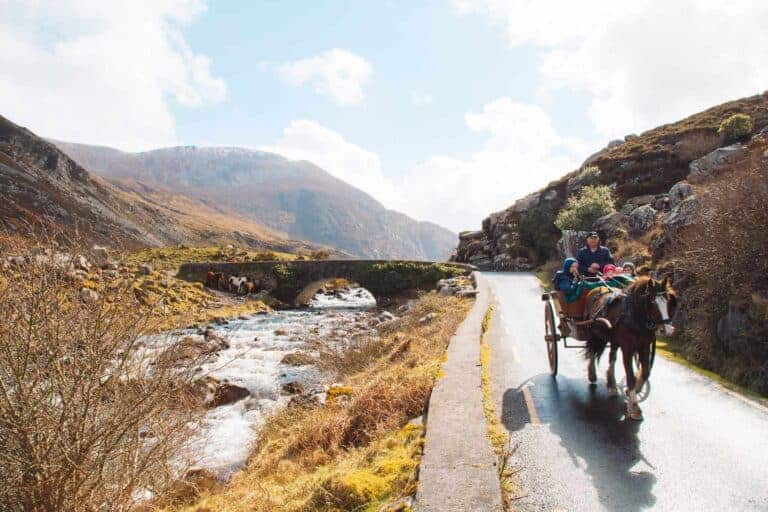
Planning a road trip to Ireland? Renting a car in Ireland can be ideal for a number of reasons. First, having a car gives you the freedom and flexibility to explore this beautiful country at your own pace and visit hidden gems and remote areas that may not be easily accessible by public transportation.
Additionally, renting a car in Ireland can be more cost and time-effective than taking multiple trains or buses, especially if you’re travelling as a group.
In this dedicated guide to Renting a car in Ireland, we will cover all the basics such as the pros & cons, where to rent a car, what documents are required, as well as a lot of tips to choose the right insurance and drive safely. Let’s get started!

WHY Rent a Car in Ireland?
Freedom
Having access to a car will allow you to avoid being tied to a set schedule or route. This means you can take your time and stop wherever you like to take in the sights and experiences of the country.
Whether you’re road-tripping along the coastline or taking day tours from Dublin or one of the other irish main cities, having your own vehicle gives you the freedom to go wherever you want.
Cost
Since Ireland is an Island, it is not cheap (or easy) to bring your own vehicle. Renting is often the most affordable way to visit Ireland for a few days or a couple of weeks. Even if you aren’t travelling as a group, renting a car can be more affordable for solo or couples than taking multiple guided tours.
Visit the countryside and Hidden Gems
Ireland’s countryside is not easily accessible by public transport. Renting a car will allow you to visit small villages and towns, and see parts of the country that many tourists may not have the opportunity to see. There are many scenic routes in Ireland that are worth a visit.
You can plan your own itinerary and make changes to your plans on the fly if you come across something interesting or unexpected.

Where to rent a car?
- Airport car rental: Many of the major airports in Ireland, such as Dublin, Cork, Shannon, and Knock, have car rental companies located on-site. These companies typically offer a wide range of vehicles to choose from, and they are often open as long as they are flight landing.
- City car rental: You can also rent cars in most towns such as Dublin, Cork, Galway, and Limerick. The rental car companies typically offer a smaller range of vehicles to choose from than at the airport, and they are mostly open during regular business hours only. It can however be useful if you plan on visiting the city before heading on a road trip.
Do you need to book a car in advance?
I wouldn’t advise to just show up at the rental car company without a reservation. In the busy months, it can get difficult (and expensive) to get a car in Ireland. The main car rental companies in Ireland like Enterprise, Avis, Budget, and Europcar, have websites to book in advance and pick up your vehicle at a location of your choice.
Although to find the best price available, comparative websites are my go-to! I personally use DiscoverCars.com, a rental car comparator that offers really good deals with full coverage for only €7 a day. This is an add-on that covers rental car deductibles, complementing existing protections like Collision Damage Waiver and Theft Protection.
What is the cost of renting a car in Ireland?
Generally speaking, daily rates start at around €25 a day during the low season and can go up to €50-60 per day during peak season.
Of course, the cost of renting a car in Ireland will depend on many factors, such as the type of car, how long you plan to rent, whether you opt for additional insurance coverage, and other options such as additional driver, GPS, etc.
💡Be careful of hidden costs! Airports have collection fees in Ireland which are not included in the price. You may also have to pay extra if you plan on travelling to Northern Ireland.
Crossing the border to Northern Ireland: It is in your best interest to declare your intention and pay the extra cost (if any) rather than getting charged a fee afterwards… Rental car companies can track your vehicle with GPS, and will more than likely charge you anyway if they see you crossed the border.

BEST IRELAND CAR RENTAL COMPANY DISCOVER CARS
When booking a rental car in Ireland online, I use Discover Cars because they offer Full coverage for less than €7. It is the best rental car comparator out there!
Document required
To rent a car in Ireland, you will typically need the following documents:
A valid driver’s license
You must present a valid driver’s license from your home country. If your driver’s license is not in English, you may also need to present an International Driver’s Permit.
A credit card
Most car rental companies in Ireland will require a credit card in the name of the driver to hold as a deposit and cover any additional costs that may arise during the rental period. Debit Cards won’t be accepted (or you may be asked to pay a large deposit but don’t take the risk).
If the main driver fails to present a credit card under their name, the booking will more than likely be cancelled. Alternatively, you can use the credit card from a passenger (and register them as a main driver) but will have to add an additional driver (and pay a fee) if the passenger isn’t driving.

Proof of insurance
If you are not taking the insurance provided by the rental company, you may be required to provide proof of insurance from another company or your bank (if your credit card covers rental car insurance). If you don’t have personal rental car insurance or are not covered by your credit card, all rental companies offer insurance upgrades to reduce your liability.
A passport or national ID
The Main driver must present a valid passport or national ID as proof of identity.
Age requirement
To rent a car in Ireland, drivers must be at least 21 years old and have had their license for at least one year.
Most rental companies have an age requirement (usually 25) and may apply a fee if the driver is younger.
How does Car rental Insurance work in Ireland?
When renting a car in Ireland, it’s important to understand the different types of insurance that are available to protect you in case of an accident or other incident.
- Collision Damage Waiver (CDW): This type of insurance covers damage to the rental car if you are involved in an accident. It may also cover theft of the car.
- Excess Reduction: CDW often has an excess that can be reduced with an Excess reduction/waiver daily fee.
- Personal Accident Insurance (PAI): This type of insurance covers medical expenses and death benefits for the renter and passengers in case of an accident.
- Personal Effects Coverage (PEC): This type of insurance covers loss or damage to personal belongings in the rental car.
- Additional coverage: you can take additional coverage such as multiple drivers, windscreen damage or road assistance… Every rental car company will have their own offers. Make sure to read all the T&C to understand what’s included and what’s not.
Full Coverage
Buying the full coverage is usually cheaper online than at the counter. Some comparative websites like Discovercars.com include Full coverage for less than €7 which is a great deal when you know most companies charge €30+ a day!
💡 Full Coverage is an add-on that covers rental car deductibles, complementing existing protections like Collision Damage Waiver and Theft Protection.
In any case, make sure to always check with your car rental company for coverage details and exclusions. Some credit cards also offer car rental insurance as a benefit, so it may be worth checking if your credit card offers this coverage before renting a car in Ireland.
Always inspect the car thoroughly before accepting it and take photos to document any existing damage in case you are held responsible for it later. Don’t forget to check the windscreen and both wing mirrors.
If you already know where you are headed, check the below tool to get your rental car quote with Discovercars.com.
BEST ONLINE CAR RENTAL COMPARATOR – DISCOVER CARS
Select the pickup location of your choice and find all the best deals!
How to rent a car in Ireland in 5 steps
1. Choose Your Pick-up and Drop-off Location: Begin by determining where you’ll pick up and drop off the vehicle. This could be an airport, city centre, or specific address. Consider the convenience and any potential fees associated with the location. Selecting the right spot can save time and money.
2. Research Car Rental Companies: Investigate various car rental providers. Look at customer reviews, prices, and the range of vehicles they offer. Some may provide better rates or more favourable terms, so compare to find the best fit for your trip.
When booking a rental car in Ireland online, you can use a comparator to find the best prices. I use Discover Cars because they offer Full coverage for less than €7. It is the best rental car comparator out there!
3. Decide on the Type of Vehicle You Need: Consider the size and type of car that will best suit your journey. Think about the number of passengers, luggage space, and whether you’ll be driving in urban or rural areas. Economy cars are great for city driving, while you might want an SUV for countryside adventures.
4. Check the Add-ons You May Need: Review potential add-ons like GPS navigation, child seats, or additional insurance. Decide what you’ll need ahead of time to avoid last-minute decisions at the counter. Bringing your own accessories can also be a cost-saving option.
5. Get a Quote and Finalize Your Reservation: Once you’ve gathered all the necessary information, get a quote from the selected rental company. Review the terms carefully, including mileage limits and insurance coverage. If everything looks good, finalize your reservation and prepare for your trip. Always keep a copy of the agreement for your records.

How to save money on Ireland rental cars
Avoid extra fees
Be wary of one-way rental charges if you’re not returning the car to the same location. They are often disguised under a higher daily rental cost, so make sure to try different drop-off locations to see which one comes cheaper.
psst! The bus system from and to Ireland airports to the main cities is pretty good and fast which can be a good alternative to avoid one-way rental fees.
Also, be careful with Airport pick-up & drop-off. Airport Rental desks might be convenient, but in Ireland, they come at a premium. For example, most rental companies charge €20-€25 just to pick up your car in Dublin Airport.
And if you’re thinking of crossing into Northern Ireland or elsewhere, check the policy on cross-border fees to avoid a nasty surprise.
Make sure unlimited kilometres are included
Ensure your rental agreement includes unlimited kilometres. This avoids unexpected charges for extensive travel, letting you explore Ireland freely without worrying about racking up extra fees. Always check and confirm this detail before finalizing your car rental.
Use your own accessories
Why pay extra for a GPS or a child’s car seat when you can bring your own? Most smartphones have GPS capabilities that are just as good, if not better, than what you’ll get from the rental agency. And if you’re travelling with little ones, bringing your own car seat not only saves money but ensures your child’s comfort and safety.
These accessories are rented per day and come with high fees. For example, a GPS (Sat nav) would usually be about €15/day which for a week of rental comes to a whooping €105 extra…
💡If you are not from the EU and don’t want to be charged for Roaming to use your Google Maps, download Ireland Map ahead or use an offline app like Maps.me. You can easily use your GPS while on airplane mode and save those extra bucks.
Stick to one driver
Adding additional drivers to your rental agreement often incurs extra costs. If possible, designate one person as the driver for the entire trip (and make sure to use their credit card for the rental).
Compare cars
Before you book, think about what type of vehicle you really need. Manual cars are often cheaper to rent than automatics in Ireland and they also consume less fuel.
However, if you’re not comfortable with a stick shift, the extra cost of an automatic might be worth it for a stress-free experience.
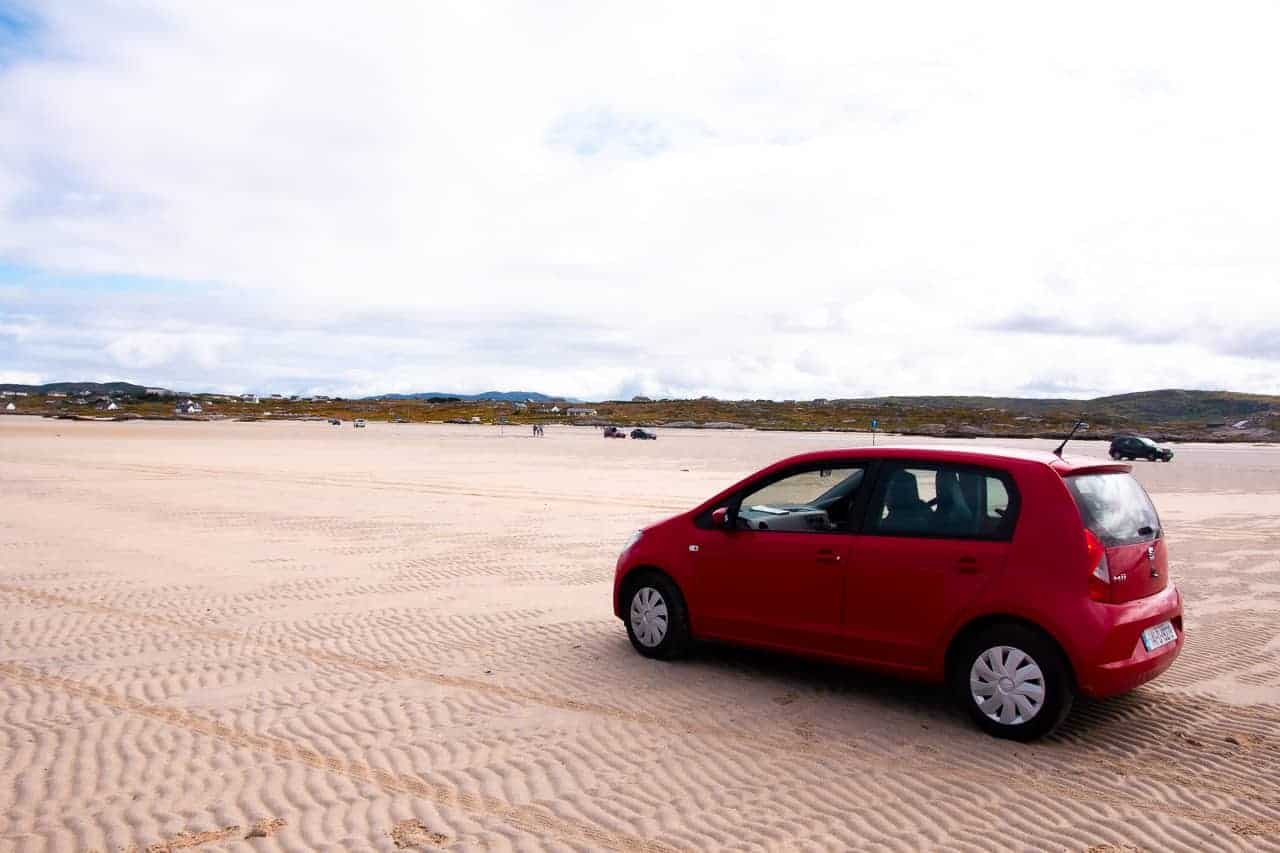
Similarly, consider the size of the car. Smaller cars are not only cheaper to rent but also to run, and they’re easier to navigate through narrow Irish roads.
Reserve a car close to your destination
Consider booking your rental car closer to your destination. If you’re flying into one part of Ireland but exploring another, opt for a bus or train to your primary region, then rent a car there. This approach can save on rental costs and fuel, streamlining your travel. Multiple operators provide frequent connections between major Irish cities and airports.
for example, If you plan on visiting the west coast of Ireland only but are flying into Dublin Airport, you can take a bus from Dublin Airport to Cork or Galway and pick up your car from there. There are a couple of companies running buses between different cities/airports in Ireland.
- DublinExpress goes to Belfast Glengall Street pretty much every hour from 5 am til 20pm
- Aircoach runs regular services to Cork, Belfast, Derry & Galway throughout the day.
- Expressway links Dublin Airport to several destinations like Donegal, Sligo, Limerick, Wexford, Waterford etc.
- CityLink has multiple routes such as Cork Airport to Galway and Bus Éireann is present from Shannon Airport too.
Be aware of Tolls
All of the tolls in Ireland can be paid using cash or credit card directly at the toll booth, except the one on the M50 which is barrier-free.
M50 Toll: Located near Blanchardstown, if you come from the airport and head to the west or south of the country, you will more than likely pass it. This toll is barrier-free and easy to miss. You will have until 8 pm the same day to pay (online, by phone, shop).
💡 Psst! If you intend on driving passed that toll, check with your car rental if they have an electronic tag in the car. Don’t worry, the company will pass on the charge to your credit card. If they don’t have that tag, it is best to prepay online or on the spot if you have a copilot! Don’t postpone, you will more than likely forget and fees will be applied.
Fuel
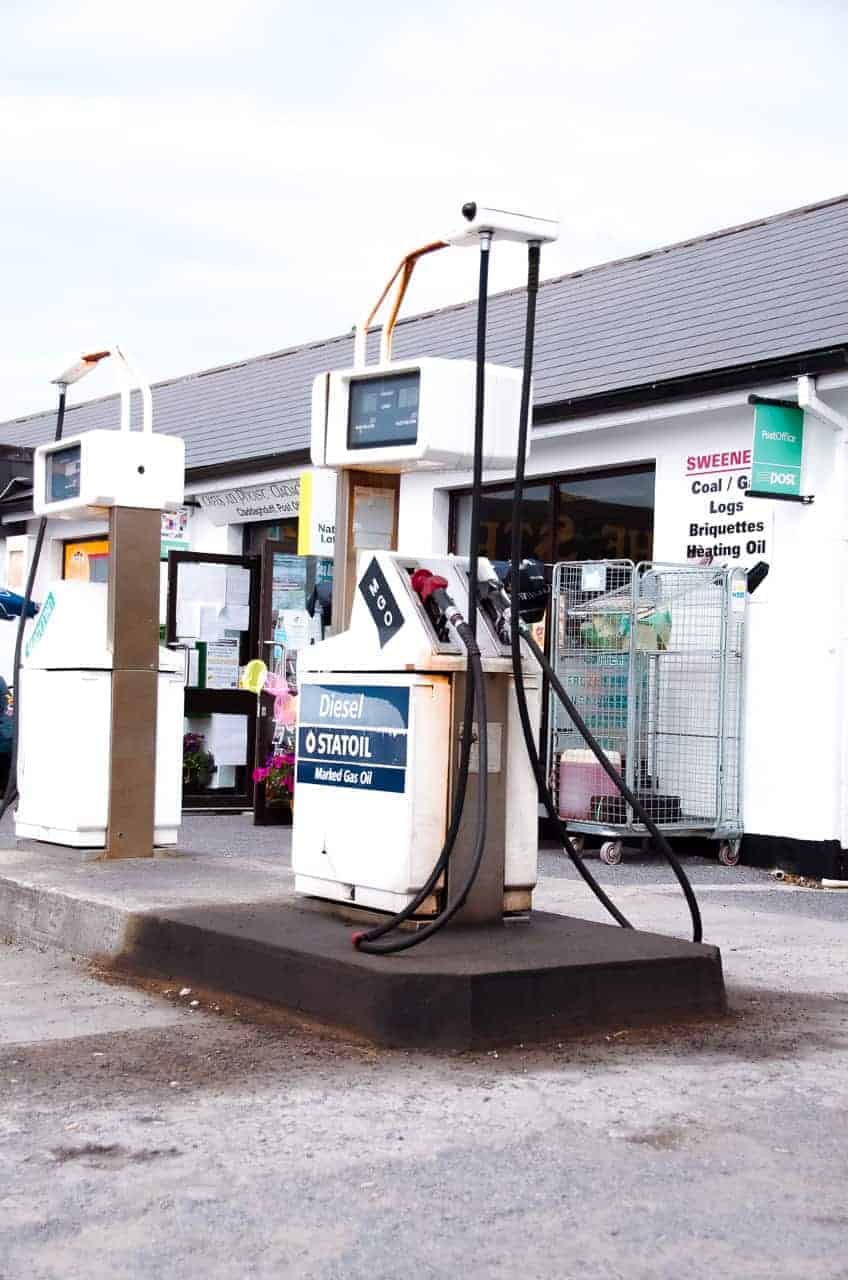
In Ireland, the two main types of fuel for cars are petrol (gasoline) and diesel. Gasoline is commonly referred to as petrol in Ireland and is available in different grades such as Regular (95 or 98 octane) and Premium.
It’s essential to confirm the type of fuel your rental car requires. It is something I always forget to ask and end up looking for the paperwork once at the petrol station! The fuel type is usually specified in the car’s manual or near the fuel filler cap but it happened to me that it wasn’t, so make sure to double-check!
Service stations are abundant, especially along major routes, and the cost of fuel can differ from one to another. Most of the time, you will be required to pay at the station directly. Once you fill the tank, park your car closer to the office and pay at the counter. You might come across self-service pumps but these are not common, especially in the countryside.
Best tips to drive a car safely in Ireland
Irish driving rules
When driving in Ireland, road safety should always be your top priority. Make sure that you familiarise yourself with Irish road rules before embarking on your road trip, such as speed limits and road signs. Here are some key points to keep in mind:
- Drive on the left side of the road.
- The speed limit on motorways is 120km/h (75mph), on national roads 100km/h (62mph), and on regional roads 80km/h (49mph). In built-up areas, the speed limit is typically 50km/h (31mph) but can get as slow as 30 km/h (18mph) in special areas like nearby schools or city centres.
- It is mandatory to wear seat belts for all passengers in the car.
- The use of mobile phones while driving is prohibited unless you are using a hands-free device.
- The legal blood alcohol limit is 50mg of alcohol per 100 ml of blood. Most people will have a BAC of 20 to 50mg after 1 standard drink, but it is best to keep to zero tolerance and avoid drinking prior to driving.
- It is illegal to use radar detectors.
- It is mandatory to carry a warning triangle and a reflective jacket in the car in case of emergency.
Road Signs in Ireland
Road signs, traffic lights, and road markings in the Republic of Ireland conform to the European standard, so they may be slightly different from what you’re used to back home. It’s a good idea to familiarize yourself with these before you hit the road. You can check out this website for more details.
👉 Fun fact! Road signs in Ireland will always include Irish translation and if you travel around the Gaeltacht region, they may only be in Irish!

If you are planning to cross to Northern Ireland It’s important to note that the road signs will change colours and the distances will be in Miles instead of Kilometers!
You should also take extra care when driving on smaller roads or country lanes as these can be narrower and more challenging to navigate. There are many country roads with 80km/h signs which seem completely unreasonable! It is a running joke here in Ireland because there is absolutely no way you can drive that fast without putting yourself or others in danger.
Finally, be aware of sheep and other animals. They often graze on the side of the road, so be prepared to slow down or stop if you see them.
Accident & Breakdown
If you are involved in an accident or experience a breakdown while driving in Ireland, there are certain steps you should take to ensure your safety and handle the situation as efficiently as possible.
- Stop your vehicle and turn on your hazard lights.
- Check for injuries and call emergency services if necessary.
- If the accident involves other vehicles, make sure to exchange contact and insurance information with the other drivers involved.
- Do not admit fault or responsibility for the accident.
- Take photographs of the scene, including the damage to the vehicles and any skid marks or other relevant details.
- Contact your car rental company and your insurance provider as soon as possible to report the accident.
If you experience a breakdown while driving in Ireland, you should:
- Move your vehicle to a safe location if possible.
- Turn on your hazard lights to warn other drivers of your location.
- Contact your car rental company or your breakdown service provider if you have one.
- If you don’t have a breakdown service, you can use the emergency road service number 112
- Be prepared to give your location, vehicle registration number, and details of the problem.
👉 It’s important to note that in Ireland you are required to carry a warning triangle, reflective jacket, and set of spare bulbs in your vehicle at all times. Their use is compulsory in case of a breakdown or an accident.
Weather
Bear in mind that the weather in Ireland can have a significant impact on driving conditions. The climate is generally mild, but it can be unpredictable, especially during the winter months.
Reduce speed and be extra vigilant when it’s foggy, rainy or windy. It doesn’t snow often in Ireland but when does, it can be particularly dangerous. During winter and in altitude be careful of ice and black ice on the road.
👉 You can find the Irish weather website here to follow the local conditions.
Add time to what Google Maps tells you
Seriously, trust me on this! Google Maps doesn’t always give you the full picture when it comes to driving in Ireland. After years of navigating the country’s roads, one thing is clear: those “shortcuts” Google suggests through regional roads (R routes), are often scenic, but most definitely not quick.
If you’re on a tight schedule, stick to the national roads (N routes) or motorways (M routes). Google has a habit of rerouting you to narrow country lanes that look faster on a map but are far from it in reality.
Many Irish country roads are winding, narrow, and lined with tall hedges or stone walls, leaving little room for manoeuvring, yet somehow, they’re still marked with an 80 km/hour speed limit! It’s baffling, considering these roads are often barely wide enough for two cars to pass.
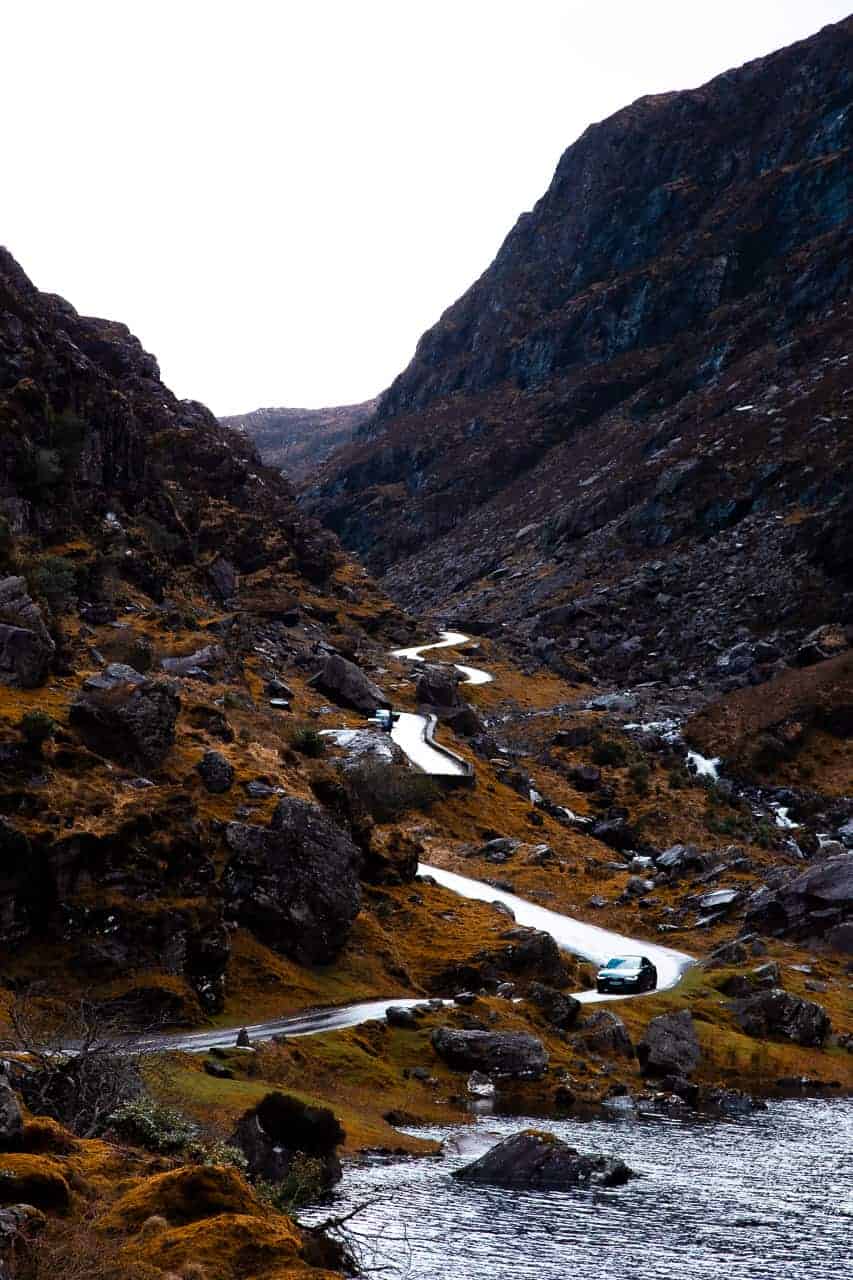
Add to that the frequent hairpin bends, blind corners, and single-lane bridges, particularly in areas like the Ring of Kerry or Connemara, and it’s clear why travel times can stretch beyond expectations.
A good rule of thumb? Add at least 30% extra time to what Google Maps estimates, more if you plan to stop and soak in the breathtaking views along the way.


Take the scenic routes
You can make the most of your road trip to Ireland by researching the attractions and landmarks that are located along the way. Taking scenic detours to see historical or picturesque sites will make your road trip even more enjoyable.
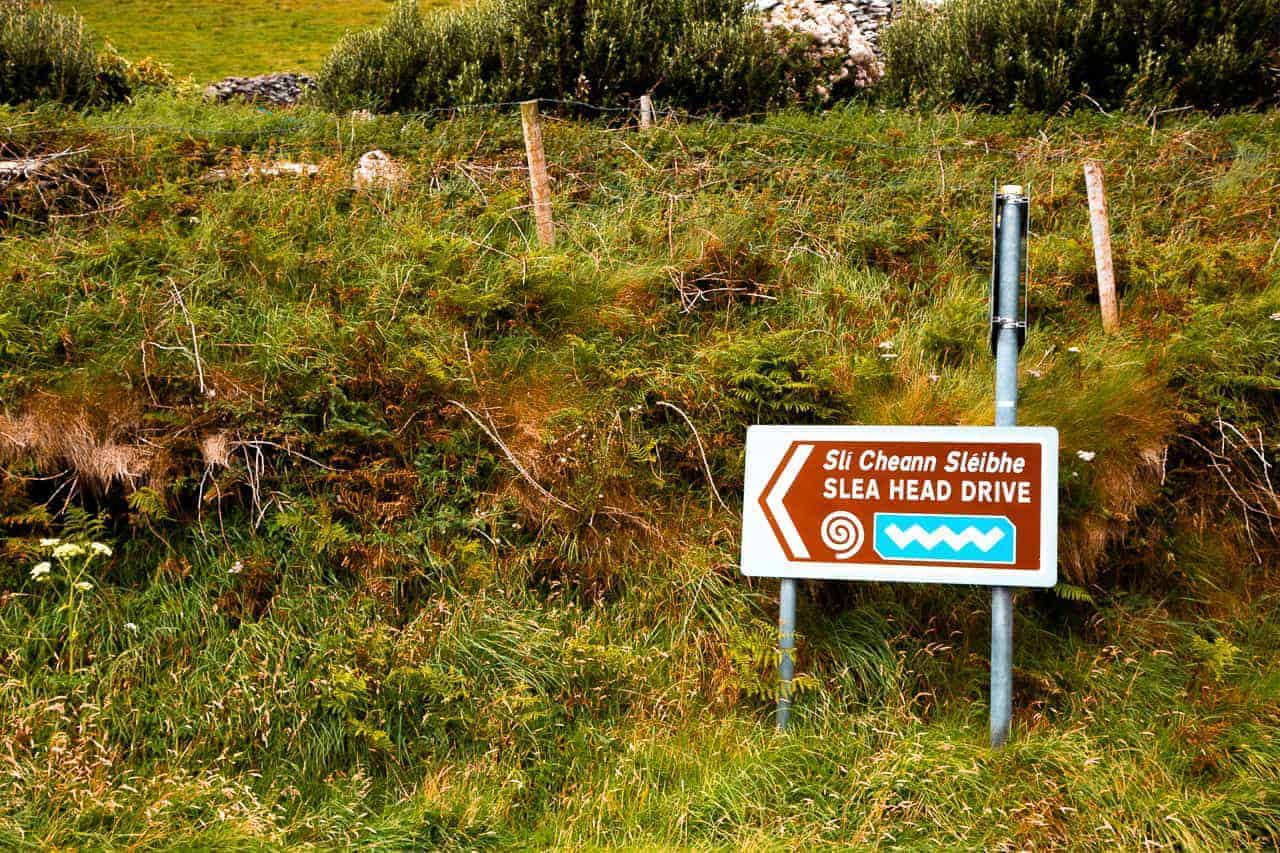
The scenic Irish roads or Heritage routes are marked with Brown signage and are very easy to follow. Here are some of the best scenic roads in Ireland:
- Wild Atlantic Way: This is a 2,500 km coastal route that runs along the west coast of Ireland, taking in some of the most beautiful scenery in the country, including the Cliffs of Moher, the Ring of Kerry, and the Dingle Peninsula.
- Ring of Kerry: This 179 km circular route is one of the most popular tourist drives in Ireland, taking in the stunning landscapes of County Kerry, including the Macgillycuddy’s Reeks mountain range, Muckross House and Gardens, and the Lakes of Killarney.
- Causeway Coastal Route: This route takes you along Northern Ireland’s Antrim Coast and the UNESCO World Heritage Site of the Giant’s Causeway. Along the way, you’ll see the Carrick-a-Rede Rope Bridge, Dunluce Castle, and the Glens of Antrim.
- Boyne Valley: the perfect day trip from Dublin that will take you to Ireland’s Ancient Est sites such as Newgrange and Knowth (Bru an Boinne), the Hill of Tara, Slane Castle and Trim Castle.
- Ring of Beara: This drive takes you through the Beara Peninsula in County Cork, offering views of the Atlantic Ocean, the Caha Mountains, and the Sheep’s Head Way.
- Burren Coastal Road: This drive follows the Wild Atlantic way south of Galway and takes you through the Burren region in County Clare. Known for its limestone landscapes, ancient ruins, and unique flora and fauna, this is aunique place to visit in Ireland.
💡 Psst! On several of these brown signs (Wild Atlantic Way, Causeway Coastal Route, etc.) you will sometimes notice either a “S” or “N”. This is to indicate you are headed South or North.
You may also see signs like the one below. The wavy white line on the blue background means you are on the Wild Atlantic Way!
Frequently Asked Questions about Driving in Ireland

ARE YOU ON PINTEREST?
What about saving this post to your Pinterest board?
Click on the photo to save this blog post for later. Follow Travel Ireland Today’s boards to see our latest pins.

I help you explore Ireland like a local with insider tips, detailed itineraries, and practical advice.
HEY THERE! I’M JEN…
Funder, Author & Photographer behind travelirelandtoday.com
Ireland has been my home for the last 12 years. Before settling here, I spent years backpacking around the globe, visiting 65+ countries. Along the way, I discovered my love for hiking, photography, and crafting budget-friendly itineraries.
Through this website, I share the best things to do and see in Ireland, detailed hiking guides, and practical tips to help you plan your perfect Irish adventure. Let’s make your trip unforgettable!