
Copper Coast Drive: Best Stops, Tips + Itineraries
This website uses affiliate links which may earn a small commission at no extra cost to you. Thank you for your support.
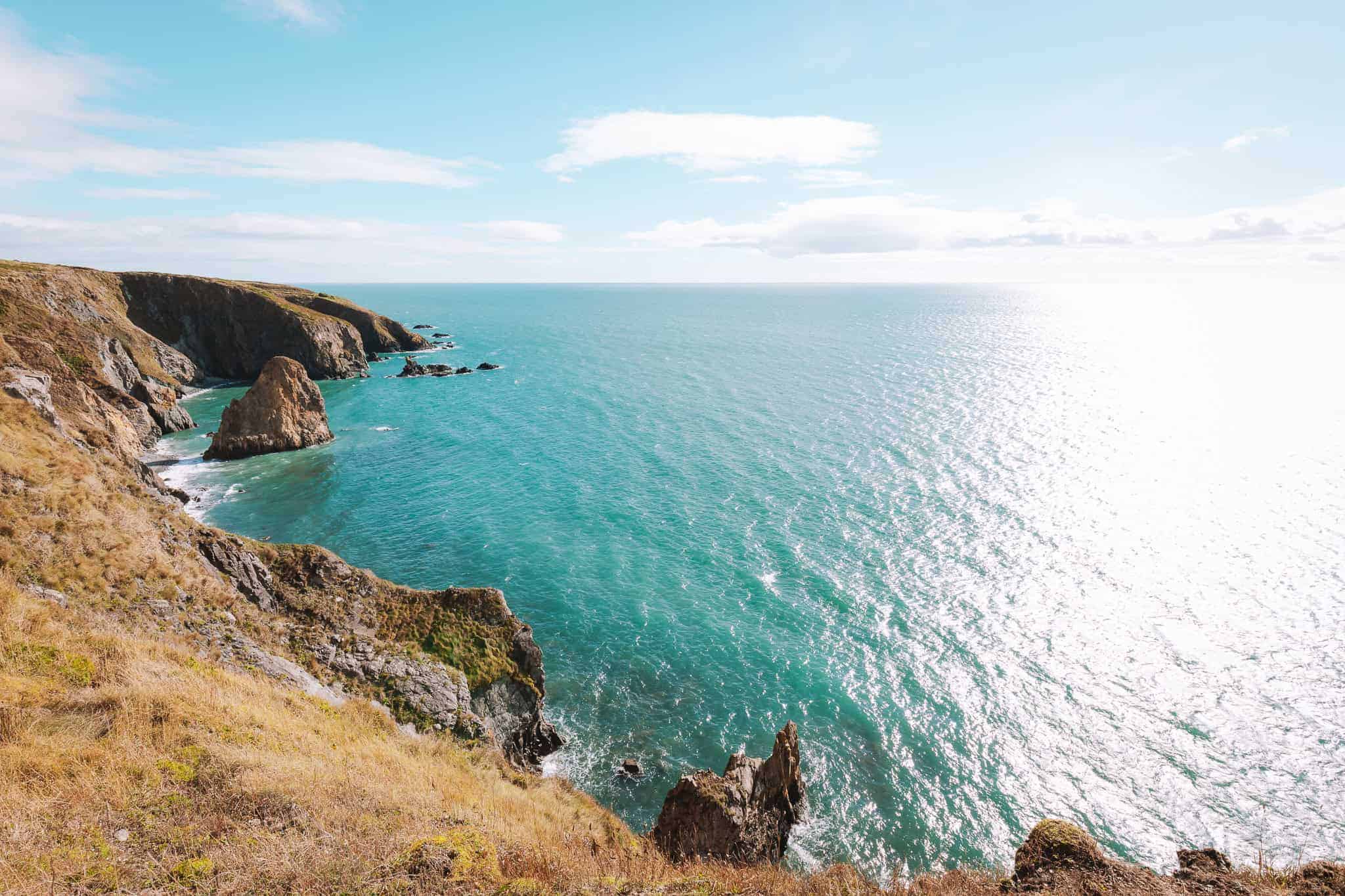
Picture this: dramatic cliffs plunge into the Atlantic Ocean, golden sands glisten under soft waves, and hidden coves beg to be explored. Throw in some historical monuments and ancient rock formations sculpted over millions of years, welcome to Ireland’s Copper Coast!
Stretching along the southeastern coast of County Waterford, this 25-kilometre UNESCO Global Geopark is a treasure trove for geology enthusiasts and anyone looking for a scenic road trip along stunning ocean views and quiet beaches.
If you crave breathtaking landscapes, peaceful harbours, and the thrill of exploring off the beaten path, the Copper Coast is a hidden gem waiting for you.
I took a long weekend in Waterford this summer and gathered all you need to know to visit the Copper Coast. In this guide, I will share everything to help you make the most of your visit, thanks to many practical tips, must-see stops, and insider advice.
Things to know before driving the Copper Coast
- Location: County Waterford
- Popular Starting point: Tramore
- Popular Ending point: Dungarvan
- Distance: Approximately 25 km one way.
- UNESCO Status: Copper Coast Geopark is recognized for its geological and cultural significance.
- Best Time to Visit: Spring through early autumn (April–October).
- Perfect For: Nature lovers, geology buffs, road trippers, and photographers
How to visit the Copper Coast
By Car
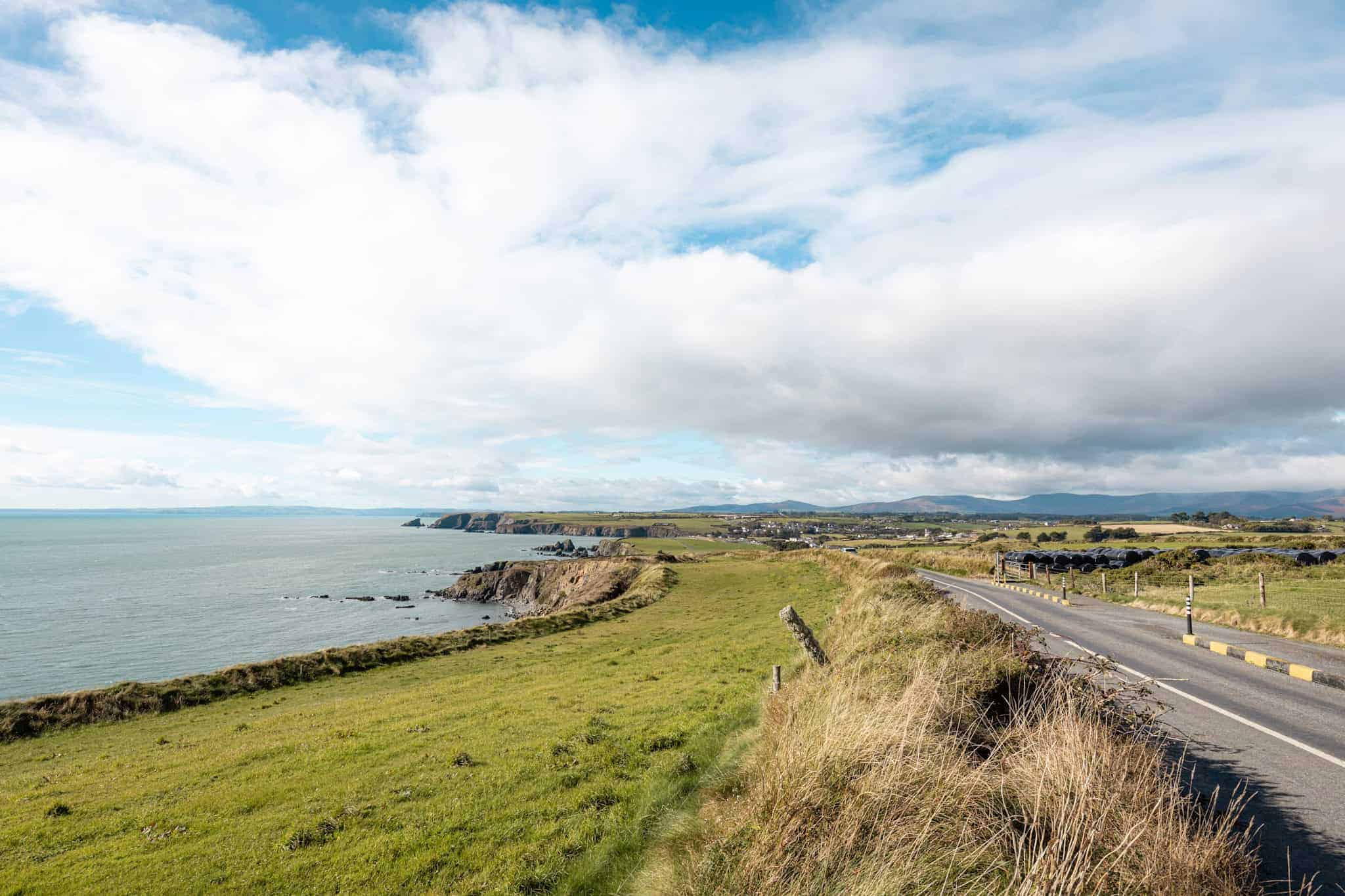
Driving is hands down the best way to explore the Copper Coast. The R675 coastal road connects Tramore to Dungarvan, offering easy access to the region’s historic landmarks.
- Why Drive? Many of the must-see stops (like hidden coves, geological formations, and mining relics) are only accessible by car. Driving also allows you to move at your own pace and stop wherever the scenery takes your breath away.
- Road Conditions: The road can be narrow and winding in parts, with limited visibility, so drive carefully and keep an eye out for cyclists and walkers.
Don’t have a car? I can only suggest to rent one.

BEST IRELAND CAR RENTAL COMPANY DISCOVER CARS
When booking a rental car in Ireland online, I use Discover Cars because they offer Full coverage for less than €7. It is the best rental car comparator out there!
By Bicycle
Cycling the Copper Coast is a scenic adventure, but it’s not for beginners. While the route along the R675 offers stunning views, cyclists need to be extra cautious due to narrow roads with blind corners and minimal shoulders for safe riding. If you are keen on cycling within the region the Waterford Greenway is an alternative you might want to look into.
The Waterford Greenway: A Cycle or Walking Alternative
The Waterford Greenway is a fantastic off-road cycling and walking route that stretches 46 kilometres from Waterford City to Dungarvan. It skirts the edge of the Copper Coast, making it a great option for a fun day out on two wheels or on foot.
However, note that the Greenway does not follow the main Copper Coast route. While it offers lovely coastal views and a peaceful ride, it doesn’t go through or nearby some of the must-see stops that you can only visit by car, such as Kilfarrasy Beach, Tankardstown or Trá na mBó.
By Public Transport
Public transport along the Copper Coast is limited but not impossible. Bus Route 367 runs between Tramore and Dungarvan, stopping at key villages along the way, such as Bunmahon and Annestown.
However, the bus does not stop at many of the main viewpoints, beaches, or hidden coves that make the Copper Coast so special.
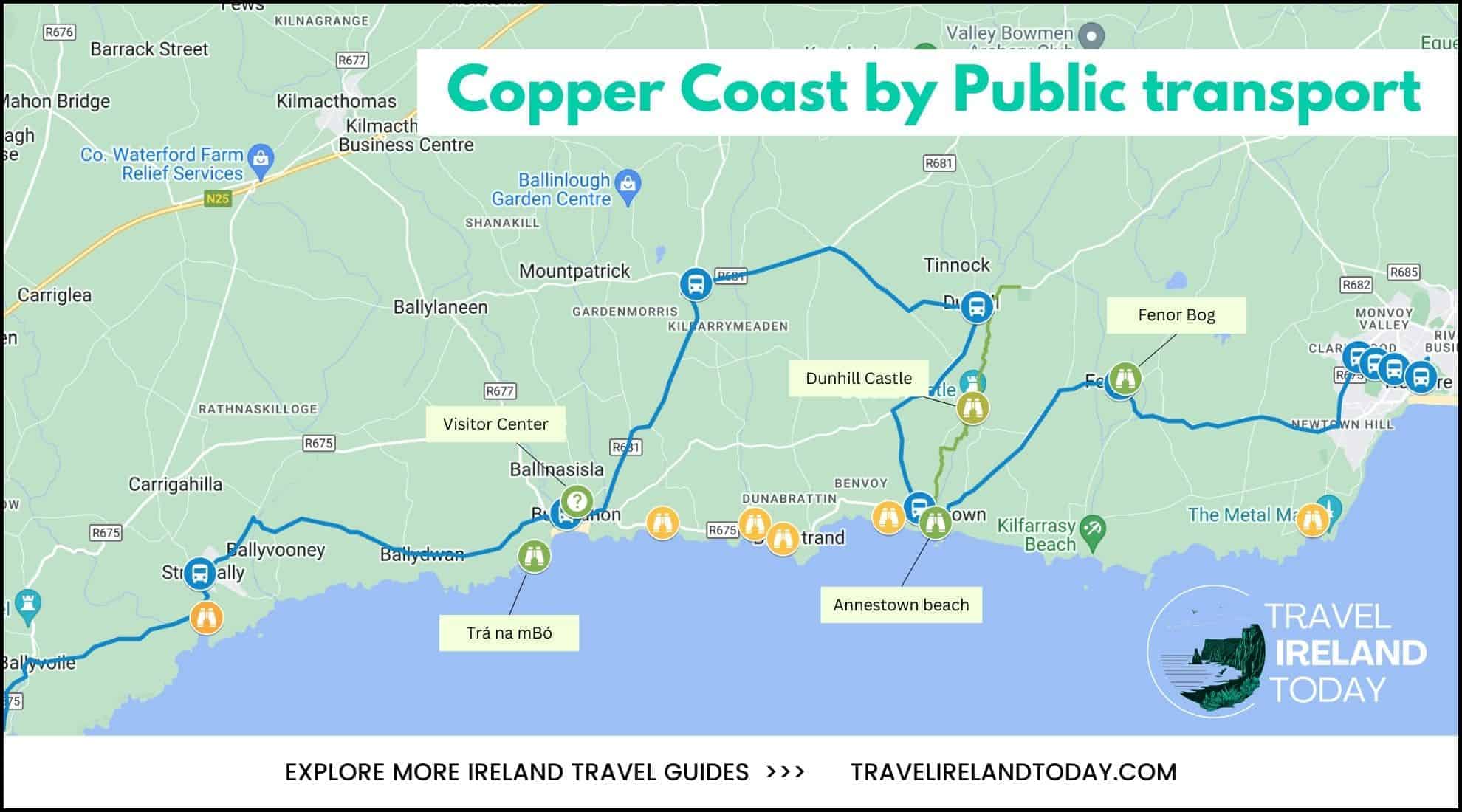
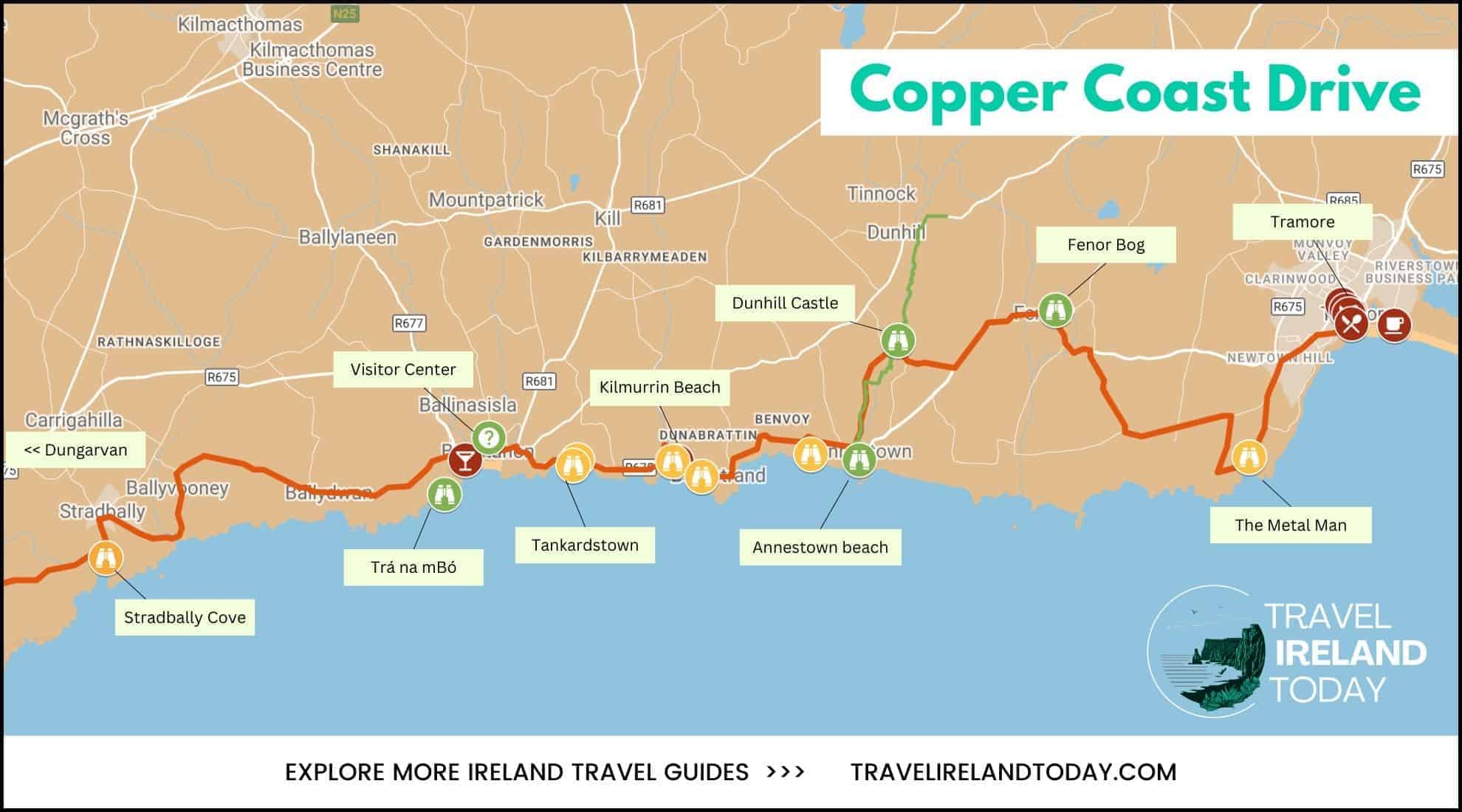
Can you walk from the bus stops/villages? I mapped the 367 bus stops and the safe locations to reach on foot (green icons on the map below) – meaning it is accessible via a pedestrian path or large road shoulder. All the other locations (yellow), despite being near some of the bus stops, don’t have any safe paths and I cannot recommend walking there.
Here are safe spots you can visit on foot from a close bus stop:
- Trá na mBó from Bunmahon Bus stop
- UNESCO Global Geopark Visit Center from Bunmahon Bus stop
- Dunhill Castle from Dunhill “Harney’s” or Annestown “Sports Grounds” Bus stop (via Anne Valley Walk)
- Annestown Beach from Annestown Bus stop “Sports Grounds”
- Fenor Bog from Fenor bus stop “Mother McHugh’s”
This being said, the bus runs 4 times a day between Tramore and Dungarvan. If you are planning to visit these sites by public transport keep this in mind as you may have to wait 4 hours until the next bus drives by to take you to the next stop… Here is the timetable for more details.
Pss!! To Access our Full map with all the main spots, places to eat and recommended itineraries enter your email and access our interactive Google Maps.
Getting to the Copper Coast
The Copper Coast is in southeastern Ireland, making it an easy trip from several major cities in Ireland.
- From Waterford City: Approximately 30 30-minute (20 km) drive via the R675 coastal road to Tramore.
- From Dublin: Around 2 hours (170 km) via the M9 motorway, connecting to the R675.
- From Cork: About 1.5 hours (120 km) via the N25 towards Dungarvan, where you can begin the Copper Coast Road heading east.
What’s the best starting point?
Most visitors start from Tramore as it is easily accessible from Waterford or Dublin, but if you are coming from Cork or like me Cahir and Lismore, then starting in Dungarvan makes the most sense.
- Tramore: A lively seaside town at the eastern edge of the Copper Coast. It’s the perfect place to begin your drive along the R675 if you are coming from the east of the country.
- Dungarvan: A charming harbour town at the western edge of the Copper Coast, ideal for starting your journey if you are coming from the west side of Ireland.
When I explored the Copper Coast, I drove the route twice, as a round trip, and I didn’t particularly find any difference from going East to West or vice-versa. The views remain equally stunning no matter which direction you’re travelling from.
If you’re driving the Copper Coast just once, choosing your start and end points is really about what works best for your day or road trip: Where are you starting your morning? Where do you plan to wrap up your day?
Something else you may want to take into consideration is where you will be having lunch! Not joking, this is very important on a road trip 🙂 In my opinion, Tramore is the best place to stop for food. I would suggest to keep that in mind when planning your trip.
Starting from Tramore, you may want to have lunch and then drive the Copper Road, but if you are starting in Dungarvan, an early morning start might be best so you can end the road trip with lunch in Tramore!
Best Stops of the Copper Coast
Stradbally Cove
Distance: 13km from Dungarvan
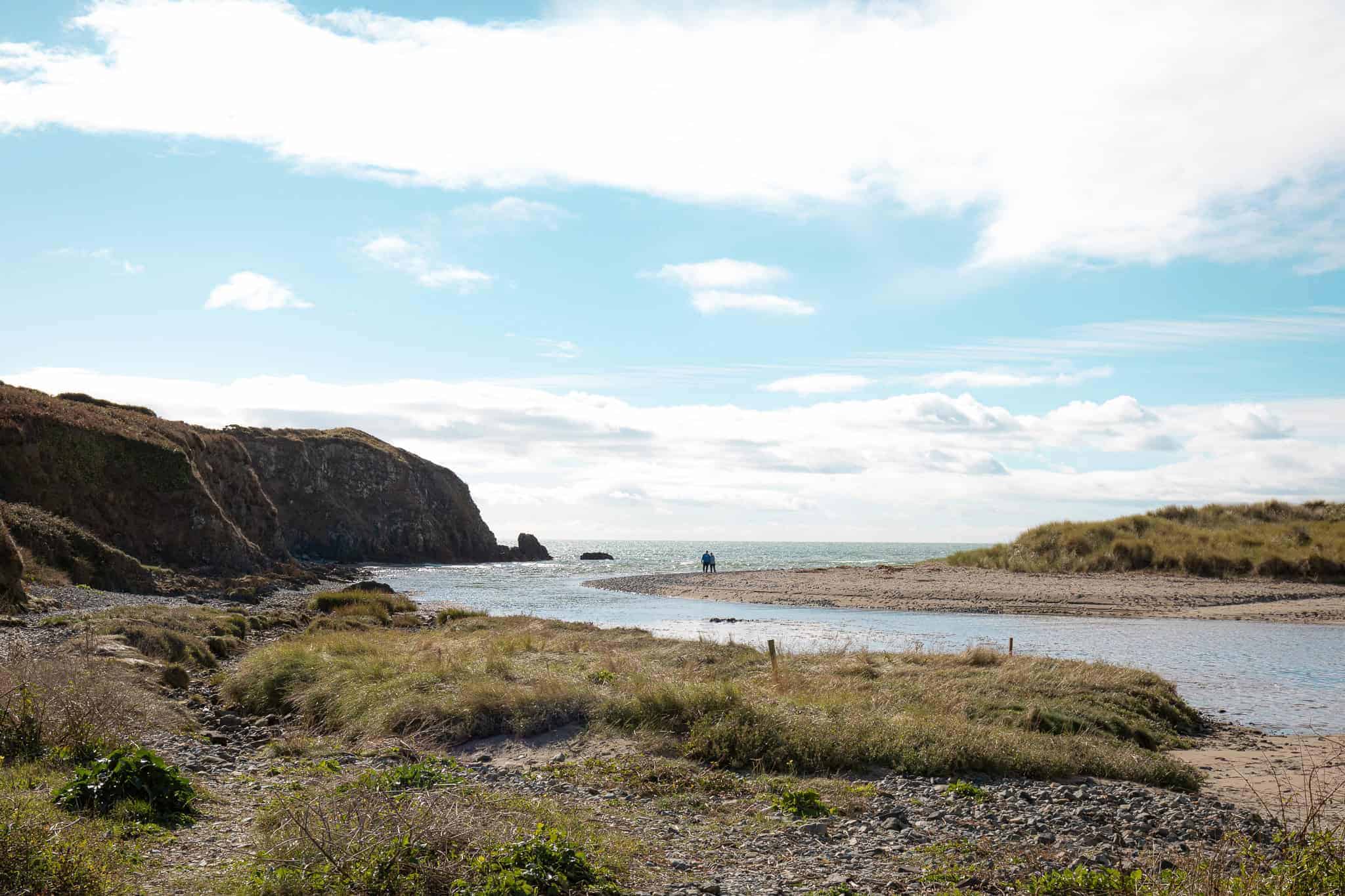
Stradbally Cove is a peaceful, picturesque inlet surrounded by rolling green hills and high cliffs. The golden sand beach feels almost secret, tucked away at the end of a narrow road. It’s a perfect first stop for a quiet walk. At low tide, the cove reveals an expansive beach so make sure to check ahead the charts.
- Parking is available but limited and the road is very narrow.
- Check tide times. Much of the beach disappears at high tide.
Trá na mBó
Distance: 9km from Stradbally Cove
Trá na mBó, which translates to “The Strand of the Cows,” is a small, secluded beach surrounded by striking cliffs. Tucked off the main route, this beach is accessible via a small gravel path.
At low tide, the beach reveals rock pools. This place is like a secret spot along the Copper Coast that is worth stopping for a bit and exploring.
- Access to the beach is down a narrow and sometimes steep path, so wear sturdy shoes.
- Keep an eye out for small adits cut into the rocks which are a testimony of the Copper Coast mining history.
- Check tide times – exploring at low tide provides the best experience.
Geopark Visitor Center
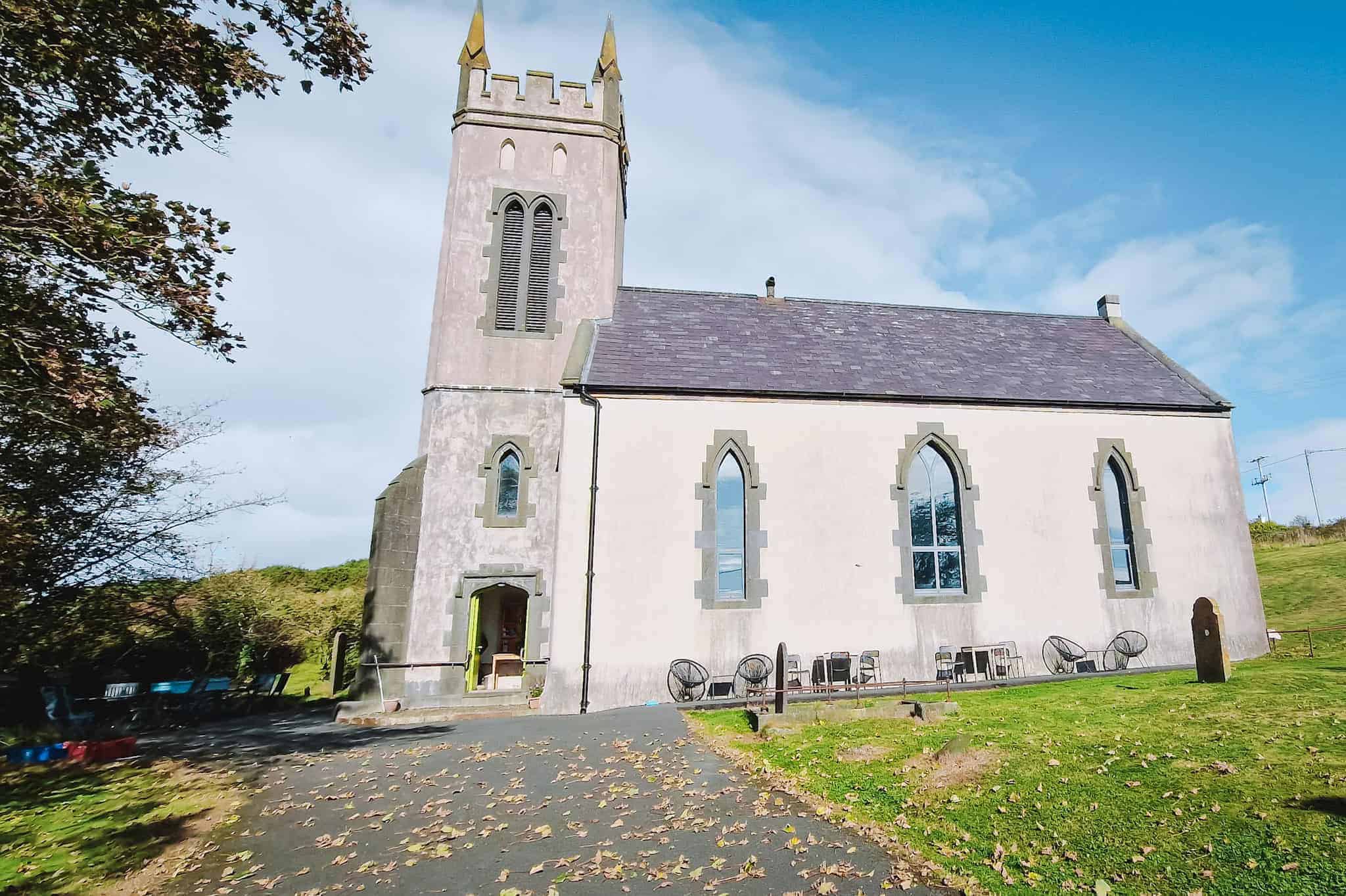
Distance: 1.3km from Trá na mBó
The Copper Coast Geopark Visitor Center is in the village of Bunmahon inside an old church. It is the perfect place to learn about the region’s fascinating geological history thanks to large informative posters covering everything from volcanic origins to the 19th-century copper mining industry.
In one of the small rooms at the back, you will find a short video to learn more about mining in the region.
It’s a great stop to gain insight into the Copper Coast’s UNESCO status, geology, and cultural heritage before heading to more landmarks.
- The centre has helpful maps and information on walking routes in the area.
- There is a small café with lovely cakes and restrooms are also available.
- You can park in the street outside the Visitor Center for free.
Tankardstown Copper Mines

Distance: 2 km from the Geopark Visitor Centre
These dramatic ruins are a striking reminder of the area’s copper-mining history. Perched on a hill overlooking the ocean, the remnants of engine houses and chimneys look moody and maybe a bit haunted, especially when it’s windy and you can hear noises coming from underground!
Tankardstown is a must-see spot to understand the industrial past of the Copper Coast and how this place was once at the heart of the region’s industry providing work for many locals.
The site is in fact, renowned for its diverse mineralogy, with at least 36 different minerals recorded, including rare specimens like brochantite and langite flowstones.
- The site is exposed to the elements – wear sturdy shoes and bring a jacket.
- Parking is available nearby on the side of the road and a short walk leads to the ruins.
- Across from the parking, you may see a small trail leading to the cliffs. Be extra careful, but the coastline view is one of the best I have seen on this drive!
Kilmurrin Beach
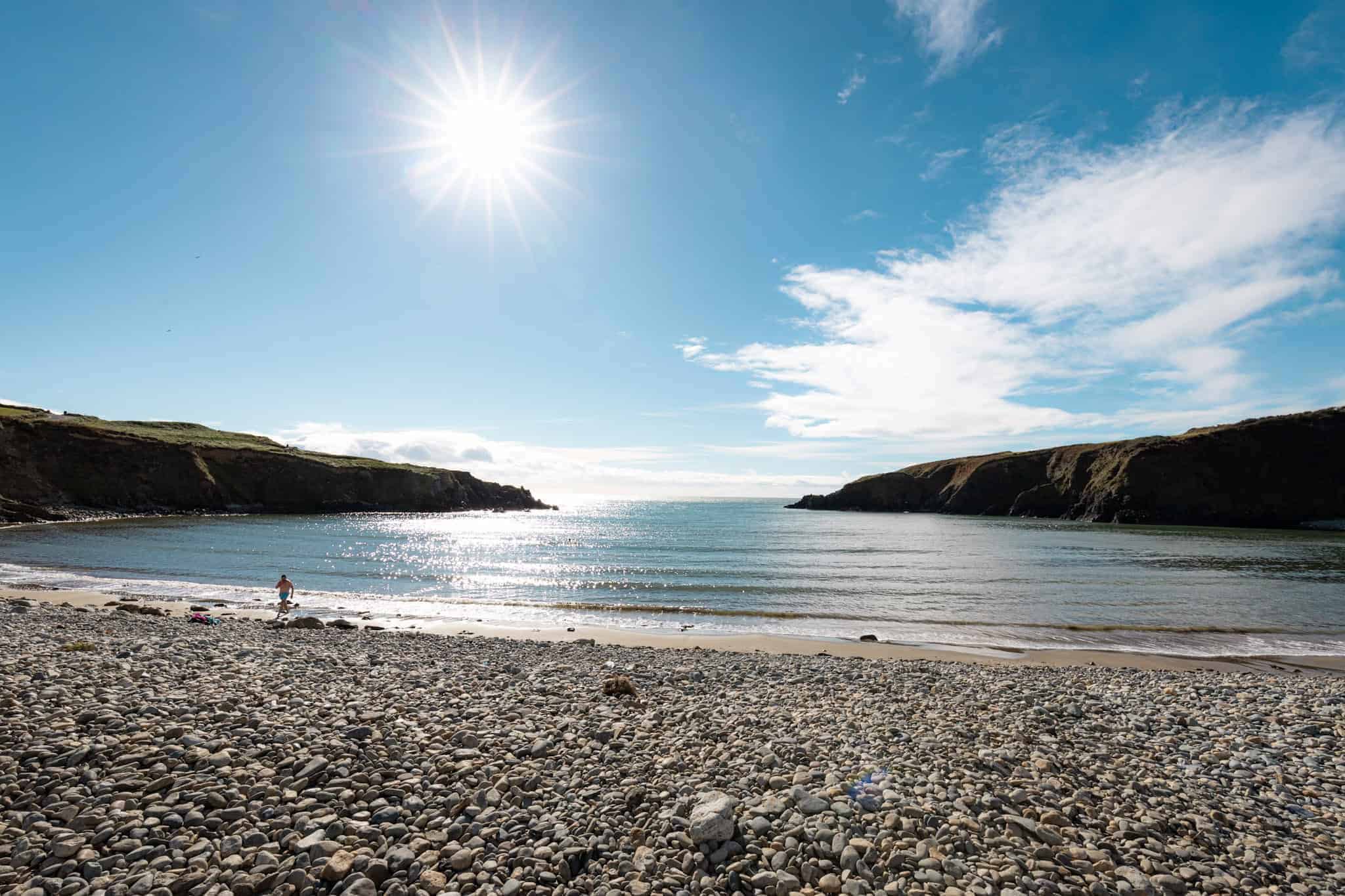
Distance: 2km from Tankardstown Copper Mines
Kilmurrin Beach is a small, sheltered cove nestled between rocky cliffs. Its horseshoe-shaped bay with calm waters makes it one of the most picturesque and peaceful stops along the Copper Coast.
It is the ideal place for a quick dip in the ocean, followed by a hot chocolate from the local food truck. If you have time (and can plan), book yourself a sauna session at the Hot Pod after your bath! (€10 for 30 min – check website for available dates and booking)
Before reaching your next Geosite, stop at Dunabrattin Head for another beautiful ocean viewpoint.
- There is a large parking at the beach so usually, no issue with parking.
- The beach is a mix of sand and pebbles. At high tides much of the sand disappears, so bring Aqua shoes if you can, since you will need to walk on the rocks a bit to reach the water.
Benvoy Beach
Distance: 3.1km from Kilmurrin Beach
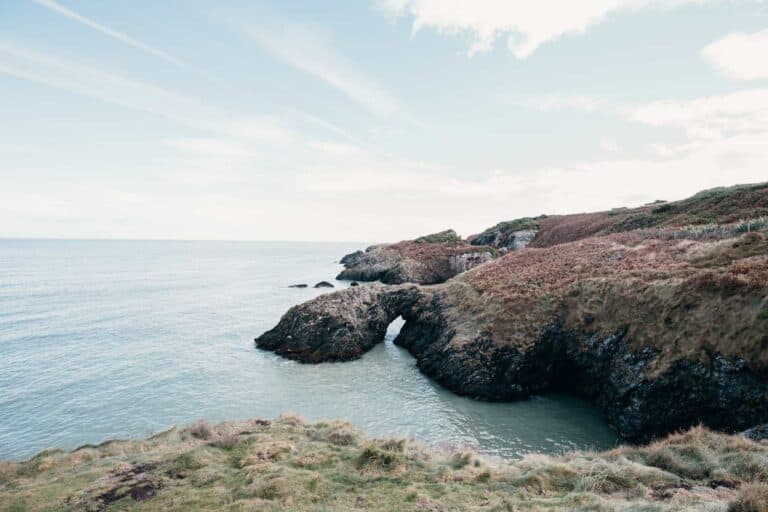
Benvoy is a large, secluded beach with striking rock formations and even caves. It is a hidden treasure along the Copper Coast and feels worlds away from the busier spots.
Perfect for photographers or those looking for solitude, Benvoy Beach is best visited during low tide when you can explore the rock pools and admire the geological formations up close.
- Access to the beach is via a narrow path – wear appropriate shoes.
- The beach is not signposted. The road to the very small car park is very narrow and only fits one car.
Annestown Beach
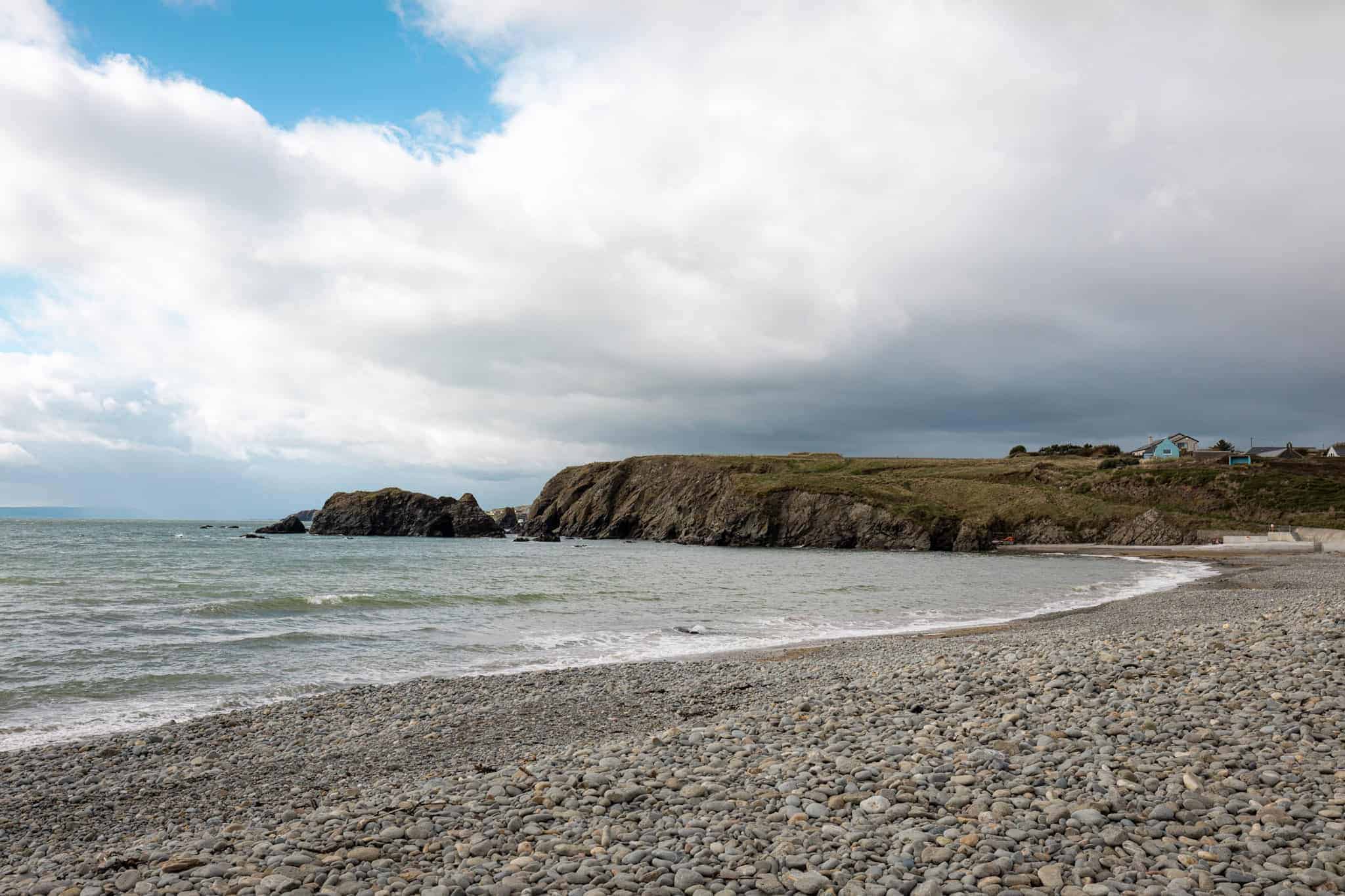
Distance:1.4km from Benvoy Beach
Annestown Beach is a sweeping bay framed by dramatic cliffs and striking sea stacks that rise from the water. The beach is a favourite for (dog) walkers, and those seeking a quiet escape.
I didn’t get to spend much time here because it was threatening to rain, but I heard it’s particularly beautiful during golden hour when the light plays across the cliffs and the shimmering waves.
- Parking is available on the cliffside just above the beach, providing easy access.
- Visit during low tide to explore the tidal pools and sea caves safely.
- I am not sure if swimming is possible here. It didn’t look inviting with strong currents. Proceed with extreme caution and look for signs.
Anne Valley Nature Walk
Distance: 5km from Annestown (drive or walk!)
The Anne Valley Nature Walk is a peaceful and scenic trail that winds its way through woodlands, wetlands, and along the Anne River, connecting the village of Dunhill to the beautiful Annestown Beach.
This 5-kilometer (one-way) linear trail is well-maintained with a gravel path, wooden boardwalks, and bridges that make it accessible for walkers, cyclists, and families.
This is the perfect spot to stretch your legs, take in the beauty of the lush surroundings, and enjoy the sights and sounds of local wildlife. You’ll likely spot swans, herons, and ducks along the river, as well as dragonflies darting over the wetlands.
- Trail Length: 5 km one way (10 km round trip), but you can choose to do a shorter section. Count about 2.5 hours to complete the 10km.
- The walk is flat and easy, suitable for all fitness levels and families with buggies and wheelchairs.
- There’s parking available near the start in Dunhill Village, at Dunhill Castle or the Annestown end.
Dunhill Castle
Distance: Along the Anne Valley Walk – 2.4km from Annestown Beach
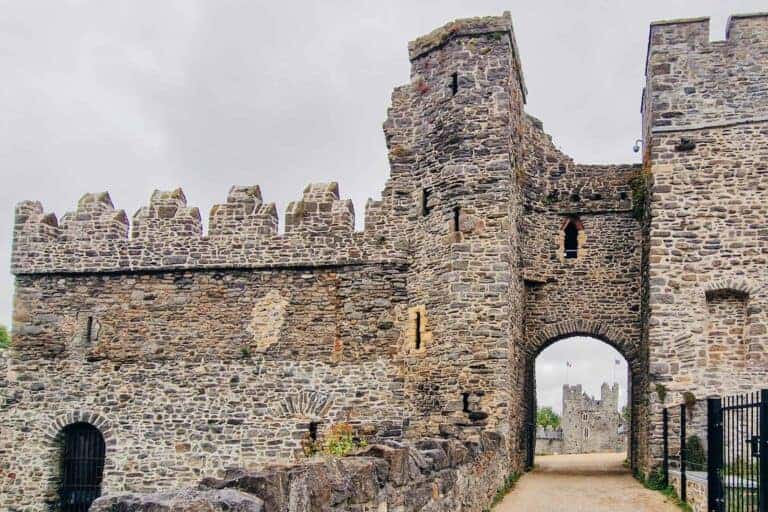
Perched on a hill overlooking the Anne River, the ruins of Dunhill Castle (meaning “the Fort on the Rock”) date back to the 13th century. A short hike up the hill rewards you with panoramic views of the surrounding countryside and coastline.
Dunhill Castle combines history and spectacular views, making it a great stop along the Copper Coast. It’s especially stunning at sunrise or sunset.
- You can visit the Dunhill Castle as part of the Anne Valley Walk. But you can also park at the base of the hill and walk up – it’s a short but steep climb.
Fenor Bog Nature Reserve
Distance: 3.4km from Dunhill Castle
Fenor Bog is a peaceful nature reserve teeming with wildlife and native plants. A short wooden boardwalk allows you to wander through this rare habitat without disturbing the environment.
It’s a perfect spot for nature lovers and birdwatchers. The reserve provides a quiet break from coastal views and a chance to experience inland biodiversity.
- Look for the sign Fenor Bog. There is a large parking but not well signed-posted (look for “Fenor Play Park” on Google Maps).
- The boardwalk is an easy, flat walk suitable for all ages.
- Keep your eyes open for dragonflies, butterflies, and birds – binoculars can be handy.
The Metal Man
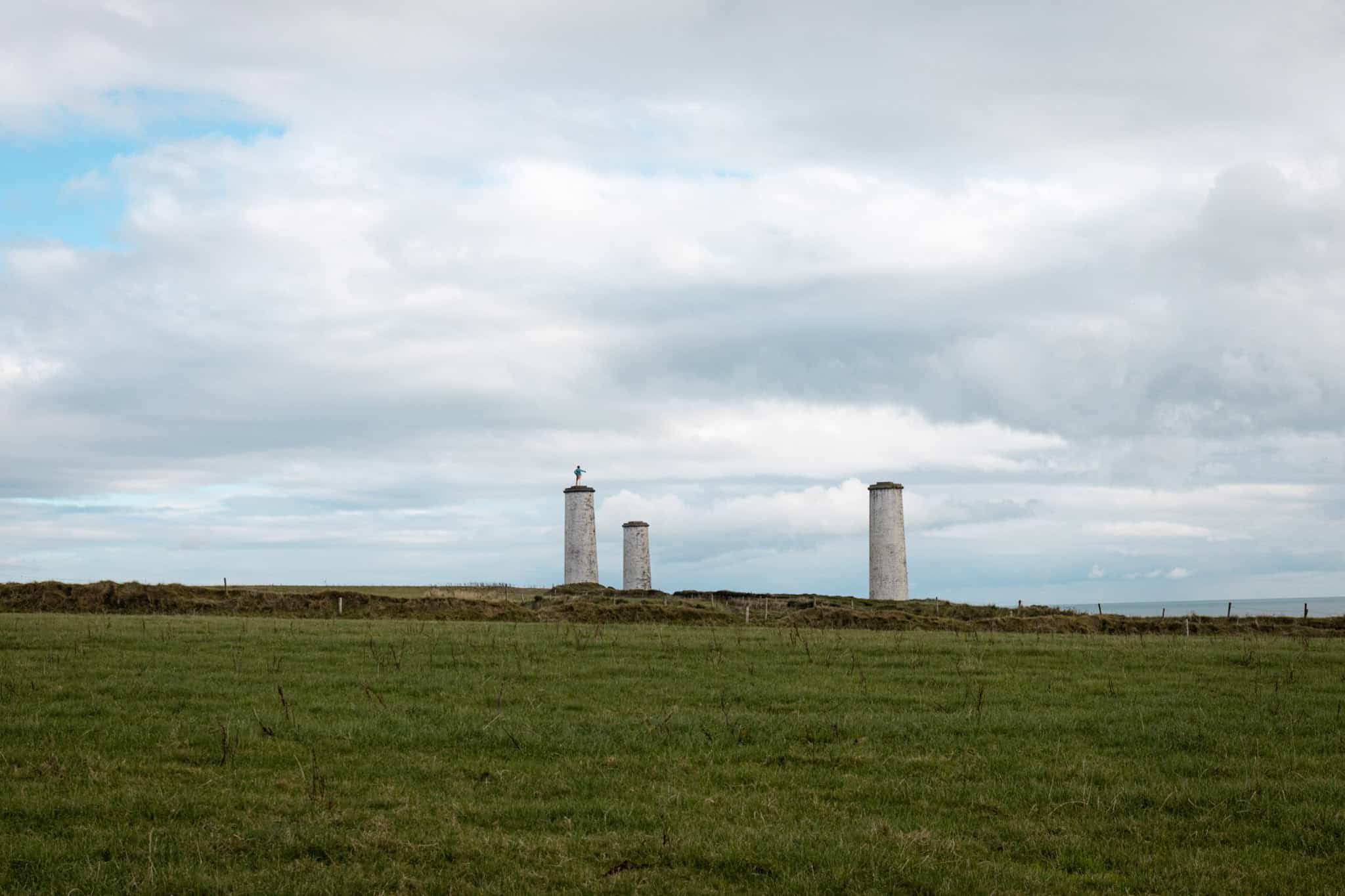
Distance: 6.3km from Fenor Bog
The Metal Man is one of the Copper Coast’s quirkiest landmarks… This cast-iron statue of a sailor standing on a tall pillar overlooking Tramore Bay was built in the early 19th century and designed as a nautical marker to guide ships safely into the Tramore harbour.
I didn’t find any way to see the statue from up close as is surrounded by private land. As far as I am aware, it is only visible from the road, but let me know in the comment if you know a better place to see the statue.
- The statue is on private land, so while you can’t walk right up to it, you’ll get excellent views from the road.
- I didn’t find any spot to park along the road, but it was relatively quiet. Just be careful where you pull up and make sure you are visible from the traffic.
Sample Itineraries for a Day Trip to the Copper Coast
Below are two recommended itineraries for exploring the Copper Coast in one day, starting from Tramore or Dungarvan. They both include all the stops I’ve covered above, with a suggested timetable to help you make the most of your adventure.
Note! The itineraries take into consideration lunch in Tramore but feel free to adjust the starting time as you see fit.
Access our map
Click on the map and enter your email to access the interactive Google Maps version of our Copper Coast Drive. I have also added details for Public transport option.
Itinerary 1: Starting from Tramore
1:00 PM – Leave in Tramore
1:10 PM – Stop 1: The Metal Man (5 min)
1:30 PM – Stop 2: Fenor Bog Nature Reserve (20-30 min)
2:15 PM – Stop 3: Dunhill Castle & Anne Valley Walk (allow 15-30 min)
3:00 PM – Stop 4: Annestown Beach (10 min)
3:20 PM – Stop 5: Tankardstown CopperMines(30 min)
4:00 PM – Stop 6: Benvoy Beach (10 min)
4:20 PM – Stop 7: Kilmurrin Beach (10min – longer if swim/sauna)
4:40 PM – Stop 8: Trá na mBó (10 min)
5:00 PM – Stop 9: Geopark Visitor Center (15-20 min)
5:15 PM – Stop 10: Stradbally Cove (10 min)
5:30 PM – Return to Tramore or continue to Dungarvan
Itinerary 2: Starting from Dungarvan
8:00 AM – Leave from Dungarvan
8:15 AM – Stop 1: Stradbally Cove (10 min)
8:35 AM – Stop 2: Geopark Visitor Center (15-20 min)
9:00 AM – Stop 3: Trá na mBó (10 min)
9:20 AM – Stop 4: Kilmurrin Beach (30 min – swim/sauna)
10:00 AM – Stop 5: Benvoy Beach (10 min)
10:20 AM – Stop 6: Tankardstown Copper Mines (30 min)
11:00 AM – Stop 7: Annestown Beach (10 min)
11:20 AM – Stop 8: Dunhill Castle & Anne Valley Walk (15-30 min)
12:00 PM – Stop 9: Fenor Bog Nature Reserve (20-30 min)
12:45 PM – Stop 10: The Metal Man (5 min)
1:00 PM – Arrive in Tramore
Where to eat on the Copper Coast


Most of the best spots for lunch and coffee are in my opinion found in Tramore. Here are some great spots I would recommend.
Tramore
- Zuca Brew/Vee Cafe
- Zuca Brew is a small coffee shop with outside seating, but it might not satisfy die-hard speciality coffee fans (I wasn’t impressed by their Americano). For better brews, you might prefer Vee Café, which seems to be a local favourite.
- Mezze (my top recommendation)
- This Middle Eastern-inspired café is a must-visit for lunch. The falafels are exceptional, and the menu offers a delicious variety of fresh, flavourful dishes. Expect some delay at lunch as it gets very busy.
- Seagull Bakery
- Known for its artisan bread and pastries, this bakery is popular with locals. While the baked goods looked a bit overdone during my visit, the buzz and crowds suggest it’s worth a try.
- Moe’s Café
- The perfect pit stop for something sweet. Their waffles and hot chocolate are particularly indulgent—great for a mid-morning or afternoon treat.
- One the Waterfront
- If you’re lucky with sunny weather, One the Waterfront is a fantastic place to relax and take in the views. The seafood-focused menu pairs perfectly with the scenic coastal backdrop.
On the road
- Engine House on the Copper
- For a laid-back pub experience, the Engine House on the Copper is a great choice. If the sun’s out, grab a pint and enjoy it in the charming beer garden.
- Milseán Coffee Truck
- Situated at Kilmurrin Cove, this coffee truck is a convenient option for a hot drink after a swim or a walk on the beach.
Geological Significance of the Copper Coast and Its UNESCO Geopark Status
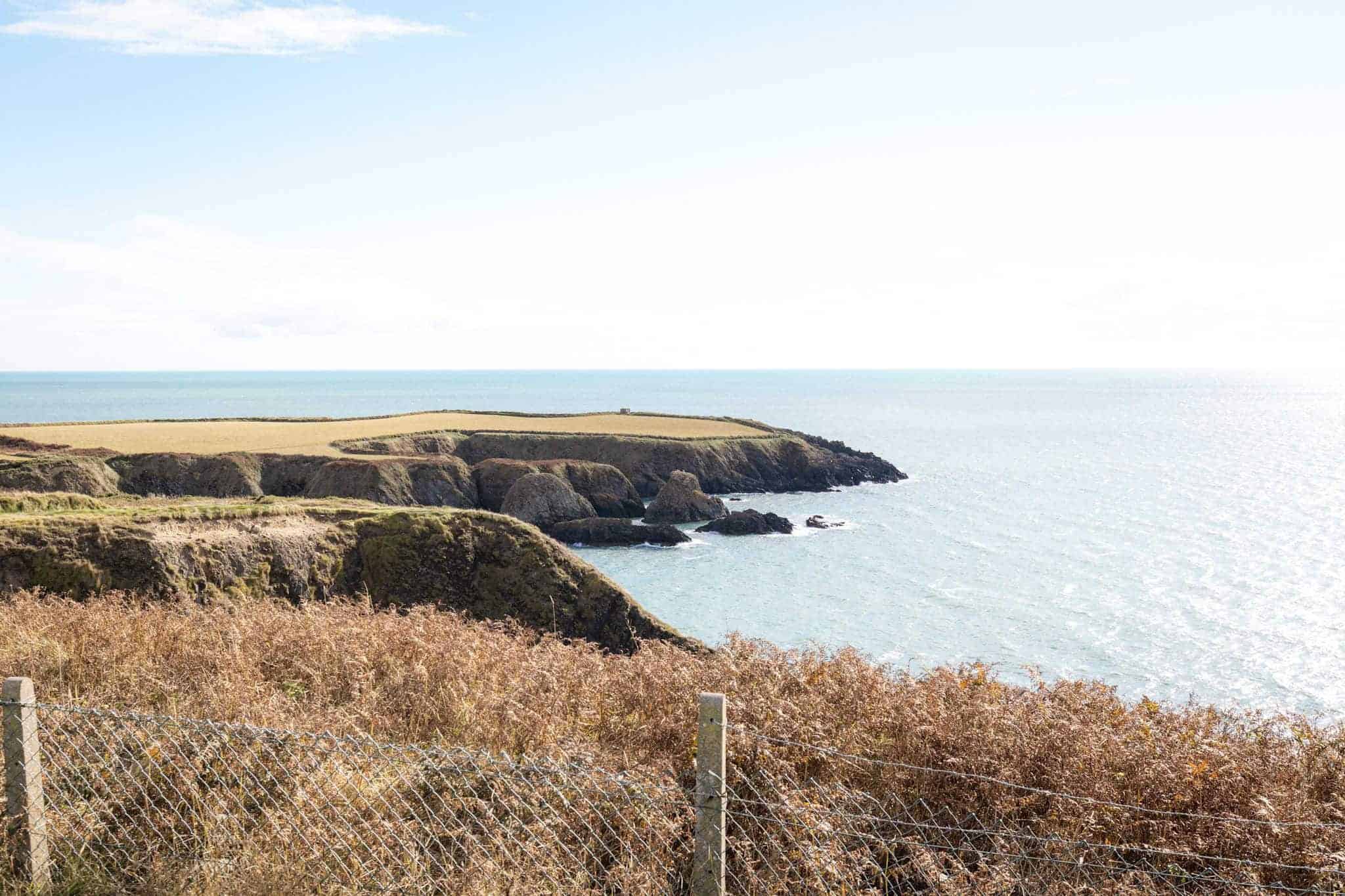
The Copper Coast is not just a stunning stretch of coastline—it’s a geological site as a UNESCO Global Geopark, highlighting its exceptional geological heritage and its importance to science, education, and conservation.
Why Is the Copper Coast Geologically Significant?
- Ancient Origins: The Copper Coast’s unique landscape was shaped over 460 million years, with evidence of dramatic geological events such as volcanic activity, continental collisions, and glacial periods. The rocks here record the history of a once-tropical sea, active volcanoes, and the eventual formation of the supercontinent Pangaea.
- Diverse Geology: The area features a mix of volcanic rocks, sedimentary layers, and striking geological formations such as sea stacks, arches, and tidal pools. These layers reveal details of Ireland’s geological history that are rarely seen elsewhere.
- Copper Mining Legacy: The region is named after its copper-mining history during the 19th century. The remains of mines, engine houses, and other structures serve as a reminder of the area’s industrial past and are an integral part of its cultural landscape.
The Copper Coast Geosites
The Copper Coast UNESCO Global Geopark features several Geosites, each showcasing unique aspects of the area’s geological history. These sites showcase volcanic rocks, ancient sedimentary layers, and the remnants of glacial activity. Here is the list of the Geosites (I have included the most striking one to the itineraries & list of best spots along the Copper Coast)
- Kilfarrasy Beach: Layers of sedimentary rock and unique folding patterns formed by tectonic forces. It’s a great spot for studying the ancient seabed that existed over 400 million years ago.
- Bunmahon Beach: Evidence of volcanic activity, with visible lava flows and pyroclastic rocks from the Devonian period. Bunmahon was also a hub of the 19th-century copper mining industry.
- Tankardstown Copper Mine: Remnants of 19th-century copper mining, including engine houses and chimneys, set against volcanic rock formations.
- Stradbally Cove: Picturesque sandstone cliffs and evidence of ancient glacial deposits. The interplay of soft and hard rock layers showcases the forces of erosion.
- Annestown Beach: Dramatic cliffs and sea stacks formed by millions of years of wave erosion. This site offers a close look at the geological features shaped by coastal processes.
- Ballydowane Bay: Coastal cliffs with visible sedimentary layers and rich fossil beds that reveal ancient marine life. It’s a great spot for fossil enthusiasts.
- Benvoy Beach: Unique rock formations and intertidal zones shaped by erosion. This site showcases the dynamic interaction between land and sea over millennia.
- Kilmurrin Cove: A horseshoe-shaped bay bordered by cliffs, with rocks that tell stories of volcanic origins and tectonic shifts.
- Trá na mBó: Iconic sea stack and striking rock formations that demonstrate the power of coastal erosion and the geological processes at work.
- Fenor Bog Nature Reserve: A rare inland site featuring preserved peat bogs and wetlands.
Want to learn more as you go?
Download the Geotours App, a self-guided tour companion for exploring the Copper Coast UNESCO Global Geopark. You will find detailed routes, audio commentary, historical insights, and points of interest, which are perfect for learning about the places you visit as you go.
FAQs About the Copper Coast
Is the Copper Coast family-friendly?
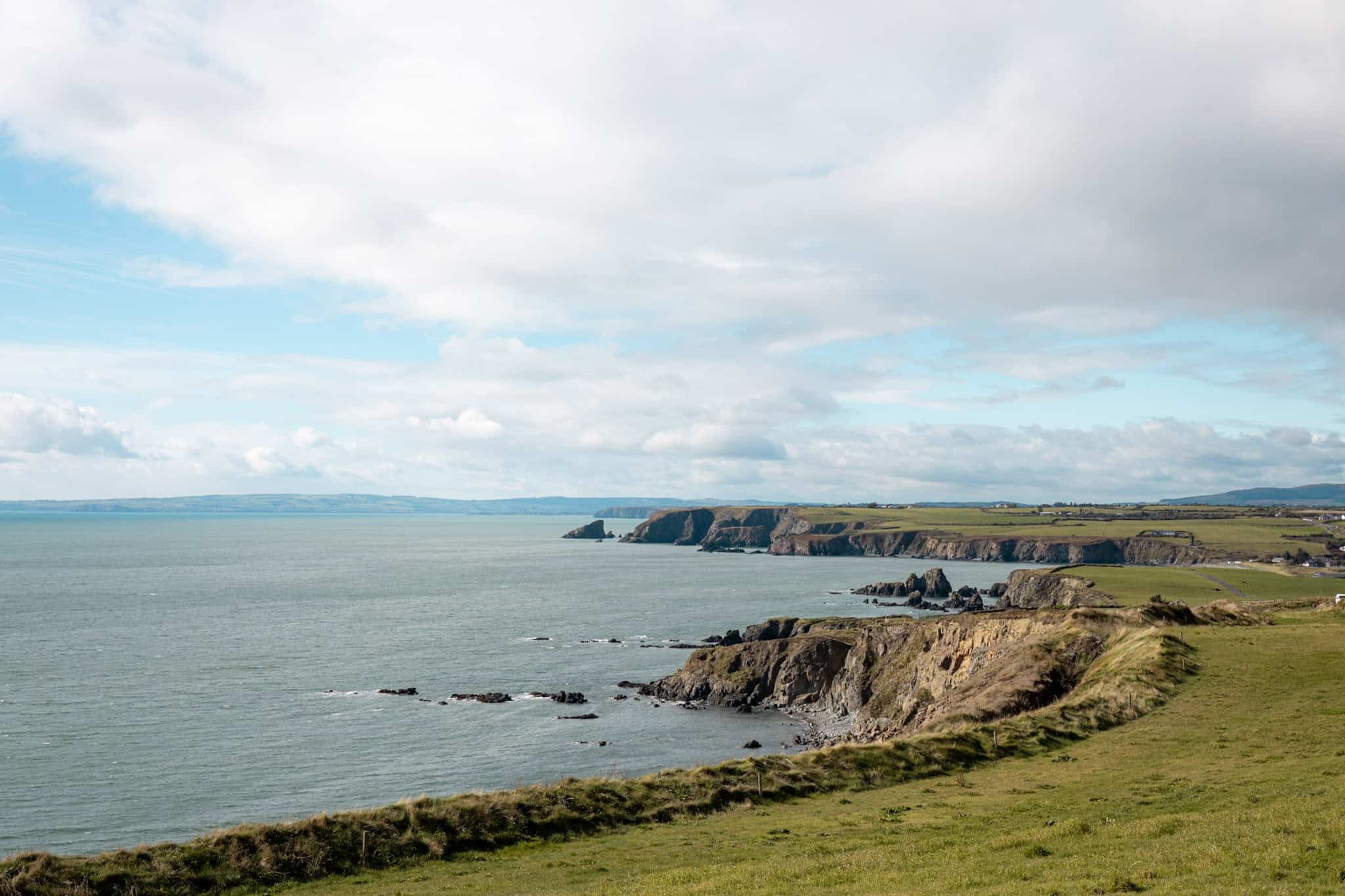
Yes, the Copper Coast is family-friendly, offering plenty of opportunities for picnics, gentle walks, and exploring beaches. However, be cautious along the cliffs and when visiting beaches with rough tides, as these areas can be hazardous for young children.
What is the best season to visit?
The Copper Coast can be visited year-round, but the best time is from April to October, when days are longer, and the weather is more predictable. That said, visiting Ireland in winter has its charm, with quieter spots and dramatic coastal views.
Are there guided tours available?
Yes, guided tours are advertised through the Copper Coast Geopark’s official website, which offers expert-led explorations of the area’s geology and heritage. However, when I tried to book a tour, the system wasn’t working, so I opted for a self-drive instead. Let me know in the comment section below if it worked for you.
Why is it called the Copper Coast in Ireland?
The region gets its name from the 19th-century copper mining industry that thrived here. Remnants of this history, such as engine houses and mining structures, can still be seen along the coastline, particularly at sites like Tankardstown Copper Mines.
How long is the Copper Coast Drive?
The Copper Coast Drive spans approximately 25 kilometres along the R675 between Tramore and Dungarvan. You can explore the route in a single day or half day depending on how long you stop at key sites.
What is the geology of the Copper Coast?
The Copper Coast’s geology is over 460 million years old, showcasing a mix of volcanic rocks, sedimentary layers, and glacial deposits. It provides a fascinating glimpse into Ireland’s ancient past, including evidence of tropical seas, volcanic activity, and tectonic shifts.
Where does the Copper Coast start?
The Copper Coast officially begins in Tramore, a lively seaside town in County Waterford, and stretches westward to Dungarvan, ending in this charming harbour town. But you can start from either end, depending on your travel plans.
Things to Do Near the Copper Coast
If you’re exploring the Copper Coast, you’re in the perfect location to visit some other Ireland’s most iconic and charming attractions nearby. Here are a few suggestions to add to your itinerary:
Saltee Islands
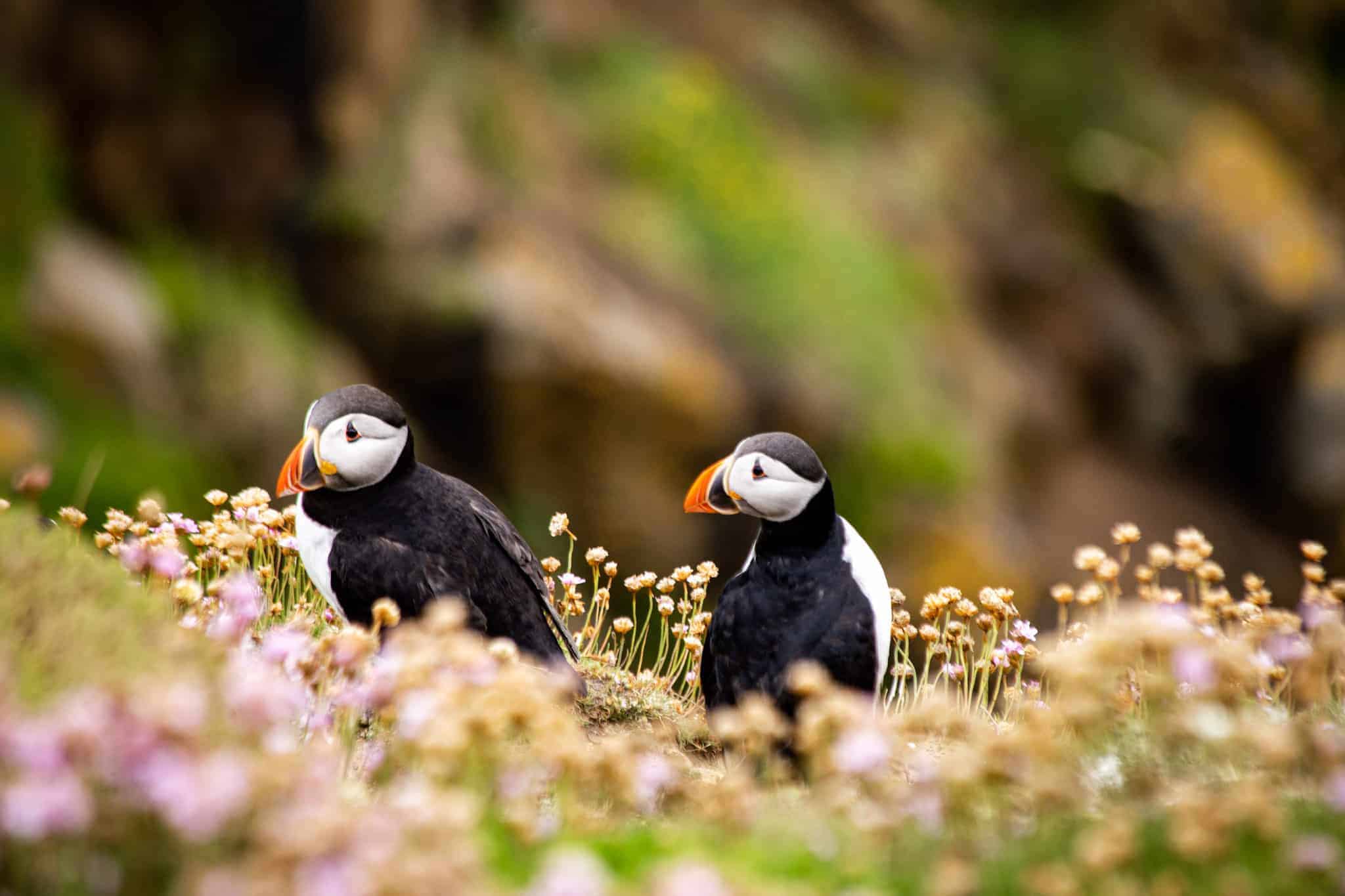
Just off the coast of County Wexford, the Saltee Islands are a haven for birdwatchers and nature lovers. Accessible by boat from Kilmore Quay, the islands are home to puffins, guillemots, and other seabirds, as well as beautiful coastal scenery.
Waterford
Known as Ireland’s oldest city, Waterford boasts a fascinating history dating back to the Viking era. Stroll through the Viking Triangle, visit the Waterford Crystal Factory, and explore the medieval atmosphere of this vibrant and historic city.
Hook Lighthouse
Located on the Hook Peninsula in nearby County Wexford, Hook Lighthouse is one of the oldest operational lighthouses in the world. Climb to the top for stunning coastal views, and don’t miss the visitor centre and café.
Lismore
This charming heritage town in County Waterford is home to Lismore Castle, one of Ireland’s most picturesque castles. Stroll through the castle gardens, wander the riverside walks, and soak in the town’s tranquil atmosphere.
Rock of Cashel
A little further afield in County Tipperary, the Rock of Cashel is a stunning historic site with ancient stone structures, including a round tower and a cathedral, perched on a limestone hill. It’s one of the best castles to visit in Ireland in my opinion.
Exploring the Copper Coast is more than just one of the best scenic drives in Ireland… It’s a day into Ireland’s rich geological and cultural history. If your adventure has sparked a desire to explore even more of Ireland, there are plenty of incredible destinations waiting for you.
If you’re based in Dublin, there are endless opportunities for exciting day trips, whether you prefer going it alone or joining a guided tour. And for those who want to dive deeper into Ireland’s eastern treasures, check out our guide to the best things to do in Leinster, full of ideas for outdoor adventurers, and culture seekers alike.
ARE YOU ON PINTEREST?
What about saving this post to your Pinterest board?
Click on the photo to save this blog post for later. Follow Travel Ireland Today’s boards to see our latest pins.

I help you explore Ireland like a local with insider tips, detailed itineraries, and practical advice.
HEY THERE! I’M JEN…
Funder, Author & Photographer behind travelirelandtoday.com
Ireland has been my home for the last 12 years. Before settling here, I spent years backpacking around the globe, visiting 65+ countries. Along the way, I discovered my love for hiking, photography, and crafting budget-friendly itineraries.
Through this website, I share the best things to do and see in Ireland, detailed hiking guides, and practical tips to help you plan your perfect Irish adventure. Let’s make your trip unforgettable!


This looks like an incredible road trip if I get back to Ireland. I love visiting UNESCO sites. Your photos of the coastline are stunning.
Great post. I am saving for my next visit. We saw a tiny bit of this region on our only visit a few years ago, but I would like to see more. I appreciate the itinerary suggestions.
Loved the itinerary suggestion. We visit last weekend and had lunch in Tramore! Excellent 🙂 great recommendation
We love this thoughtful and thorough guide. There is now a gorgeous quaint cafe in Bunmahon called Gourmet Coffee which serves coffee/ snacks but also yummy ice cream and fish&chips. The Engine House has also had a facelift and provides bar and indoor/ outdoor seating restaurant. This is a great hive of activity for outdoor live music at the weekend.