

Best Things to Do in Connemara on Your Next Road Trip
This website uses affiliate links which may earn a small commission at no extra cost to you. Thank you for your support.
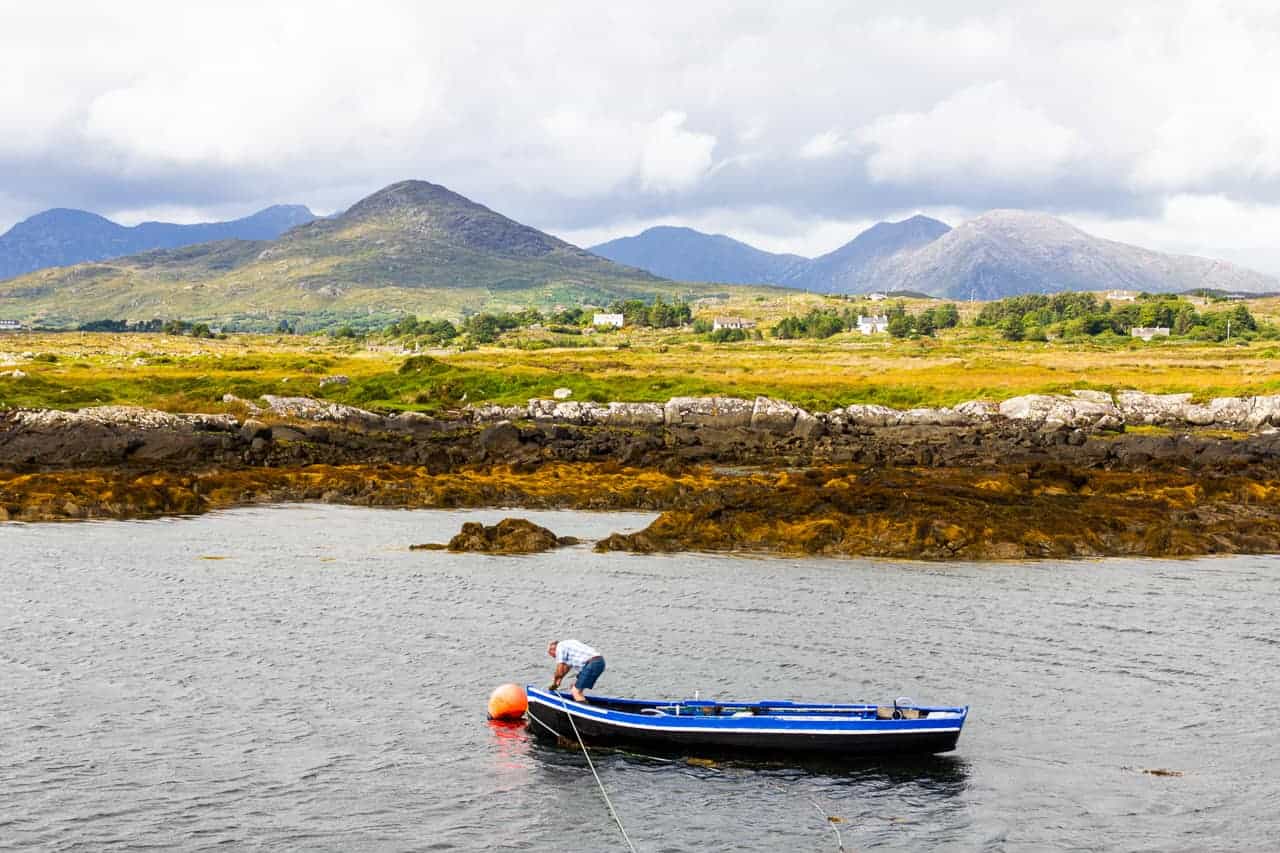
Connemara has to be my favourite place in Ireland. I often escape there for the weekend to relax and explore Ireland’s nature. It’s the perfect spot for chilling, mixing in a few activities, and enjoying more chilling.
My favourite things to do in Connemara include camping by the beach, hiking, visiting new places, and driving around.
Whether you’re passing through or planning to stay in this region for a few days, all I can say is that Connemara is a place to explore. Make sure to take every turn and follow the roads without a destination! For sure, they’ll lead you to stunning beaches, secluded forests and lakes, and impressive viewpoints.
Now, if you need some pointers before going all adventurer more, this complete guide to Connemara is exactly what you need. Based on my own experiences and multiple visits over the last 10 years, I’m sharing all the best things to do, from activities to beaches, hikes, and landmarks.
With over 30 ideas, you’ll have plenty of options to plan your trip to this beautiful, yet not so popular, part of western Ireland.
Are you ready to discover the best things to do in Connemara? Let’s dive in and start planning your adventure!
Access our Connemara Map!
Click on the map and enter your email to access the interactive Google Maps version of our Connemara favourite spots. I have also added a recommended itinerary to follow for a day trip from Galway.
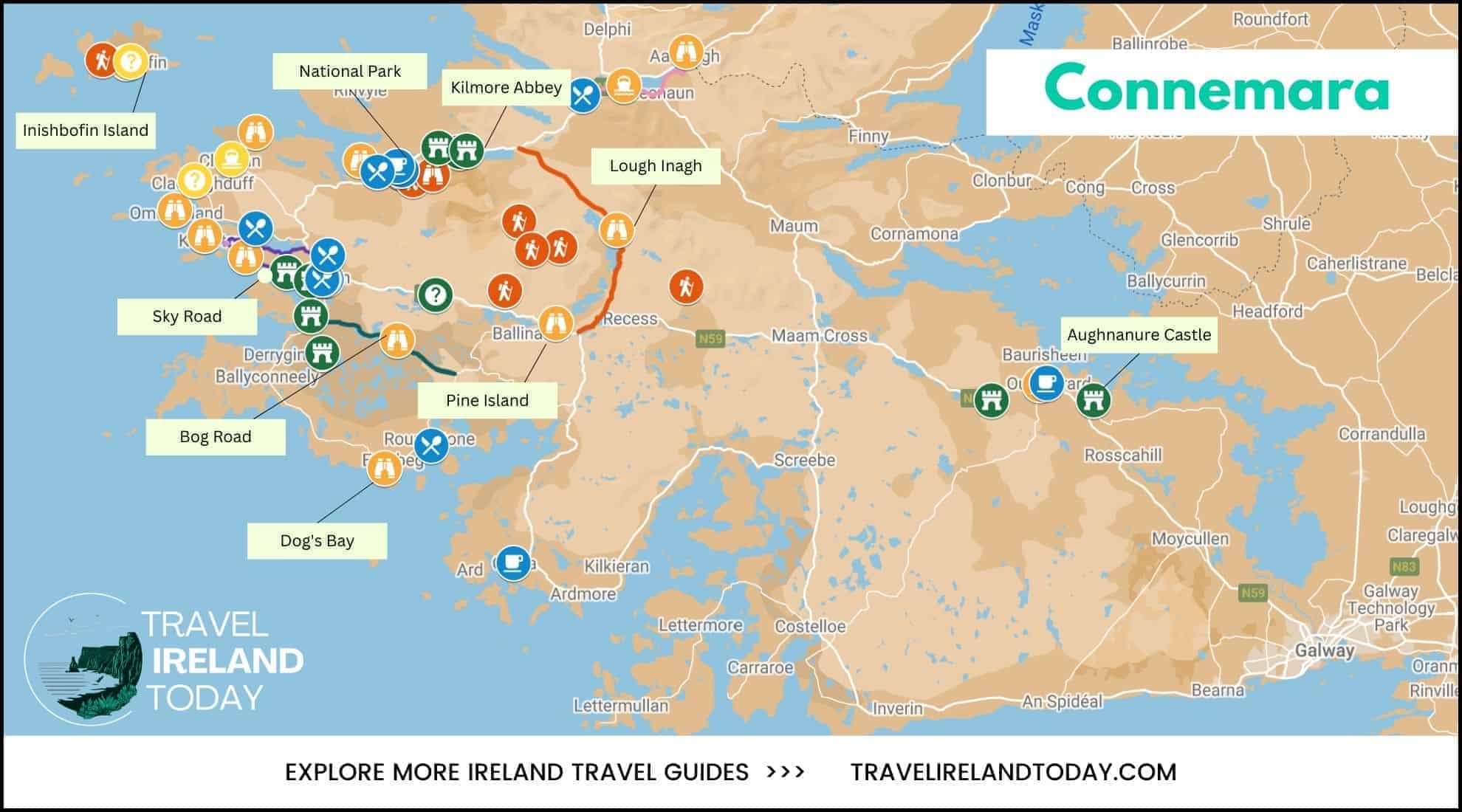
Best things to do in Connemara
Connemara National Park
Let’s start the list with the Connemara National Park. Established in 1980, the park spans approximately 2,000 hectares of scenic mountains, expansive bogs, heaths, and rich grasslands.
Located in the heart of Connemara, this national park is home to several walking trails such as Diamond Hill, accessible to hikers of all levels, as well as unmarked footpaths for more experienced trekkers.
Connemara National Park is accessible from Letterfrack, year-round, with free entry. The visitor center is a great place to start where you can access a free exhibition and watch a 20 minute film about the National Park. You will also find a playground, outdoor picnic areas and a café serving delicious scones and homemade soups!
Hiking in Connemara National Park

Ellis Wood Nature trail
A short loop walk (500 m) going through woodland It is part of the Tree trail and feature a beautiful waterfall. Easy – Dogs allowed on lead –
Diamond Hill
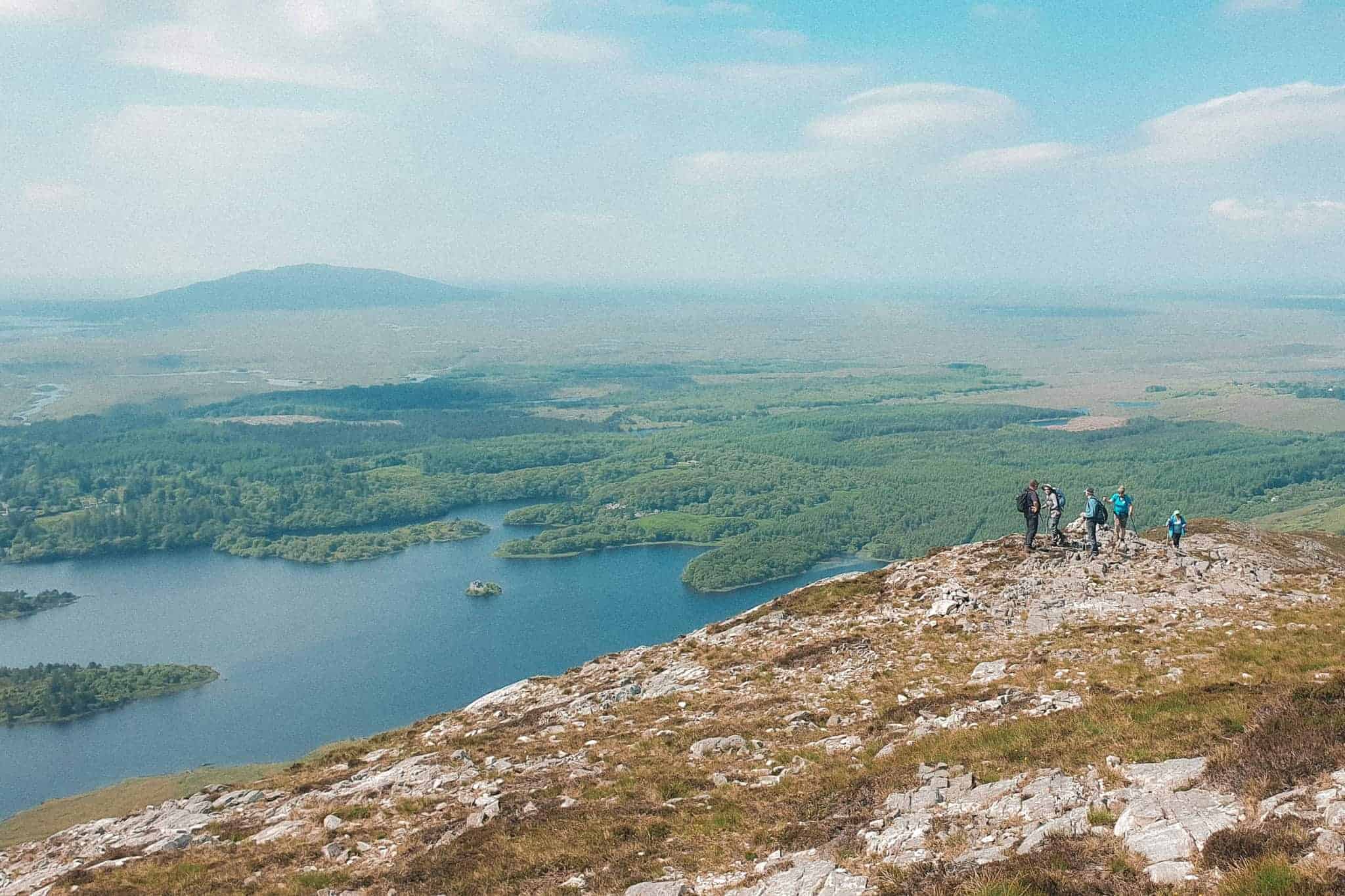
There are 2 routes you can take: the lower (3km) or upper (3.7 km). If you are hoping to get to Diamond hill summit, I would suggest to make a loop that includes both trails. Start on the lower trail then turn left onto the upper circuit.
When you have completed that upper loop via Diamond Hill summit, turn left at the crossing with lower trail and complete that loop. That’s about 7km during which you will get to enjoy incredible views of the Twelve Bens and Kylemore Abbey from above.
Sruffaunboy Trail
It offers nice views of Diamond Hill and Ballynakill Harbour. Although, if you hike to Diamond Hill summit, I don’t think this trail offers much. Easy – 1.5km loop.
Pss! I put together a guide to hiking in Connemara National Park to share all of our insider information with you.
Explore Kilmore Abbey

Kilmore Abbey is a stunning Gothic Revival monastery established in 1920 by Benedictine nuns. Originally built in 1868 by Mitchell Henry as a romantic gift for his wife, this fairytale-looking castle is a marvel of architecture and history.
The €17 entry fee deterred me several times. However, in July 2024, I finally went inside, and I can tell the grounds and gardens are genuinely worthwhile.
Do I think €17 is still quite expensive? Yes, but that’s how prices are in Ireland lately. Though, my understanding is that the earnings are used to maintain the abbey, which is indeed exquisite, and build new infrastructures for the nuns.
👉 Website – Open 7 days a week from 10am to 6pm
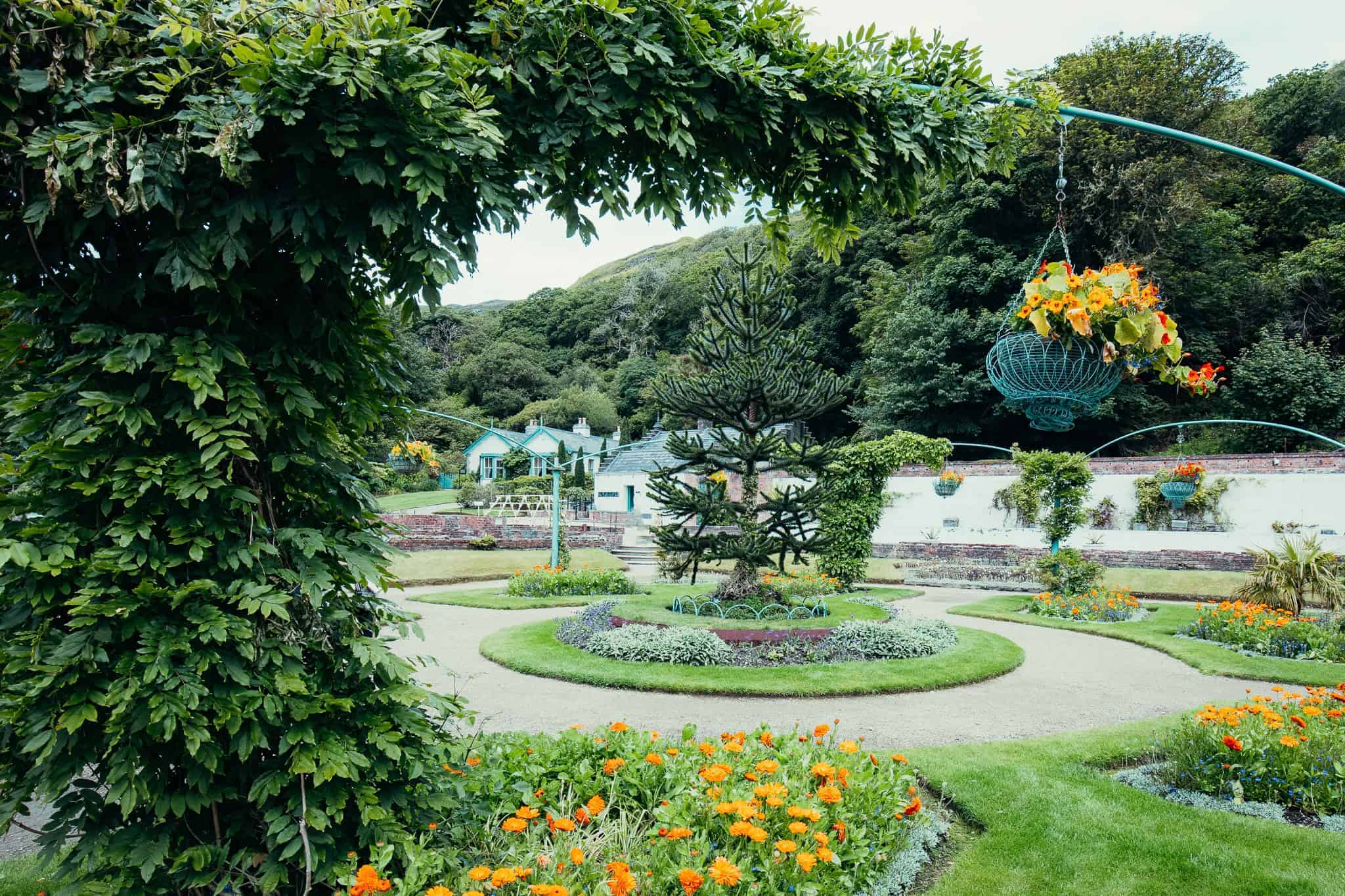
One of the highlights of visiting Kilmore Abbey is exploring the Victorian Walled Gardens. These meticulously restored gardens, covering six acres, showcase a variety of native and exotic plants. There is also a farm with two pigs and three Connemara ponies.
💡If the entry fee isn’t for you, you should still stop at the free car park and enjoy the stunning view from a small wooden bridge. If it isn’t too windy, you’ll get a picture-perfect reflection of the abbey in Pollacappul Lake. On a rainy day, the fog and low clouds create a spooky atmosphere that’s worth experiencing.
Drive the Sky Road
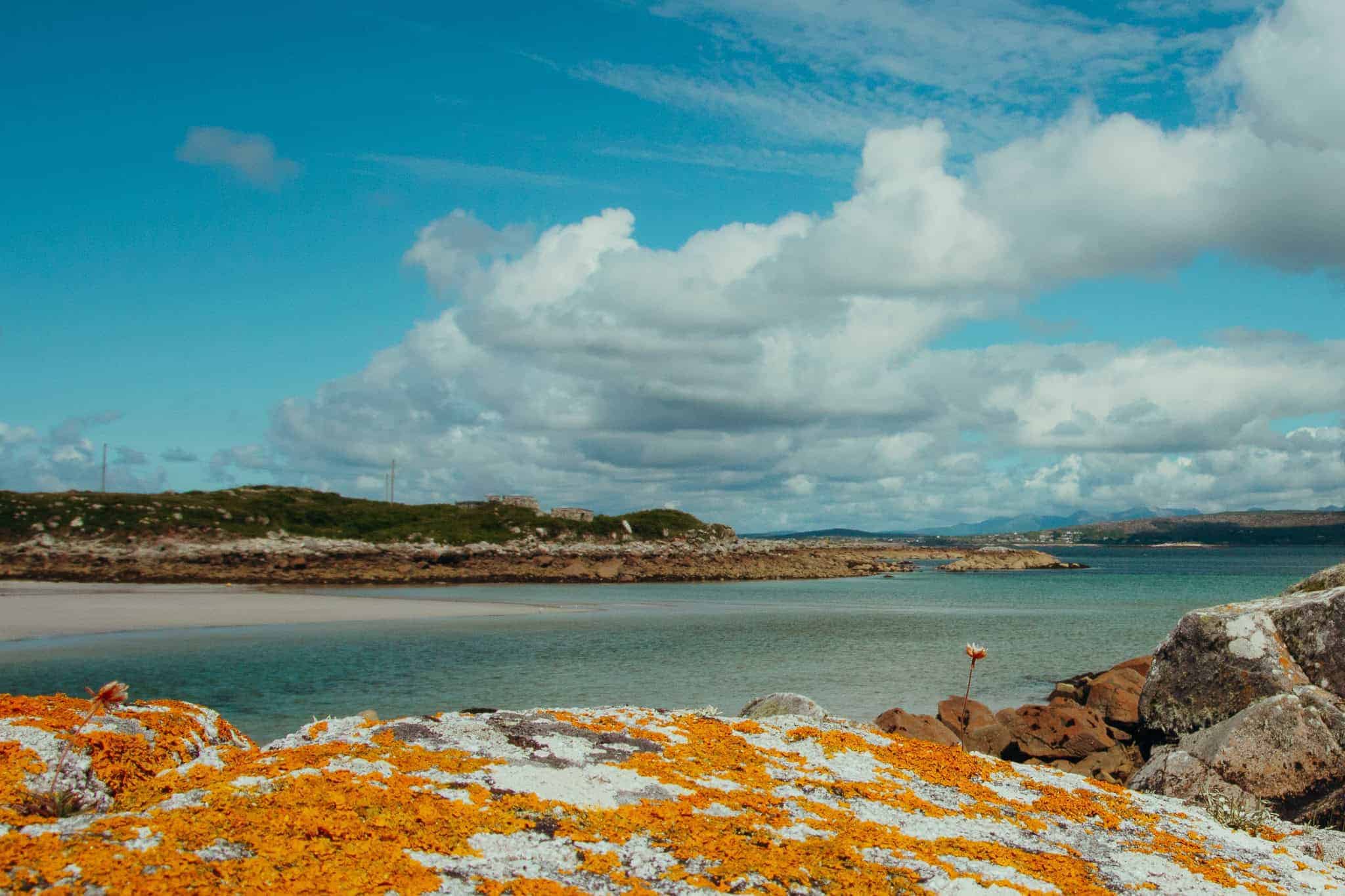
The Sky Road is one of Ireland’s most scenic coastal routes. This 11-kilometre (7-mile) loop starts from Clifden and offers breathtaking views of the Atlantic Coastline.
You can choose to take the upper or lower sky road. Both offer views of the ocean, but the upper one is especially popular for its bird-eye view perspectives. Driving along Sky Road, you’ll come across several areas where you can stop and take photos.
In addition to the scenic views, the Sky Road loop includes several points of interest, such as Clifden Castle, dedicated to John D’Arcy, the founder of Clifden. You can also drive to the western part of the Sky Road for a break at Eyrephort Beach, a hidden gem worth a detour.
Discover Clifden Town & Castle
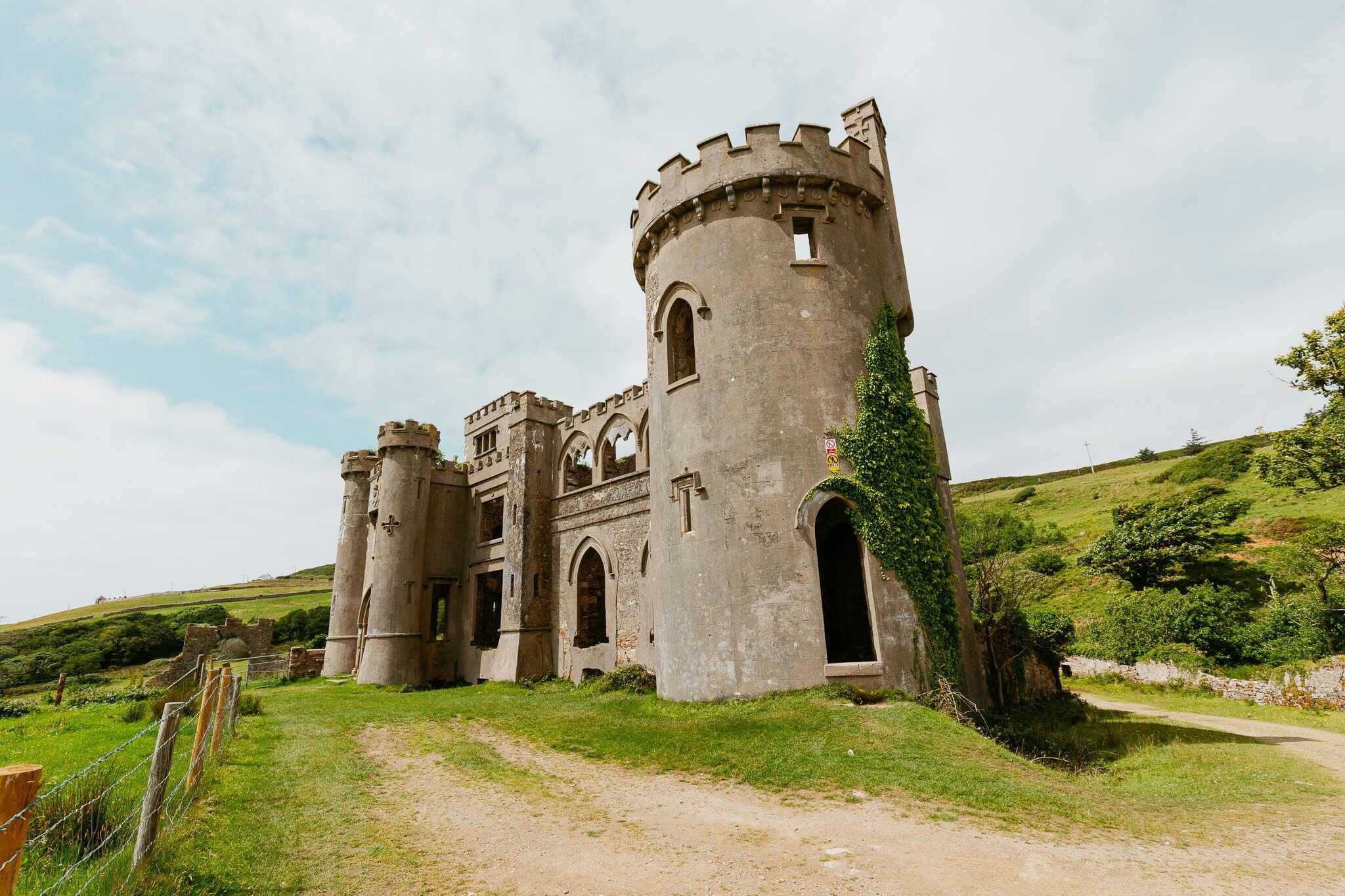
Often referred to as the “Capital of Connemara,” Clifden is a charming town that serves as a base for exploring Connemara over long weekends. Nestled between the Twelve Bens Mountain range and the Atlantic Ocean, its colourful shopfronts, cosy cafes, and traditional pubs and restaurants are worth a stop (especially for their Seafood Chowder!)
One of the main attractions in Clifden is Clifden Castle, located just a short distance from the town centre along the Sky Road. Built in 1818 by John D’Arcy, the founder of Clifden, this Gothic Revival castle now stands in picturesque ruins, offering a fascinating glimpse into the past.
It takes about 20 minutes to walk there, and while it isn’t the most amazing castle ruin you might see in Ireland, the view on the walk is worth a stop in itself.
💡Although the castle is in ruins, visitors can still explore its remains. The castle’s grounds are open to the public and accessible via a leisurely 20-minute walk. There is a small car park (fits about 8 cars) at a junction (easy to miss).
The town also hosts several festivals throughout the year, including the Clifden Arts Festival and the Connemara Pony Show.
Photograph Pine Island
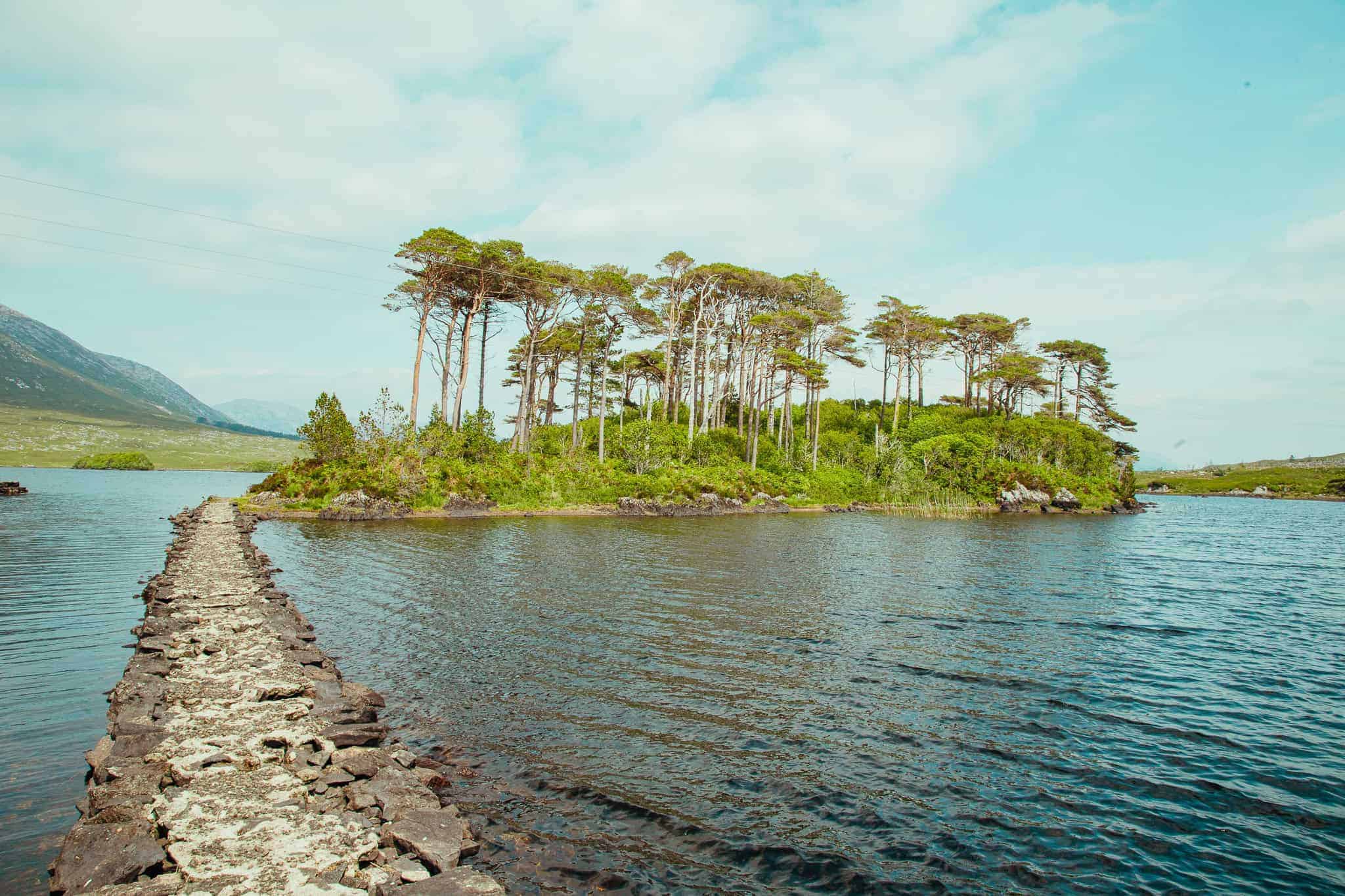
This has to be one of the hidden gems that have made the top-rated Instagram images in the last 2 years. This small, tranquil island is known for its dense pine trees, contrasting against the mountainous background and the surrounding waters.
Accessible by a short stone passageway, you can walk around the island on narrow trails through the pine forest.
The island’s setting makes it a popular spot for photography, especially when the waters are really calm and the trees reflect themselves in Derryclare Lake.
💡About 6 km east of Clifden towards Pine Island, visit the Connemara Heritage and History Centre to learn more about the region’s rich history and cultural heritage.
Go for a walk (or swim) in Dog’s Bay
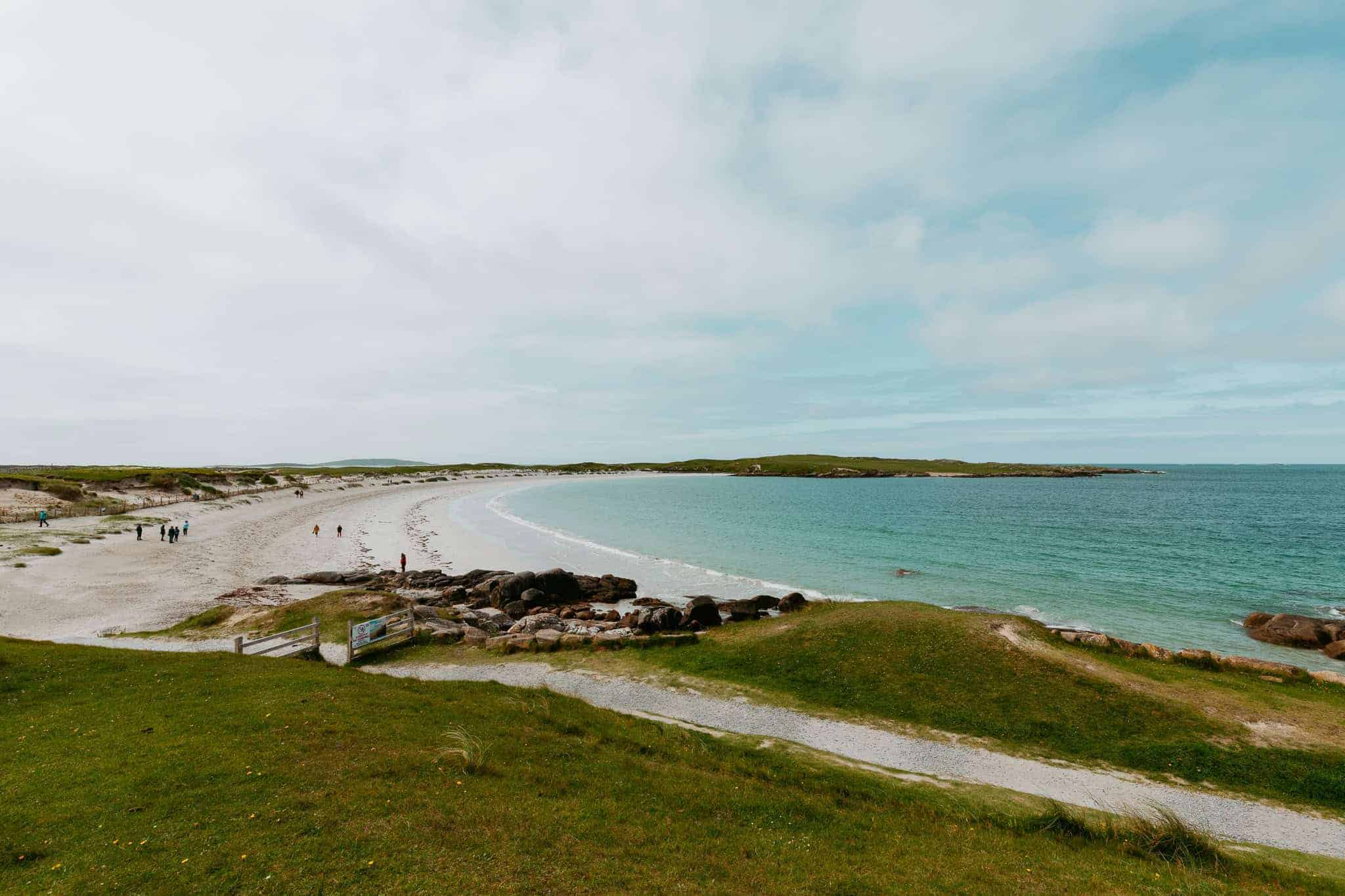
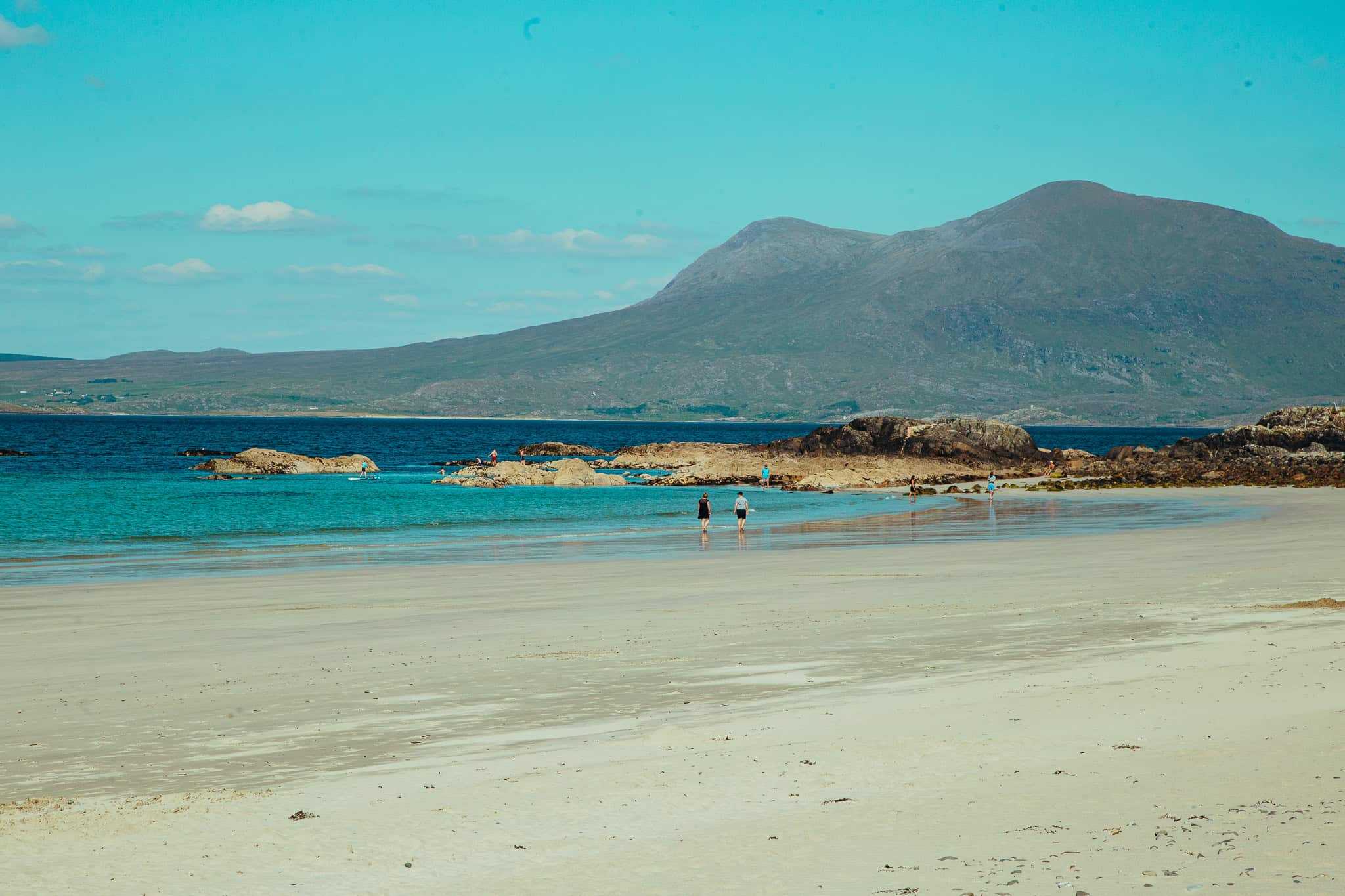
Dog’s Bay, just outside Roundstone in Connemara, is a stunning crescent-shaped beach unlike anywhere else in Ireland. Made entirely from crushed seashells rather than rock, the sand here is bright white and soft, perfectly contrasting the turquoise water and green hills behind. On a sunny day, it genuinely looks tropical.
The beach lies on a narrow strip of land (a tombolo) with Gurteen Bay on the other side. You can walk from one to the other using the marked passway across the dunes (do no climb the fences).
Swimming is popular here thanks to the sheltered bay and gentle waves, though there are no lifeguards, so caution is still important. Water sports, such as kayaking and paddleboarding, are also excellent options.
Beyond the beach, the area is ecologically and geologically rare, home to delicate machair vegetation found only in parts of Ireland and Scotland. It’s important to stick to marked paths, avoid stepping on the dunes, and leave no trace.
If you’re up for a peaceful walk, a refreshing dip, or just want to lounge with a view, Dog’s Bay is a must-see. And if you’re lucky, you might even catch Jimmy’s Handmade Ice Cream open at the car park!
My favourite place: The Bog Road

Strangely enough, this has to be one of my favourite parts of Connemara. Probably because the first time I visited, I cycled around for 3 days, and I have fond memories of cycling along the bog road surrounded by sheep and singing “The Rattling Bog”.
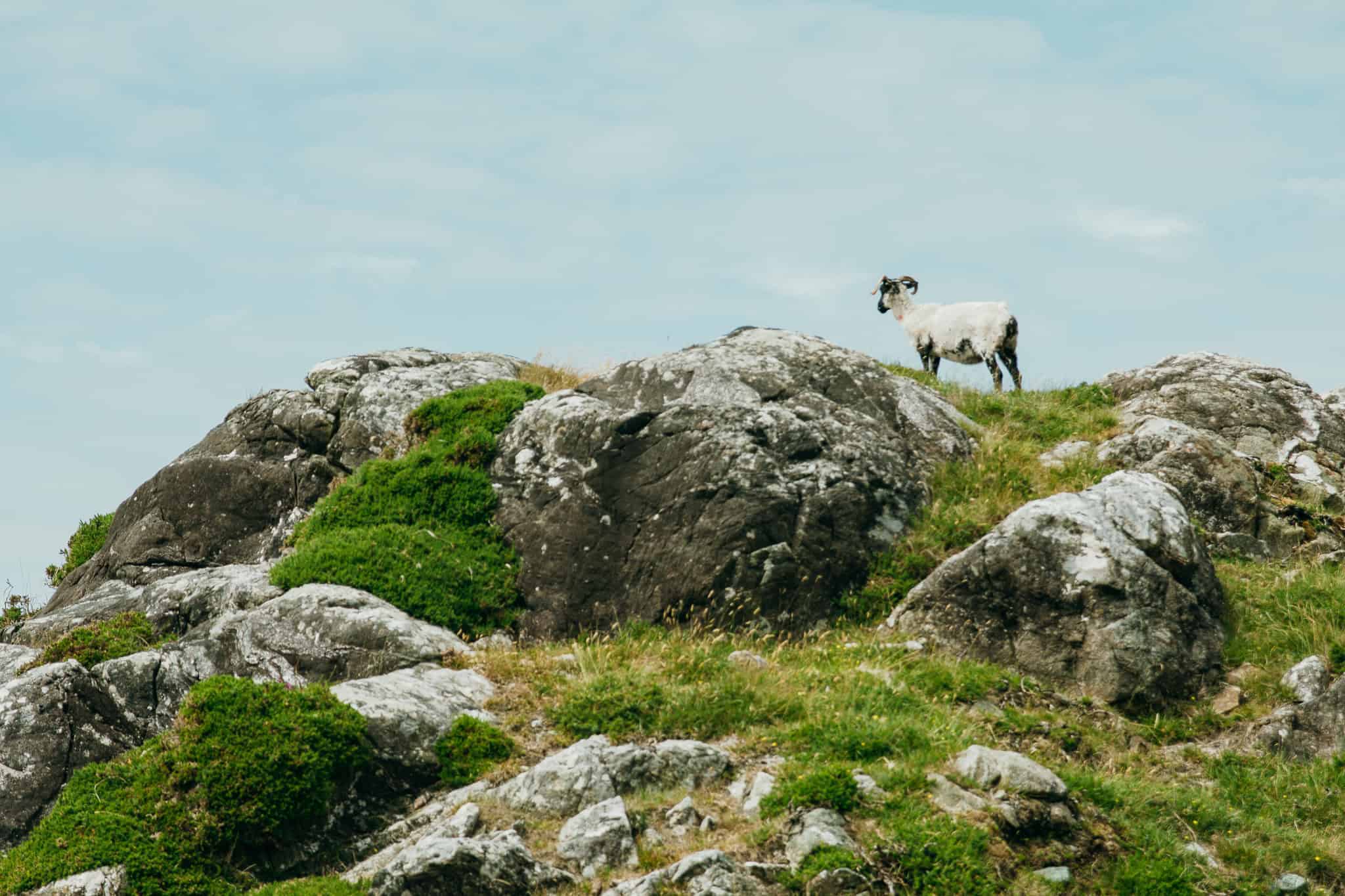
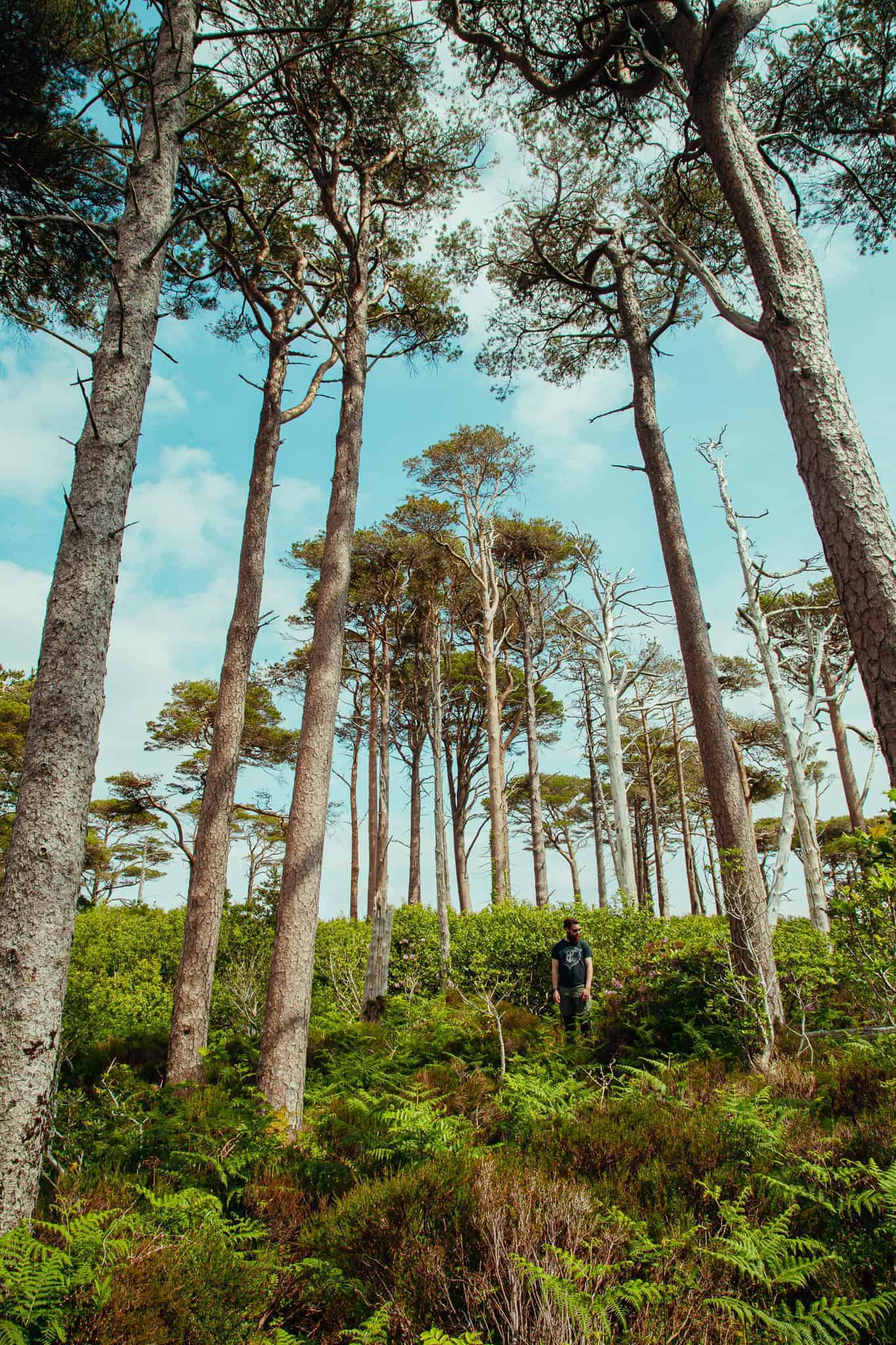
This is indeed a country road that is rarely used by visitors, who prefer either the national road to Clifden or the coastal route via Roundstone. While both options are totally good, the Bog Road, in my opinion, is home to what Connemara is really about. Bog, lakes and sheep!
Officially known as the R341, that drive starts about 3 km from Derradda West and ends in Ballinaboy, only a kilometre from the Sky Road entrance.
Driving along the Bog Road is a journey through a landscape that has remained largely unchanged for centuries. The road winds through vast stretches of bogland, where you can see peat, or turf, has been harvested from these bogs for generations, and it was used as a fuel source in many local homes.
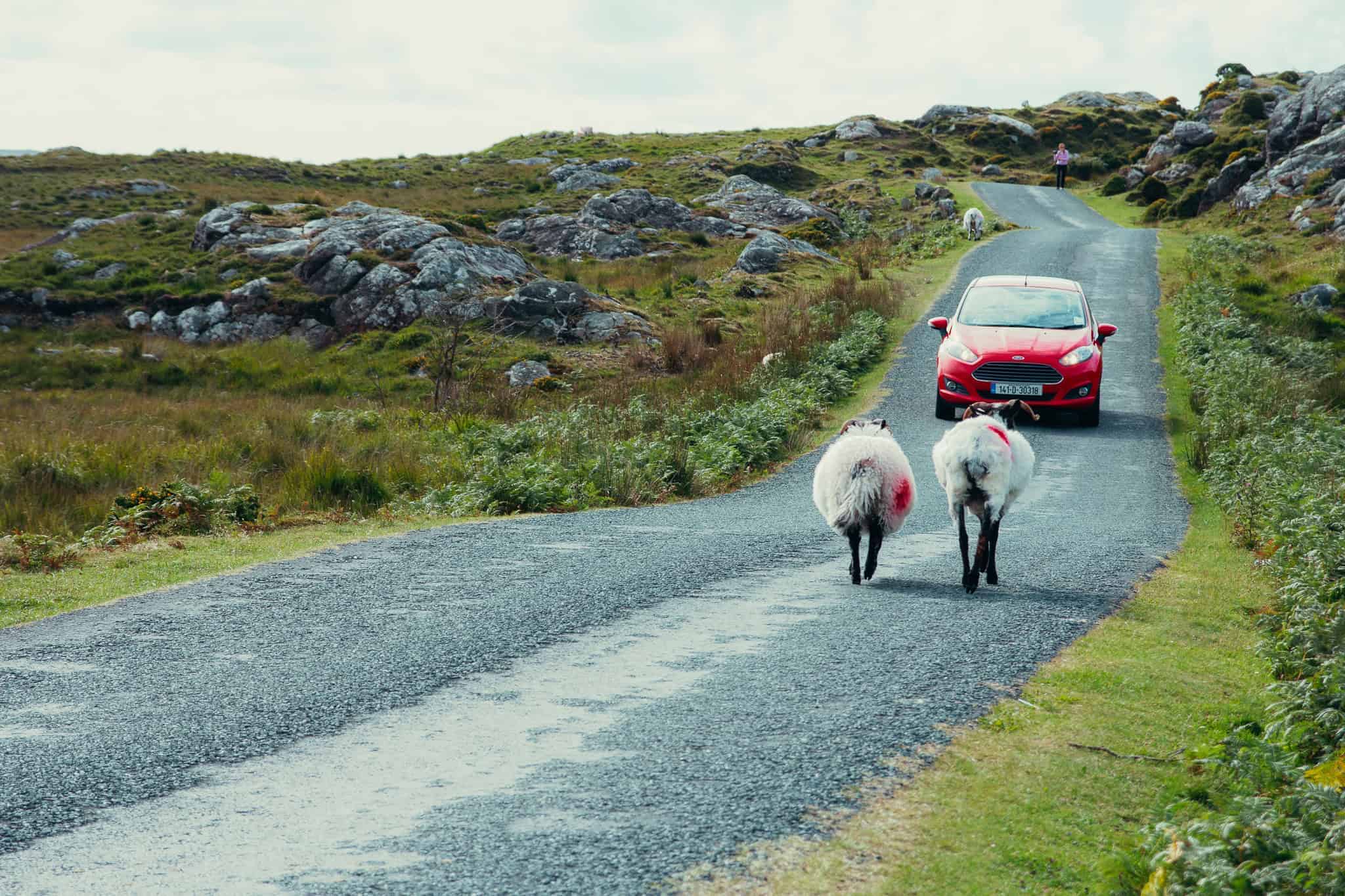
The beauty of the Bog Road lies in its simplicity and raw natural charm. The landscape is dotted with patches of heather and wildflowers, and you will definitely spot sheep grazing freely along the roadside.
Along the Bog Road, there are several points where you can pull over and take in the scenery. While there isn’t any official trail, you might be able to walk around in some areas to get beautiful views of the Twelve Bens.
Just be careful where you walk (holes might be hidden by grass) and be aware not to trespass onto private properties.
Alcock and Brown landing site
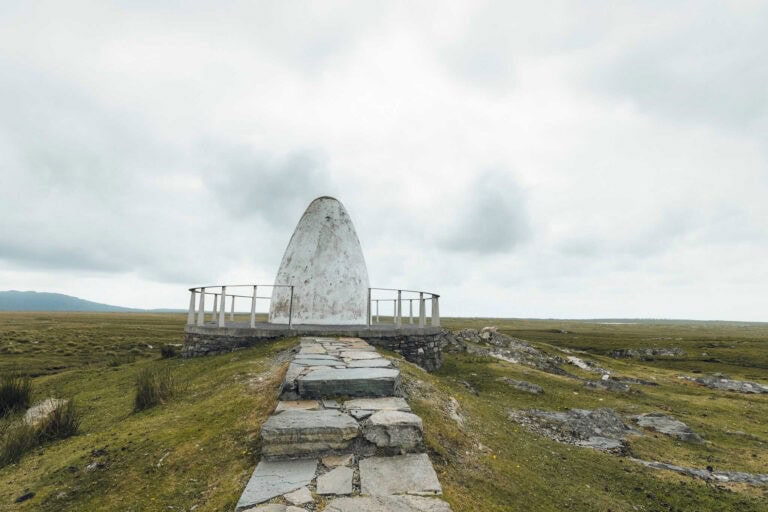
The Alcock and Brown landing site is a historical landmark located near Clifden. This site marks the spot where British aviators John Alcock and Arthur Whitten Brown completed the first non-stop transatlantic flight on June 15, 1919.
Their groundbreaking journey began in St. John’s, Newfoundland, and ended in a bog near Clifden, marking a monumental achievement in aviation history.
Do not confuse this spot with the Alcock and Brown Memorial found on the sky road (though, also worth a quick stop!)
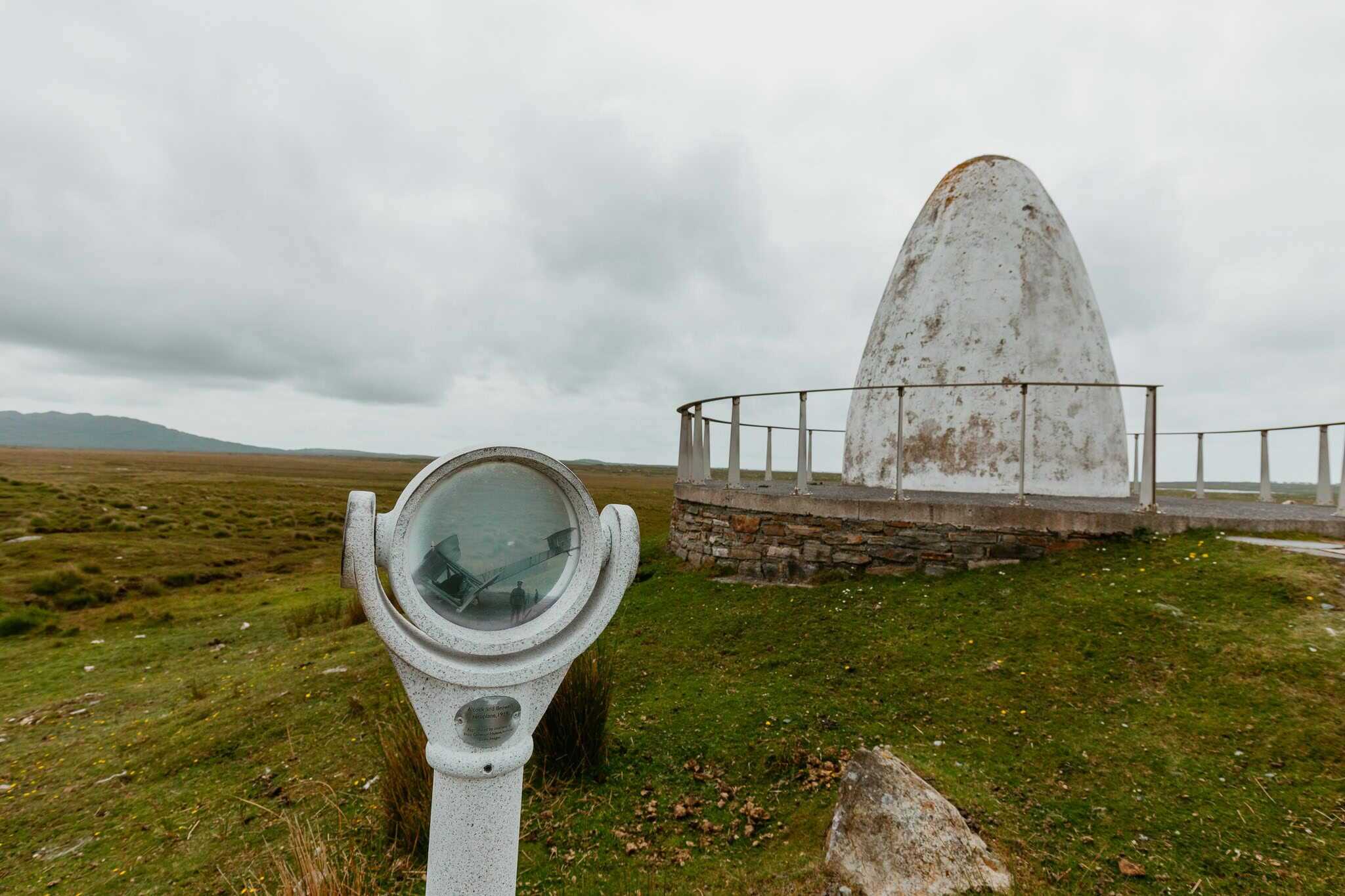
Today, the actual landing site is accessible only on foot, via a well-maintained 5 km loop known as the Marconi Wireless Station Trail. Don’t be thrown off by the name; the trail overlaps with the site of the historic Marconi Station, which played a crucial role in early transatlantic communication.
The walk itself is scenic and atmospheric, taking you across open bogland rich with history. In the past, you could drive directly to the beacon marking the landing site, but now the path is pedestrian-only, winding past interpretive signs, historical markers, and remnants of the original Marconi buildings, including the condenser house, powerhouse, and social club.
Allow approximately 1.5 to 2 hours to complete the loop, especially if you pause at the viewpoints to read the informative displays along the way. Several viewing installations offer glimpses into the past, complete with archival photos and descriptions, all thoughtfully integrated into the rugged scenery.
Even if you aren’t too much into the history of the place, it is one of the only flat trails where you can walk or cycle across a bog, surrounded by local sheep, with incredible views of the Twelve Bens. Worth it just for the views!
Hike the Twelve Bens
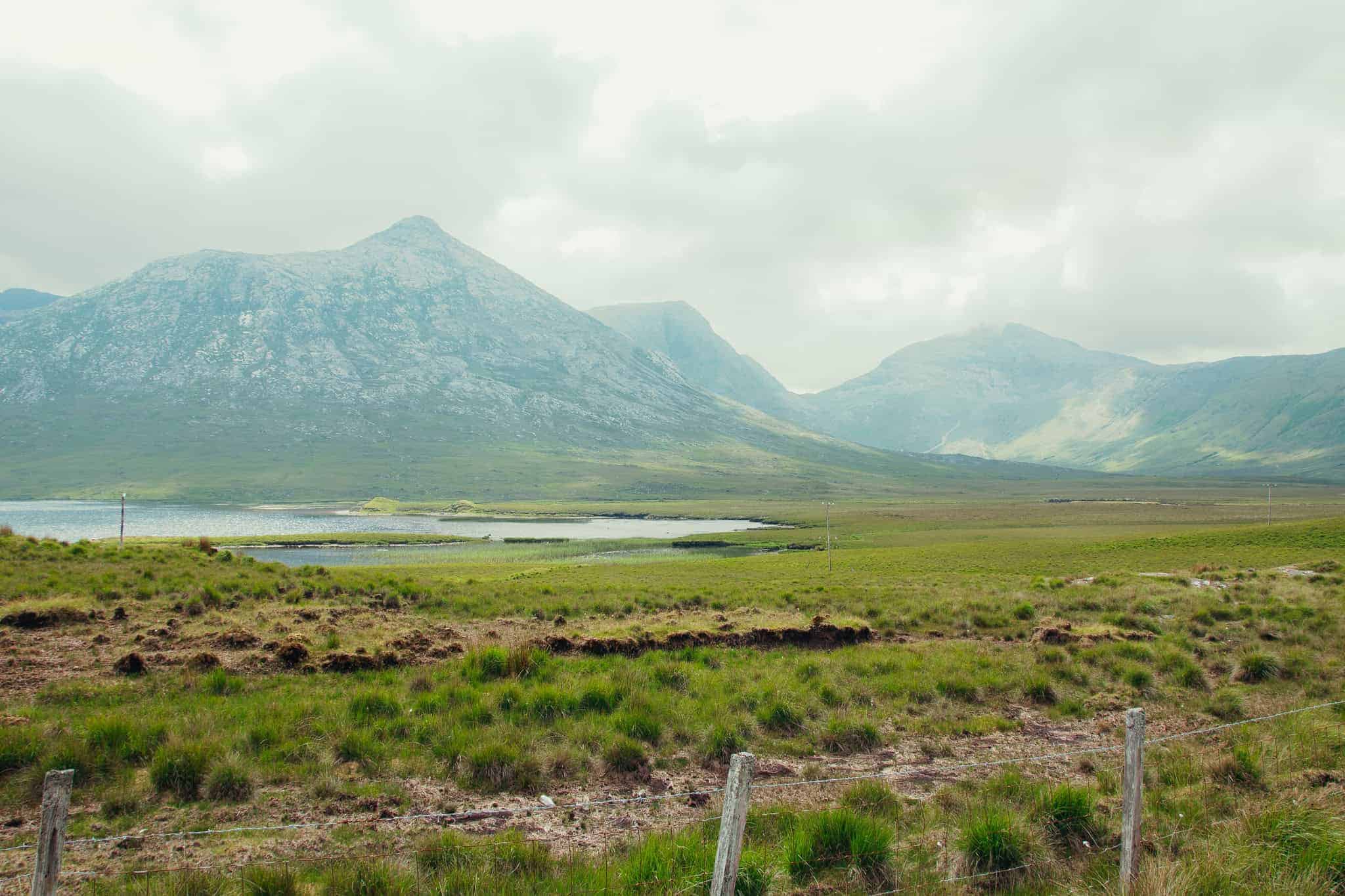
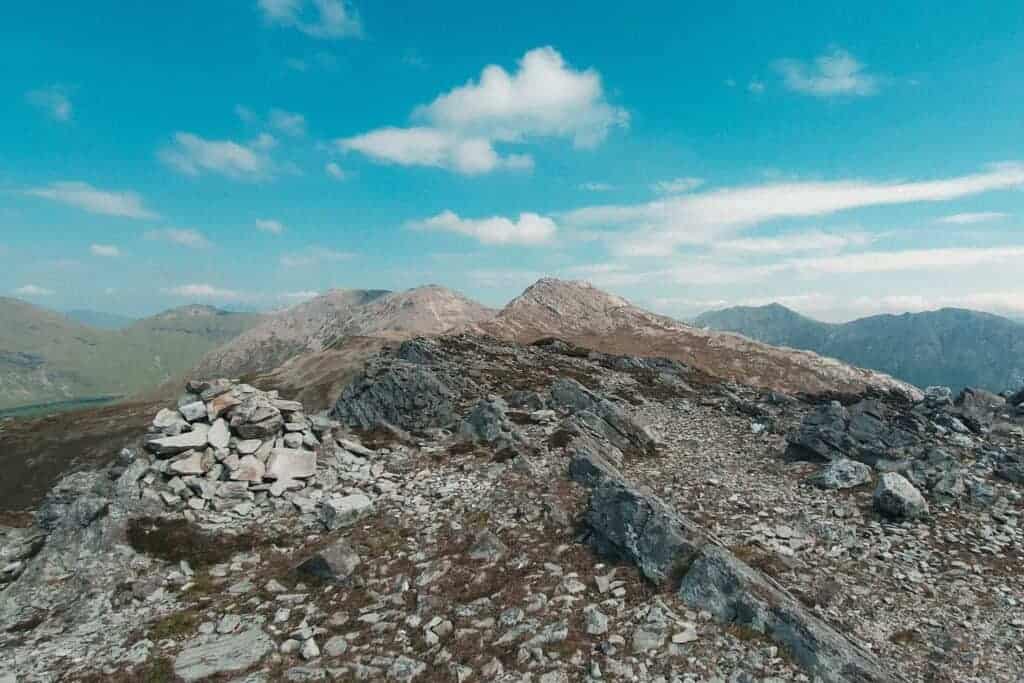
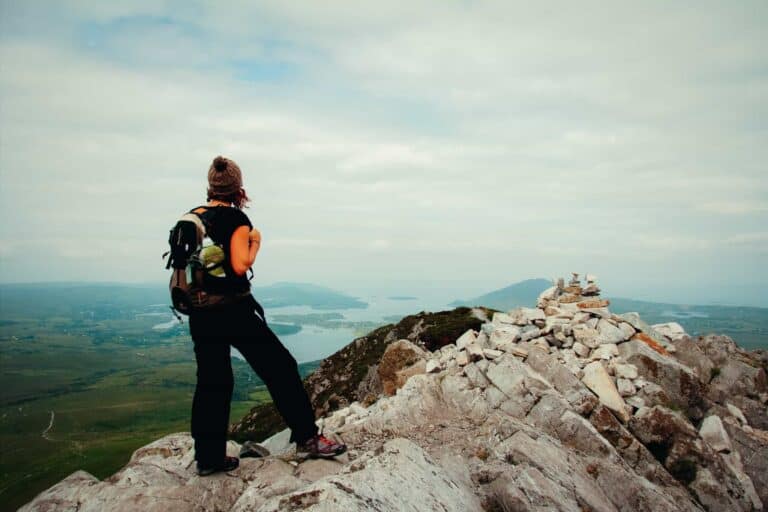
The Twelve Bens, also known as the Twelve Pins, are the mountain range that dominates the Connemara landscape. These peaks are a hiker’s paradise, offering some of the most challenging and rewarding climbs in Ireland.
As their name suggests, they comprise twelve distinct peaks. The range’s highest point is Benbaun, standing at 729 meters (2,392 feet). Here are some of the main hikes up the Twelve Bens you may be interested in.
Benbaun
Benbaun is the highest of the Twelve Bens and a popular choice for hikers. The ascent typically begins from the village of Glencorbet, with a well-trodden path leading up through the valley. The summit provides a panoramic view of Connemara, including the Atlantic coastline and the other peaks in the range.
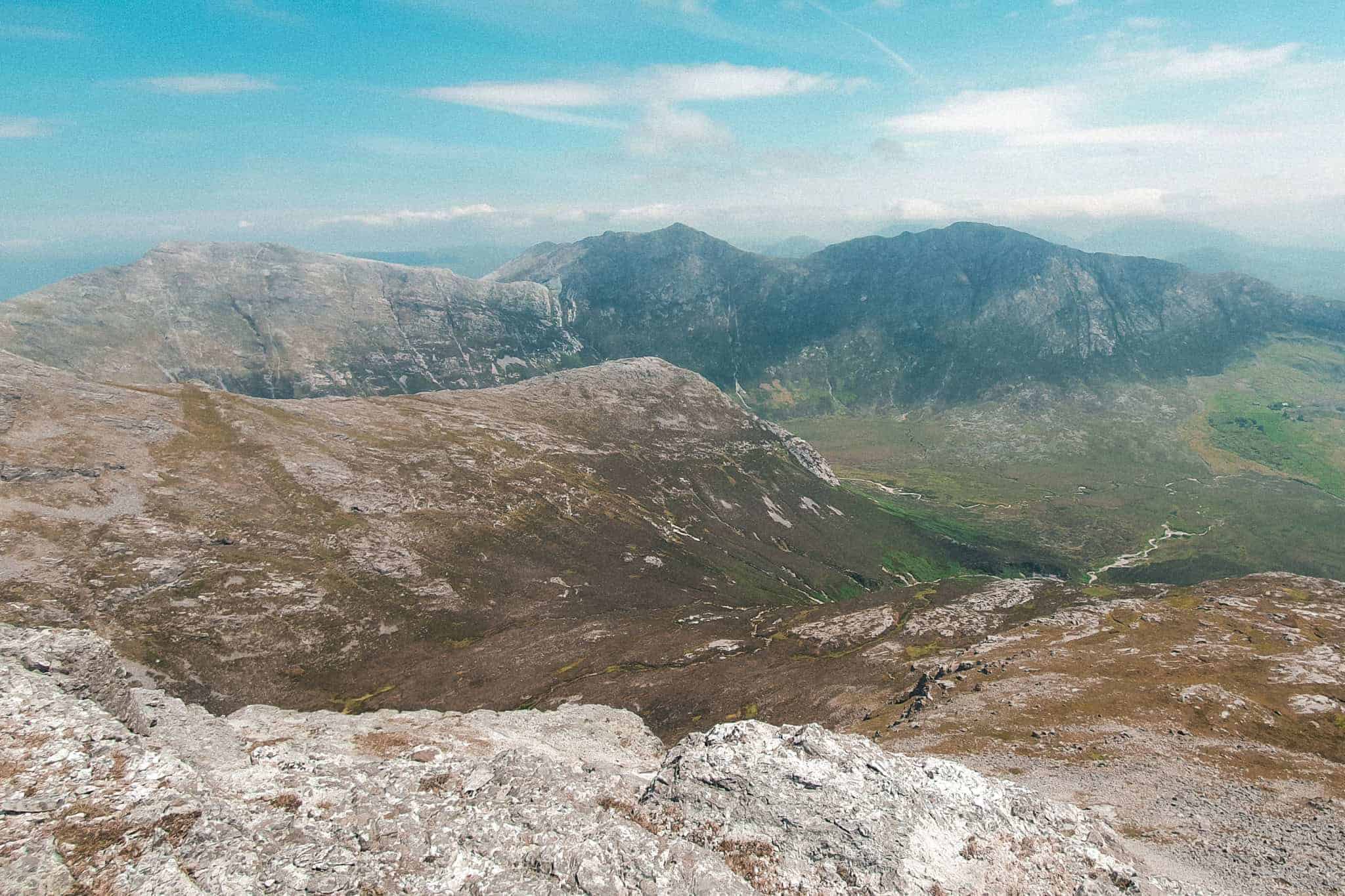
Bencorr and Bencollaghduff
A classic route in the Twelve Bens is the traverse from Bencorr to Bencollaghduff. This hike is known for its challenging ridges and spectacular views. Starting from the Maumina Pass, the route takes you over rocky terrain and steep inclines.
Derryclare and Knocknagussy
For those seeking a slightly less strenuous hike, the ascent of Derryclare and Knocknagussy offers a rewarding experience. Starting from the Inagh Valley, this hike takes you through varied terrain, including grassy slopes and rocky outcrops.
The Glencoaghan Horseshoe
The Glencoaghan Horseshoe is one of the most challenging routes in the Twelve Bens. This loop takes in six of the range’s peaks, including Benbaun, Bencollaghduff, and Bencorr. The hike is long and strenuous, typically taking 8-10 hours to complete.
Ben Lettery
Ben Lettery is an accessible peak in the Twelve Bens, suitable for intermediate hikers. The trailhead is located near the Ben Lettery Hostel, and the route follows a well-marked path to the summit. Once at the summit, you can continue to Bengower.
🥾 Practical Information – Hiking the Twelve Bens
Hiking in the Twelve Bens requires good preparation. Weather conditions can change rapidly, so it’s essential to bring appropriate clothing, footwear, and navigation tools.
The trails aren’t especially well-marked, so you will need a GPS (or a map & compass) as well as a good level of fitness and hiking experience. You can use Apps like Alltrails to follow the right path.
Drive at low tides to Omey Island
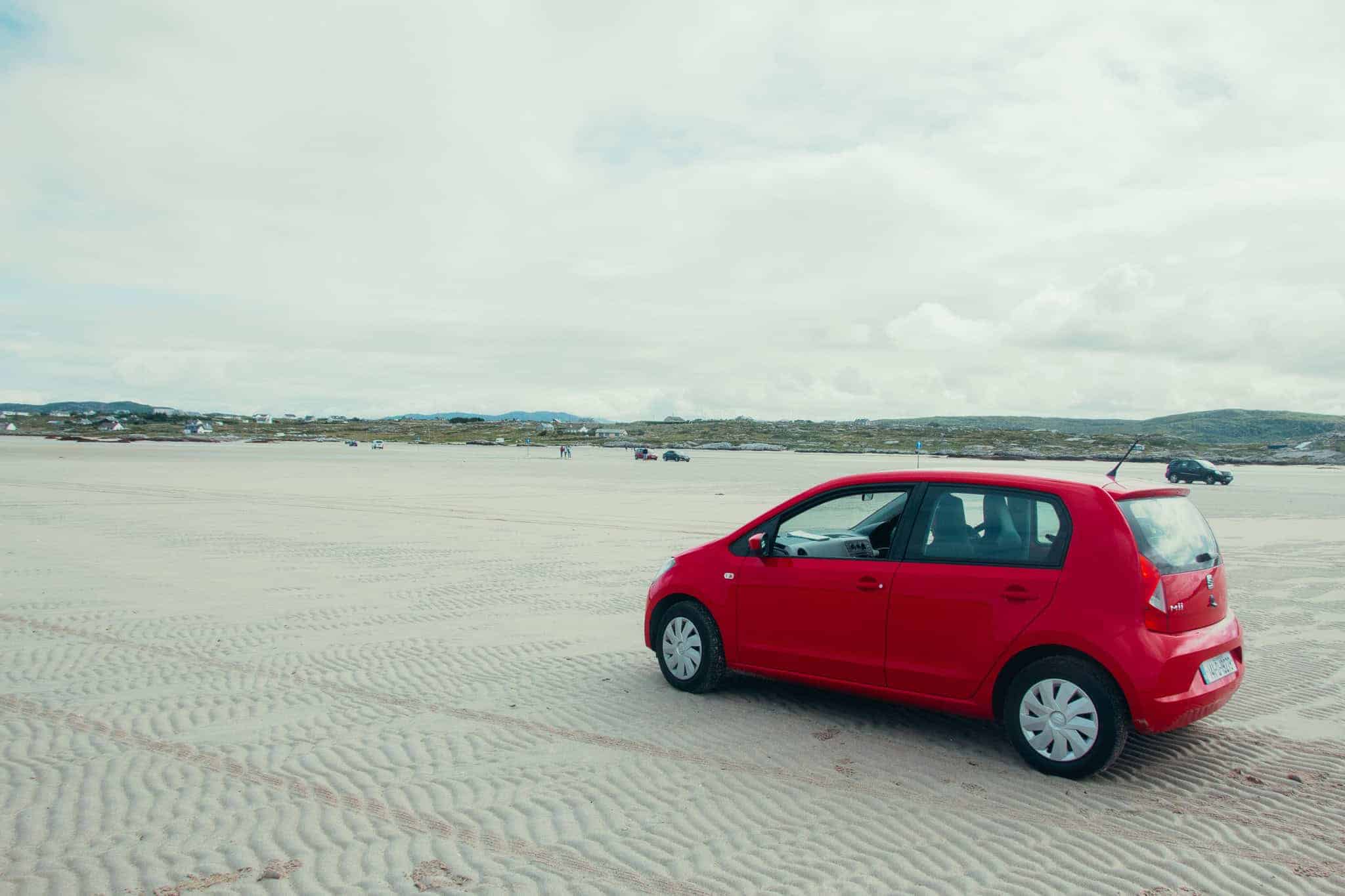
This tidal island is only accessible at low tide via a sandy causeway from Claddaghduff. This means you need to be organised and prepared, or you may have to spend a few hours waiting until the next low tide, if you don’t return to the mainland on time.
Generally speaking, you should have between half-tide and half-tide to get there and back, so make sure to read the tide chart properly (also available at the car park). If you aren’t sure how to read them, stop at Sweeney’s shop-bar, where the staff can help you out.
On the island, you will find the remains of St. Feichin’s Church, a 7th-century monastic site. You might as well spot some Otters at the lake; pretty random! Other than that, there isn’t much to do. The fun is mostly driving on sand at low tide!
Chill in Inishbofin
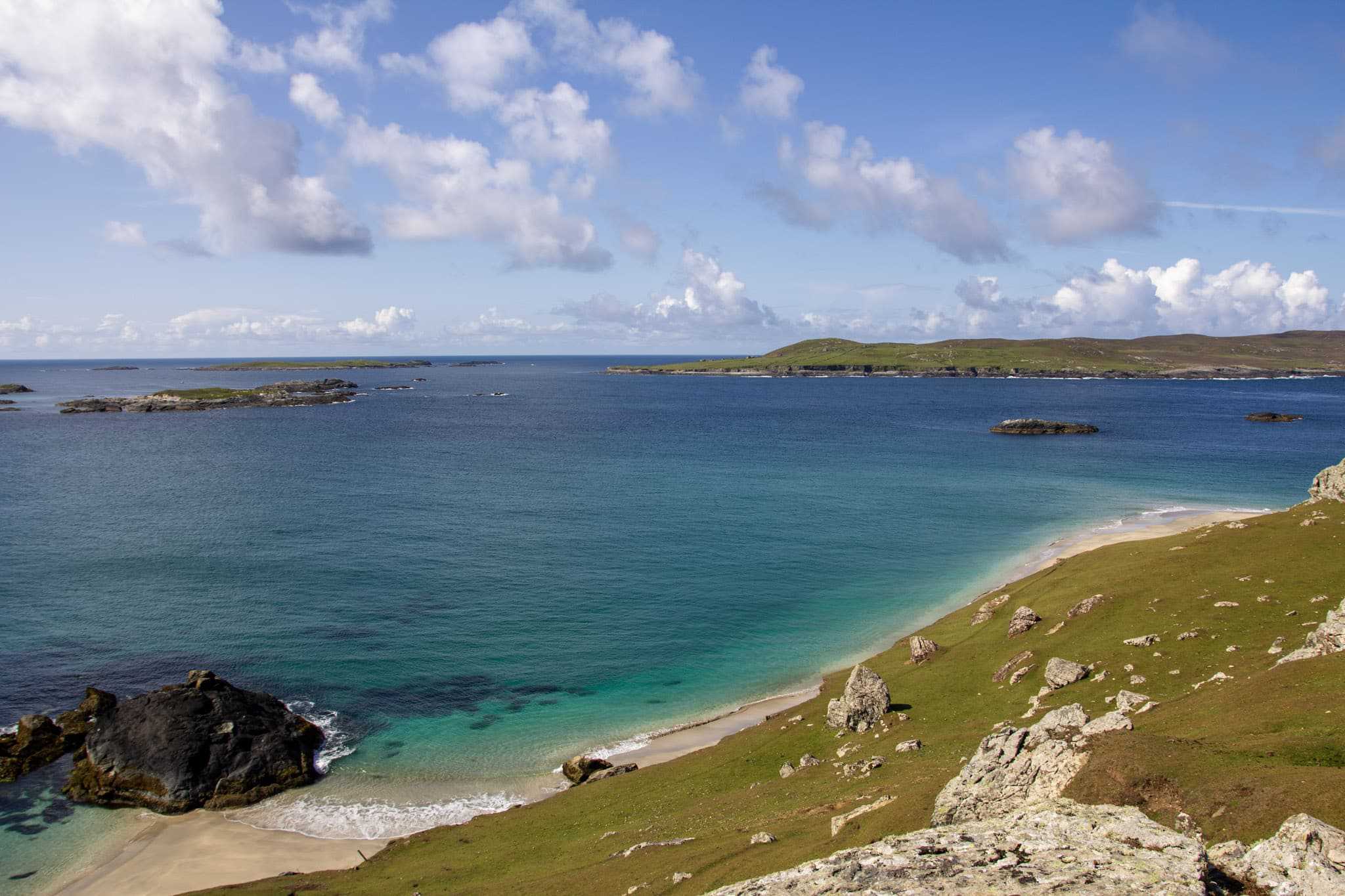
Accessible by a ferry from Cleggan 2 to 3 times a day (in summer), the island is as peaceful as it gets. Although you will spend the night on Inishbofin and you will quickly discover how lively it can be, with local pubs often hosting live sessions of traditional Irish music.
During the day, hikers will highly enjoy exploring Inishbofin’s scenic walking trails. My favourite of all must be the Westquarter Loop Walk, which overlooks incredible sandy beaches and is quite easy for an afternoon stroll.
You can also rent a bike and explore the island at your own pace.
In the summer, I highly recommend going snorkelling, paddleboarding, or kayaking. The water is crystal clear which is a delight to anyone who enjoys the sea. You can bring your own equipment, but I believe the Beach also rent SUPs from June.
Lough Inagh
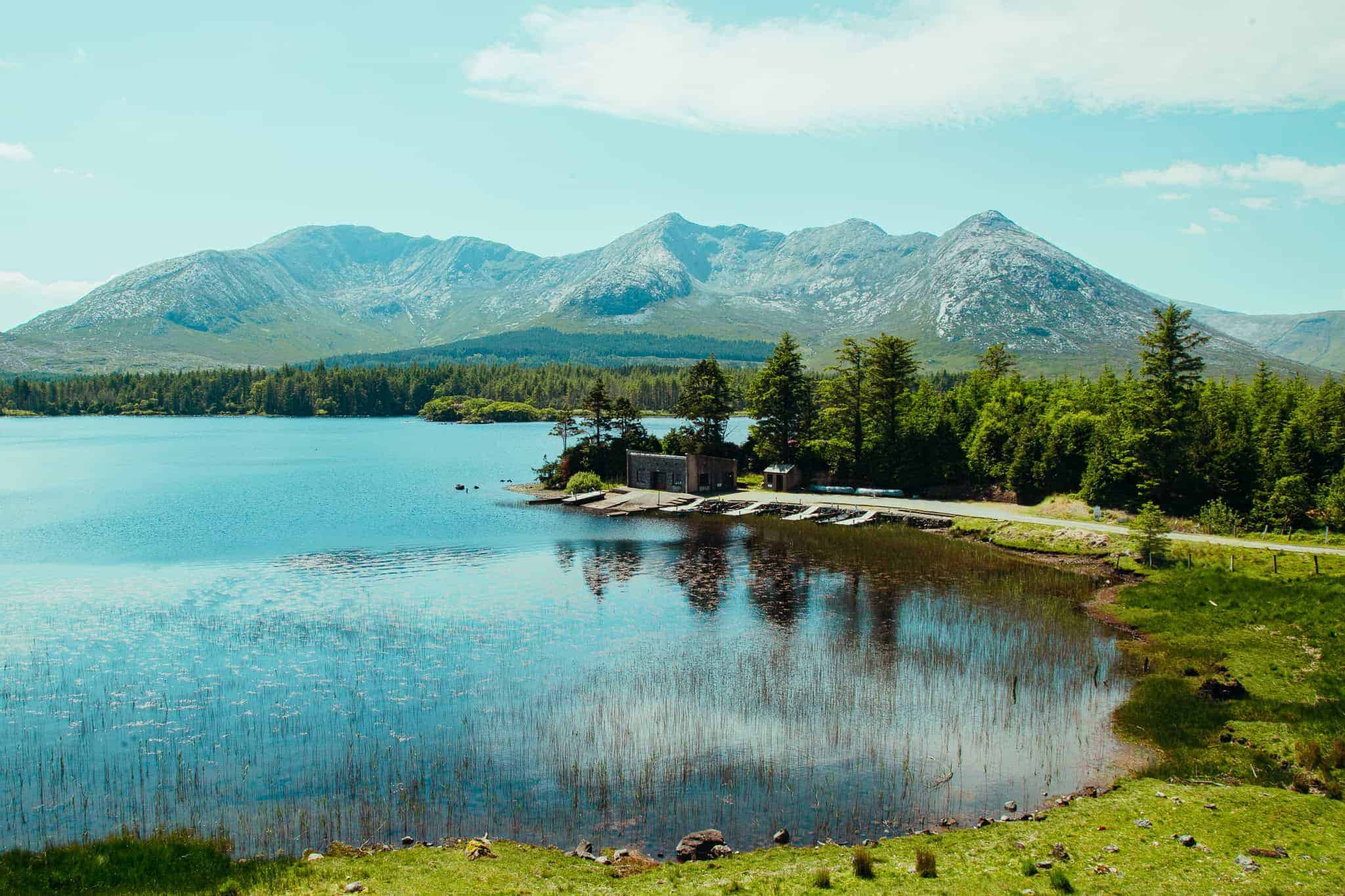
You probably won’t find this one on any other blog about the things to do in Connemara, but this is probably my favourite scenic road in Ireland! Most visitors would probably avoid this road, but if there is a place you have to see, it’s the R344.
This road follows Lough Inag, a gorgeous lake surrounded by the majestic Twelve Bens mountain range. There isn’t much to do here, to be honest, but on a clear day, the views are just astonishing and well worth stopping to take photos.
👉 This road is also a shortcut if you come from Galway and are heading to Kylemore Abbey, so make sure include it to your next trip to Connemara!
Killary fjord

Killary Fjord is Ireland’s only fjord. It stretches 16 kilometres (10 miles) from the Atlantic Ocean into the heart of the Connemara mountains.
Dramatic landscapes surround the fjord, with the Mweelrea mountain range to the north and the Maumturk and Twelve Bens ranges to the south.
Popular activities include boat tours along the fjord, looking for wildlife such as dolphin pods. There are also several trails that offer stunning views of the fjord, like the Killary Fjord Famine Walk.
Nearby, you can pop by the Aasleagh waterfall (technically in Mayo – but right at the border with Connemara) or the Doolough Valley.
👉 I have covered several things to do at Killary Fjord in my “Doolough Valley Drive” dedicated article. Have a look!
Go to a Traditional Sheep Dog Demonstration
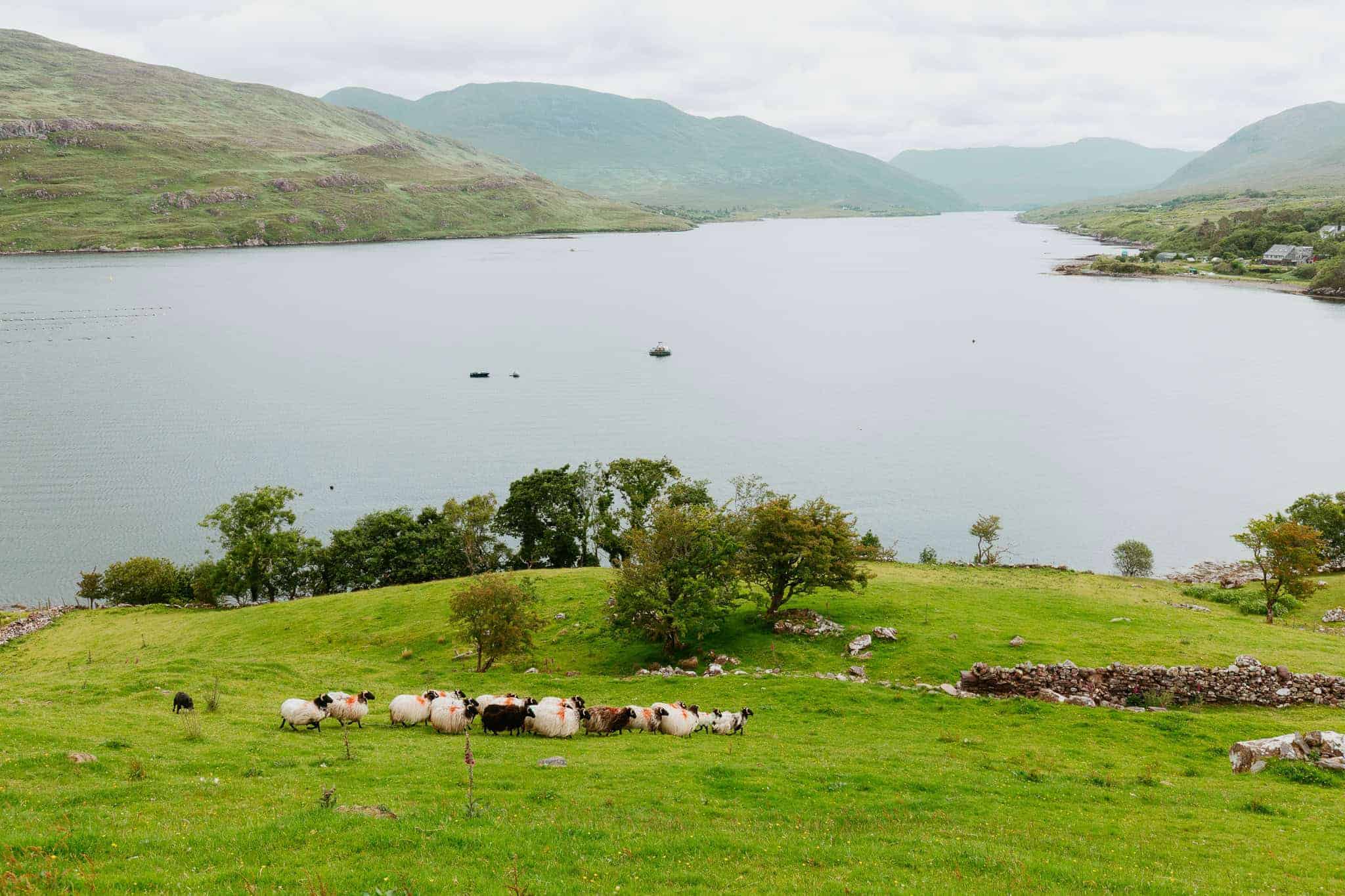
One of the most unexpected and memorable experiences in Connemara is to attend a traditional sheepdog demonstration at Killary Sheep Farm. They run the demonstration three times a day at 11 a.m., 1 p.m., and 3 p.m. and it’s worth making time for.
The demonstration starts with the farmer showcasing how he commands his sheepdog, often from hundreds of meters away. It’s genuinely impressive to see the dog respond to subtle voice commands or whistles, even when it’s 150–200 meters across the hills. Sometimes the sheep have a mind of their own and escape, which only adds to the fun; watching the dog regroup the flock is all part of the show!
After the herding, we got to see a live sheep shearing. Using traditional hand shears, the farmer clipped the wool with surprising speed and skill; something I wasn’t expecting at all. We even got to touch the fleece afterwards, which was soft, warm, and full of texture.
But the real highlight? Bottle-feeding the lambs. Yes, they let visitors feed baby lambs with milk bottles; an adorable and heartwarming moment that made the whole experience unforgettable.
If you’re in the area, this is definitely something to add to your itinerary. It’s fun, educational, and gives you a deeper appreciation for the farming traditions of the region.
You can book online on their website. Though you cannot book on the day, if you turn up ahead of time, they will just ask you to book online, choosing the next day. No bother!
If you don’t have your own car, you can of course book this tour of Connermara from Glaway that includes a stop at the farm.
Other things to do in Connemara
Glengowla mines
Located near Oughterard, the Glengowla Mines offer a unique glimpse into 19th-century silver and lead mining. Guided tours take you through hand-dug tunnels, showcasing mineral formations and quartz crystals. Above ground, the museum features mining history and equipment, while gold panning demonstrations provide hands-on fun.
Aughnanure Castle
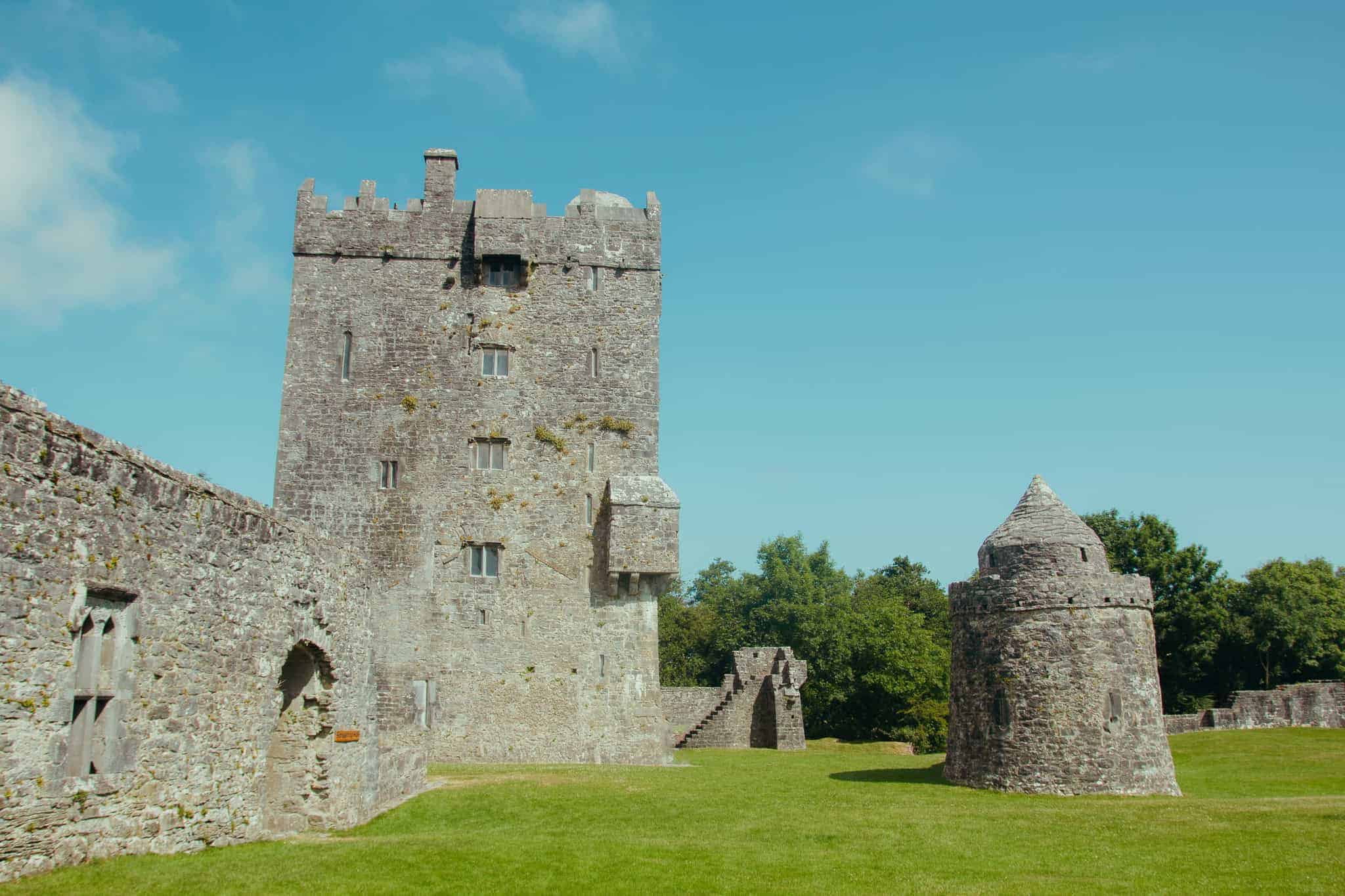
This well-preserved 16th-century Irish tower house is open to visitors who can explore its towers, dungeons, and banquet hall. The castle’s picturesque setting by the Drimneen River was one owned by the O’Flaherty clan who ruled west Connacht for 300 years.
Oughterard
This small town is usually skipped despite being the “Gateway to Connemara”. I personally find this village rather charming, especially the old bridge and the area around the river. Very cute and worth a quick stop!
Look for Connemara pony
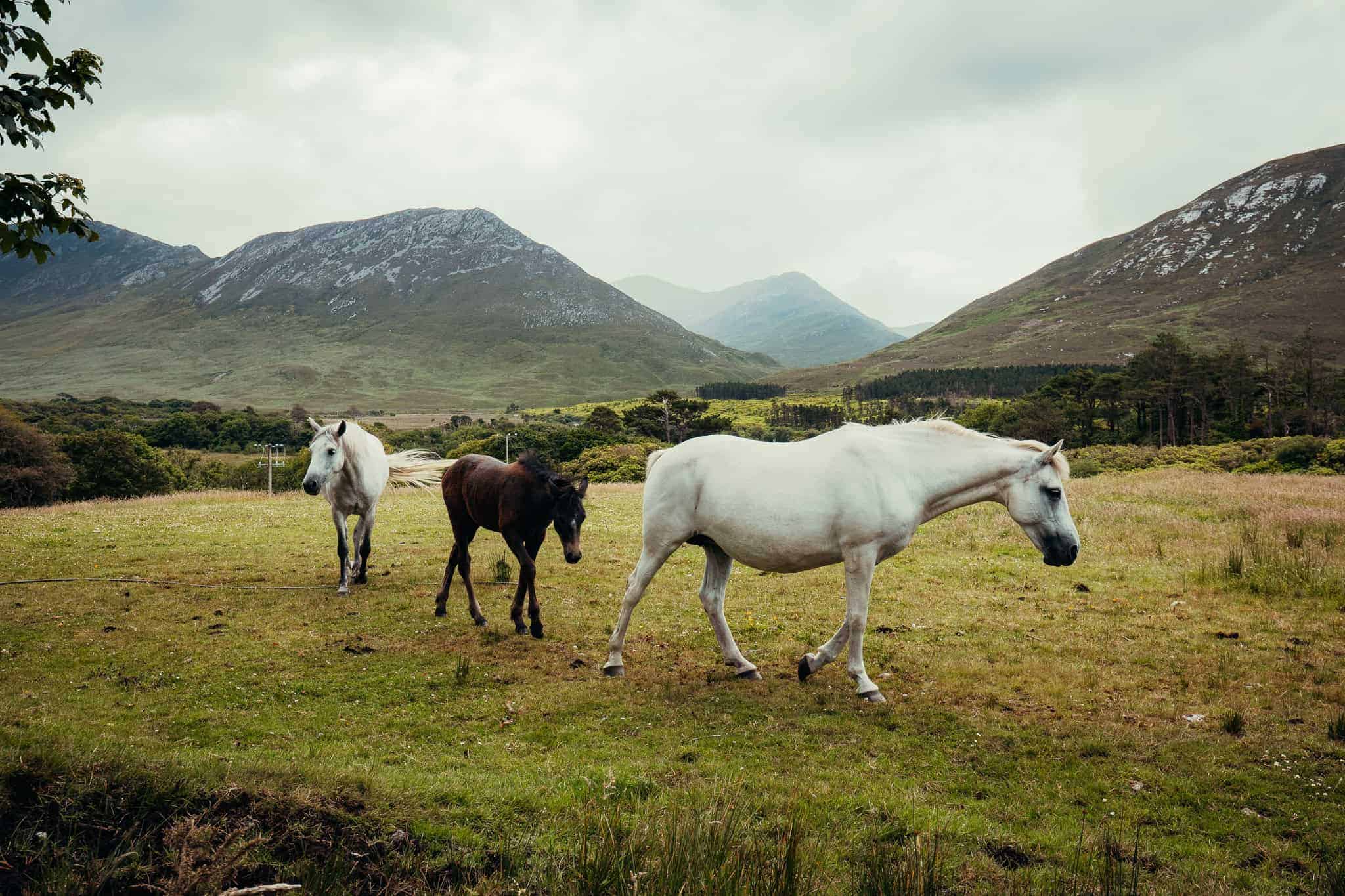
Spotting a Connemara pony in its natural habitat is a delightful experience. These hardy and graceful ponies are native to the region and often seen grazing in fields across Connemara. Various local farms and tours offer opportunities to see and even ride these iconic Irish ponies.
Mam ean pilgrimage
The Mam Ean Pilgrimage in Connemara is a spiritual and historical trek leading to a small chapel and Stations of the Cross nestled in the Maumturk Mountains. The trail offers breathtaking views and a peaceful atmosphere, making it a meaningful journey for both pilgrims and hikers.
Fun activities in Connemara
Connemara is a paradise for adventure lovers, offering a variety of fun activities to enjoy. Start with an oysters farm tour to taste the freshest oysters and learn about local aquaculture.
For a more active experience, Horseback riding offers a scenic way to explore beaches, bogs, and mountains. It is a great way to also see a Connemara pony.
On the water, Sea kayaking will lead through clear waters to hidden coves. If you’re seeking thrills, try coasteering along the rugged Galway coast, combining swimming, climbing, and jumping.
How to visit Connemara
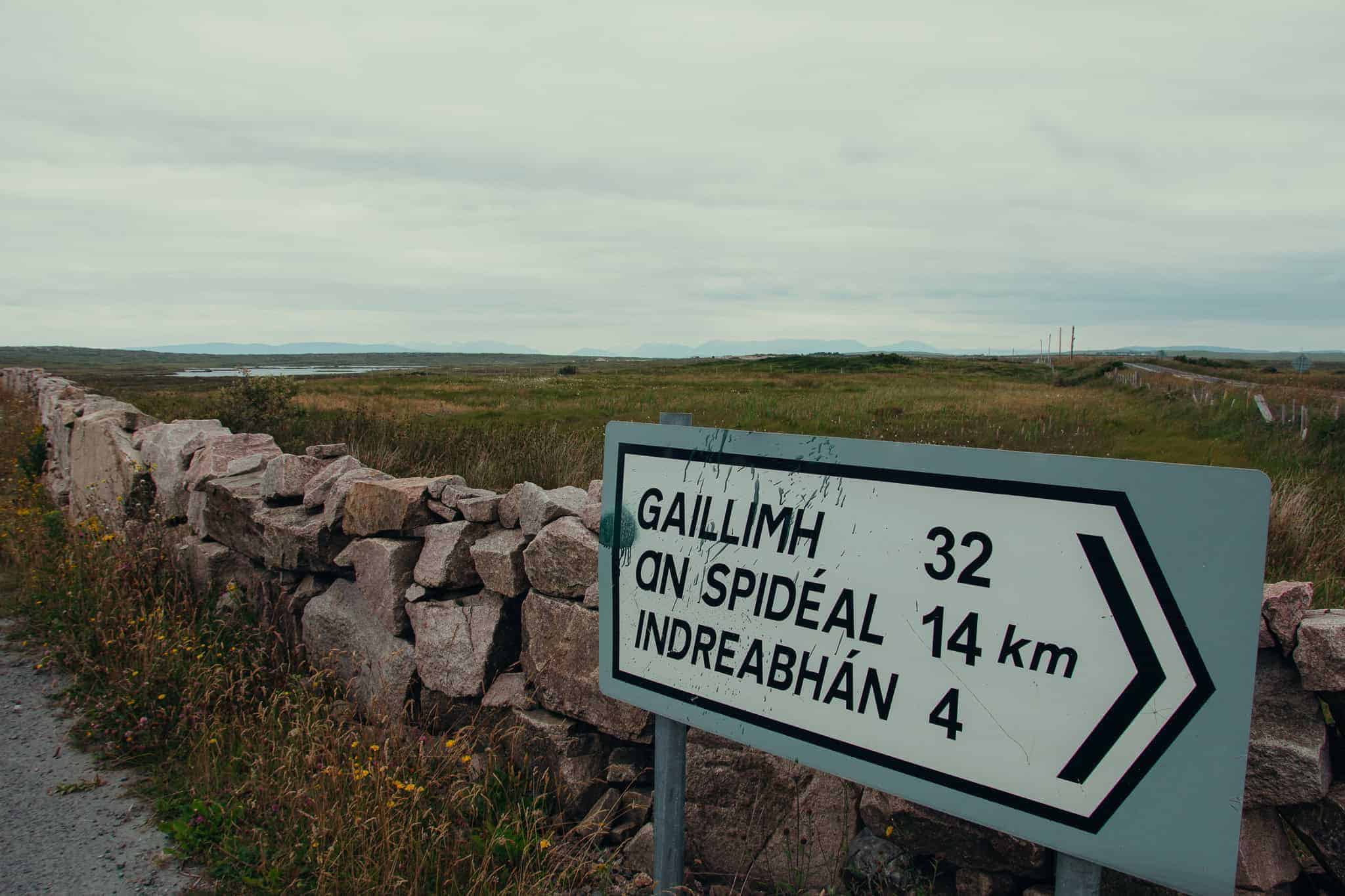
Rent a car
Renting a car is one of the best ways to explore Connemara. It gives you the freedom to travel at your own pace and visit remote areas that are not easily accessible by public transport.
The scenic drives through the region, such as the Sky Road and Bog Road, offer stunning views and the opportunity to stop at various attractions along the way.

BEST IRELAND CAR RENTAL COMPANY DISCOVER CARS
When booking a rental car in Ireland online, I use Discover Cars because they offer Full coverage for less than €7. It is the best rental car comparator out there!
Take a day tour
Day tours from Galway to Connemara are a convenient option for those who prefer not to drive. These tours typically include stops at major attractions such as Connemara National Park, Kylemore Abbey, and the Twelve Bens.
Here is a selection of day trip to Connemara you might like:
Cycle
Cycling is a fantastic way to experience Connemara’s breathtaking landscapes. The quiet country roads make it a cyclist’s paradise (if you stay away from the main roads).
This is how I first discovered Connemara and it will forever be one of my most memorable adenture. Allow at least 3 days to cycle at your own pace (it is more hilly than you may think!).
You can rent bicycles in Galway, join this cycling day trip on electric fat bike or bring your own by bus or train.

Walk
For avid walkers, the Western Way offers an excellent way to explore some secluded parts of Connemara on foot. This long-distance trail stretches from Oughterard to Westport, passing through diverse landscapes including mountains, forests, and lakes.
While the Western Way doesn’t pass near any of the main landmarks detailed above, you might have to make your own trail following countryside roads.
Ireland guide
read our COMPLETE GUIDE TO PLANNING THE PERFECT TRIP TO IRELAND.
From choosing the right time to visit or finding the best accommodations, this dedicated article covers everything you need to know to plan the trip of a lifetime in Ireland. So, buckle up, grab a cup of tea, and let’s get started on planning your dream trip to Ireland!
Where to eat or drink
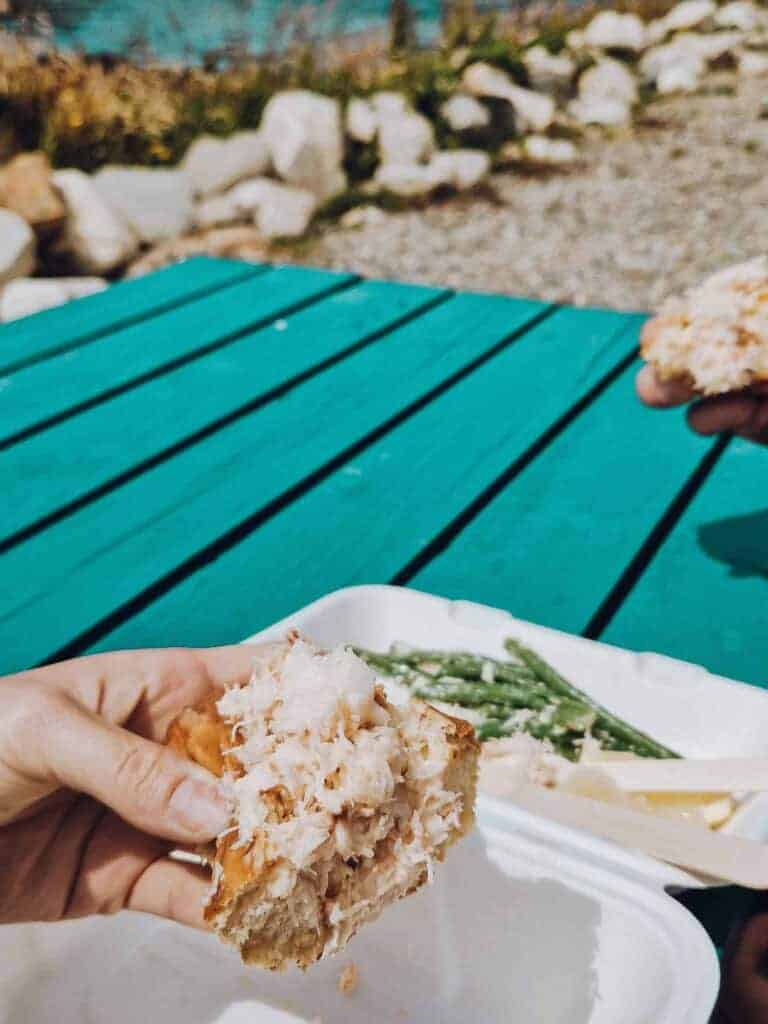
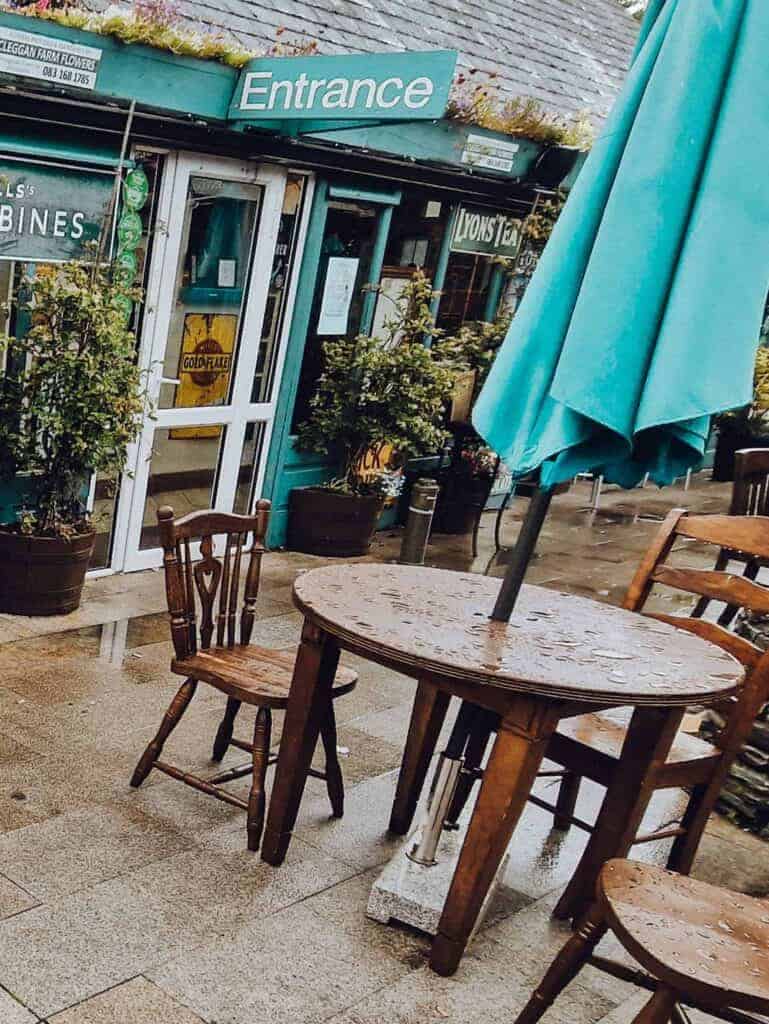
Here is a selection of a few places I would recommend stopping to eat or drink. There are a few food trucks that are well worth a try to taste local food and coffee! For the best pint, aim for local pubs that also serve delicious food like seafood chowder and Irish mussels.
On the road
- Snappy Snappy crab roll
- Dooncastle Oysters seafood trailer (Closed temporarily)
- Kabo Coffee Shop in Letterfrack
- The Pink Wagon
- The Coffee Corral
- Misenderstoo Heron (Moved to Mayo)
Best pubs in Connemara
- Veldons Seafarer Bar & Restaurant in Letterfrack
- Tigh Mheaic
- Guys Bar Clifden
- Powers Thatch

Best restaurants in Connemara
- O’Dowd’s Seafood Bar and Restaurant
- Little Fish Café
- Ravi’s Bar and Restaurant
- Off The Square Restaurant
Things to do near Connemara
Doolough Valley
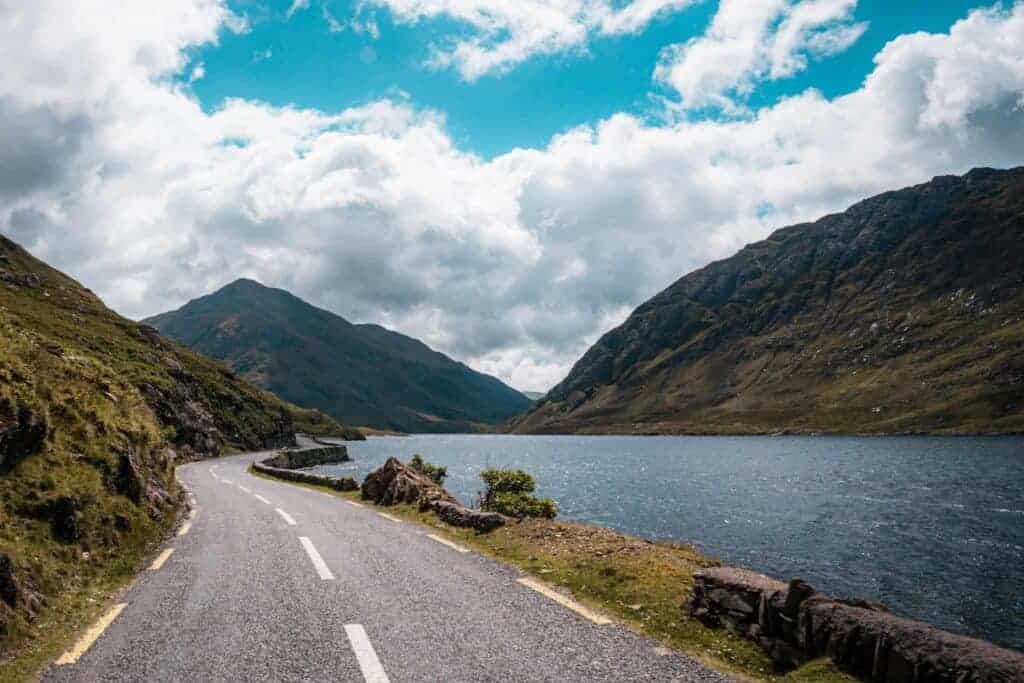
Doolough Valley is a breathtaking destination known for its stunning landscapes and dark history. The valley, nestled between the Mweelrea and Sheeffry Hills, offers a scenic drive and stops at memorials commemorating the tragic Doolough Famine Walk of 1849.
Aran Island
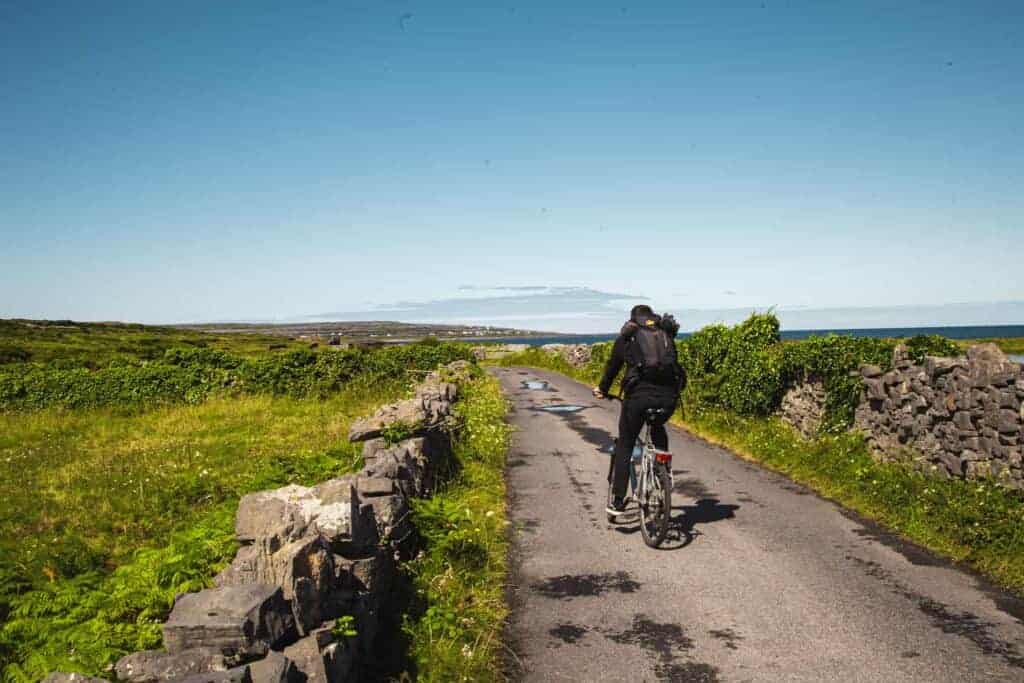
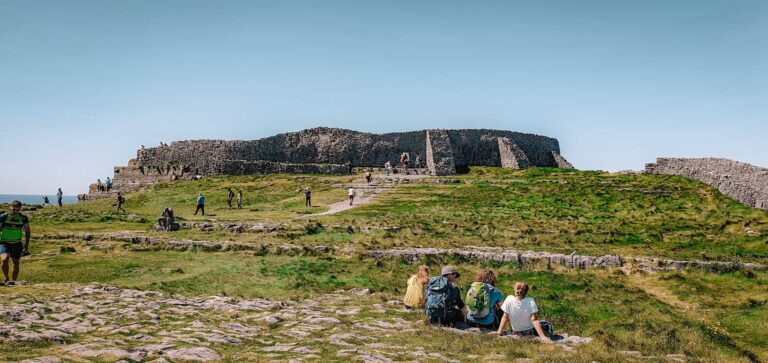
The Aran Islands are accessible by ferry from Galway or Doolin, only an hour away from Connemara. Out of the 3 islands, Inishmore is the most popular for a day trip. You can rent a bike and explore the island, visit ancient forts like Dun Aonghasa, and see the iconic stone walls.
Galway
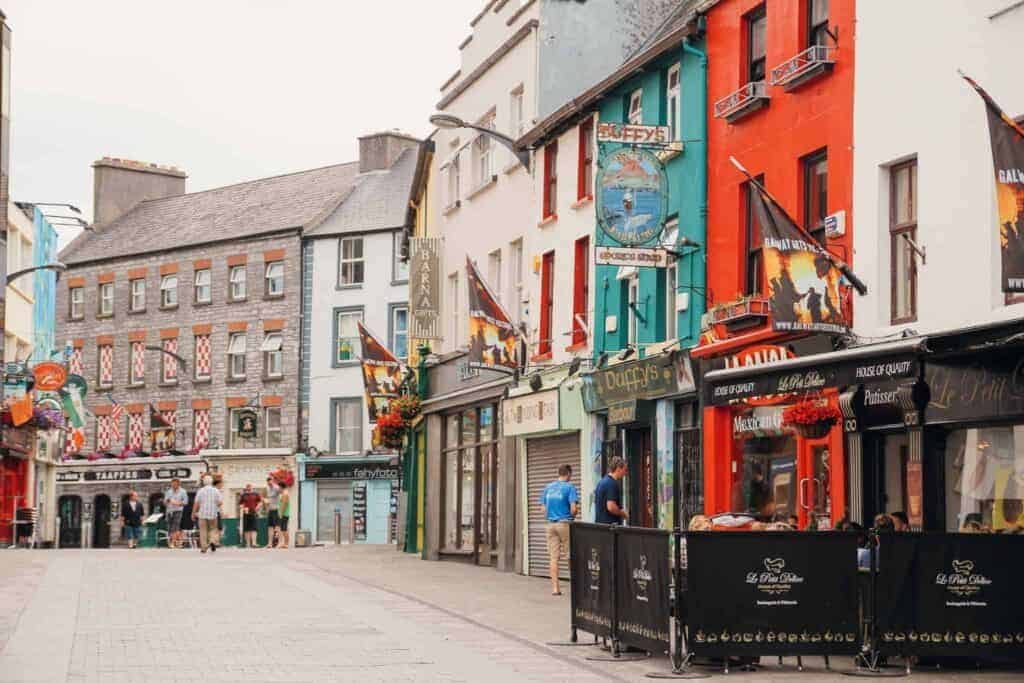
Galway is the main city near Connemara, known for its lively arts scene, historic Spanish Arch, and bustling Shop Street. Enjoy traditional Irish music in local pubs, explore the medieval streets, and visit the Galway City Museum.
Croagh Patrick
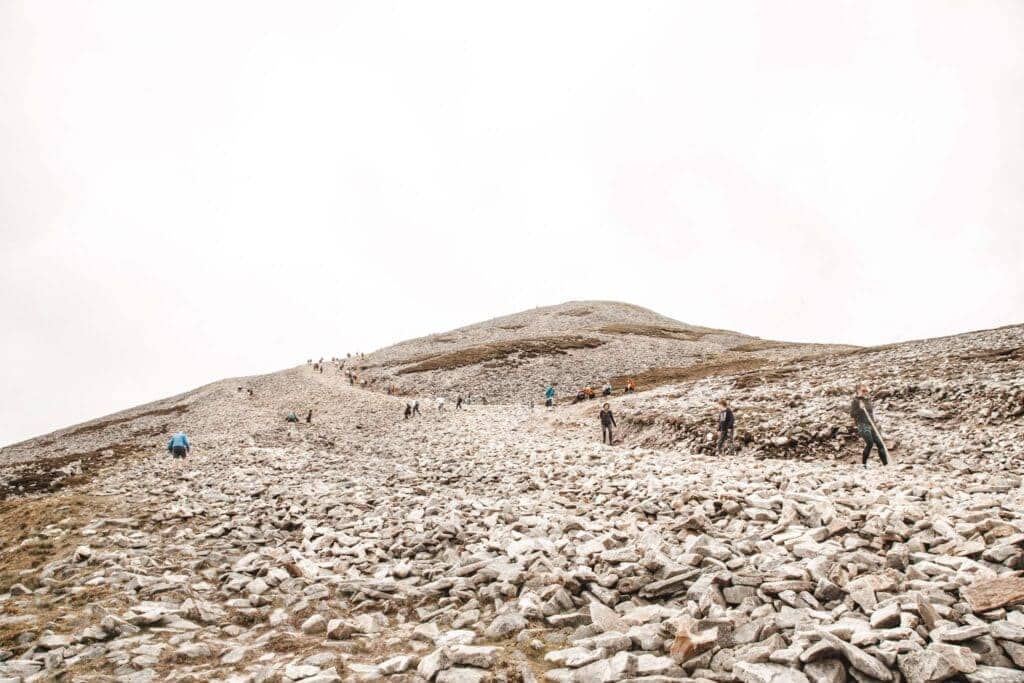
Known as Ireland’s holy mountain, this pilgrimage site offers a challenging climb with rewarding panoramic views of Clew Bay from the summit. The hike is steeped in history and spirituality, with St. Patrick said to have fasted on the mountain’s summit.
When is the best time to visit Connemara?
The best time to visit Connemara is from late spring to early autumn, typically between May and September. During these months, the weather is mild and more predictable, with longer daylight hours perfect for outdoor activities like hiking, cycling, and exploring the stunning landscapes.
Spring (May and June) is particularly beautiful as the wildflowers bloom and the countryside is lush and green. Summer (July and August) offers the warmest temperatures and is ideal for enjoying the beaches, kayaking, and attending local festivals. Early autumn (September) still provides pleasant weather and fewer tourists, allowing for a more peaceful experience.
While Connemara can be visited year-round, the winter months can be quite cold, wet, and windy, which may limit outdoor activities. However, if you don’t mind braving the weather, visiting Ireland in the winter is still worth it, as it brings its own charm with dramatic landscapes and cosy pubs.
Where to stay in Connemara
Connemara offers a variety of accommodation options to suit all preferences and budgets, ranging from luxurious hotels to charming bed and breakfasts and cozy self-catering cottages.
Hotels
For a luxurious stay, consider booking one of Connemara’s renowned hotels. Connemara Sands Hotel & Spa, set on a private estate just outside Clifden, offer incredible views over the Atlantic Ocean and modern comfort. Lough Inagh Lodge Hotel provides a picturesque lakeside setting with excellent amenities. These hotels offer fine dining, stunning views, and easy access to outdoor activities.
Bed and Breakfasts
For a more personal and homely experience, bed and breakfasts are an excellent choice. Rosleague Manor, a charming country house near Letterfrack, offers cosy rooms and warm hospitality. Sharamore House, just outside Clifden, provides comfortable accommodations and a hearty breakfast to start your day.
Hostels
For budget travellers, hostels offer affordable accommodation without sacrificing the Connemara experience. The Connemara Hostel in Leenane offers dormitory and private rooms with spectacular views of Killary Fjord. Ben Lettery Hostel, located near Connemara National Park, provides comfortable lodging with easy access to hiking trails and local attractions.
Camping and Glamping
For those who love the outdoors, camping and glamping are great ways to stay in Connemara. I know the Clifden Eco Beach Camping & Caravan Park usually comes highly praised, but I personally disliked my stay there and don’t recommend it. Check out the Connemara Caravan and Camping Park or Renvyle Beach Caravan & Camping Park instead.
If you are travelling with a camper or motorhome, you can, of course, find a free overnight car park. Use the Apps Park4night to find a spot that suits you. My favourite ones in the area are: Eyrephort Car Park and Dog’s Bay car park (I will have an article on this – Coming soon).
FAQ

ARE YOU ON PINTEREST?
What about saving this post to your Pinterest board?
Click on the photo to save this blog post for later. Follow Travel Ireland Today ‘ boards to see our latest pins.

I help you explore Ireland like a local with insider tips, detailed itineraries, and practical advice.
HEY THERE! I’M JEN…
Funder, Author & Photographer behind travelirelandtoday.com
Ireland has been my home for the last 12 years. Before settling here, I spent years backpacking around the globe, visiting 65+ countries. Along the way, I discovered my love for hiking, photography, and crafting budget-friendly itineraries.
Through this website, I share the best things to do and see in Ireland, detailed hiking guides, and practical tips to help you plan your perfect Irish adventure. Let’s make your trip unforgettable!



I am absolutely charmed by the country roads and sheep, abbey, walled gardens, parks and trails, water views and architecture. I must visit. Your nature pics are gorgeous.
This brings back great memories. We went on a bike trip on the Wild Atlantic Way a number of years ago. Loved the sheep wandering on the roads as we biked by.
Loved this! Very informative. I have always wanted to visit Ireland and reading about how at low tide you can drive in the sand to an island sounds so fun. I will be planning a trip soon.
Connemara’s landscapes are unparalleled! Your detailed list of activities is perfect for making the most of this stunning region.