
A complete guide to visiting the Saltee Islands
This website uses affiliate links which may earn a small commission at no extra cost to you. Thank you for your support.
One of the most beautiful bird sanctuaries in Ireland
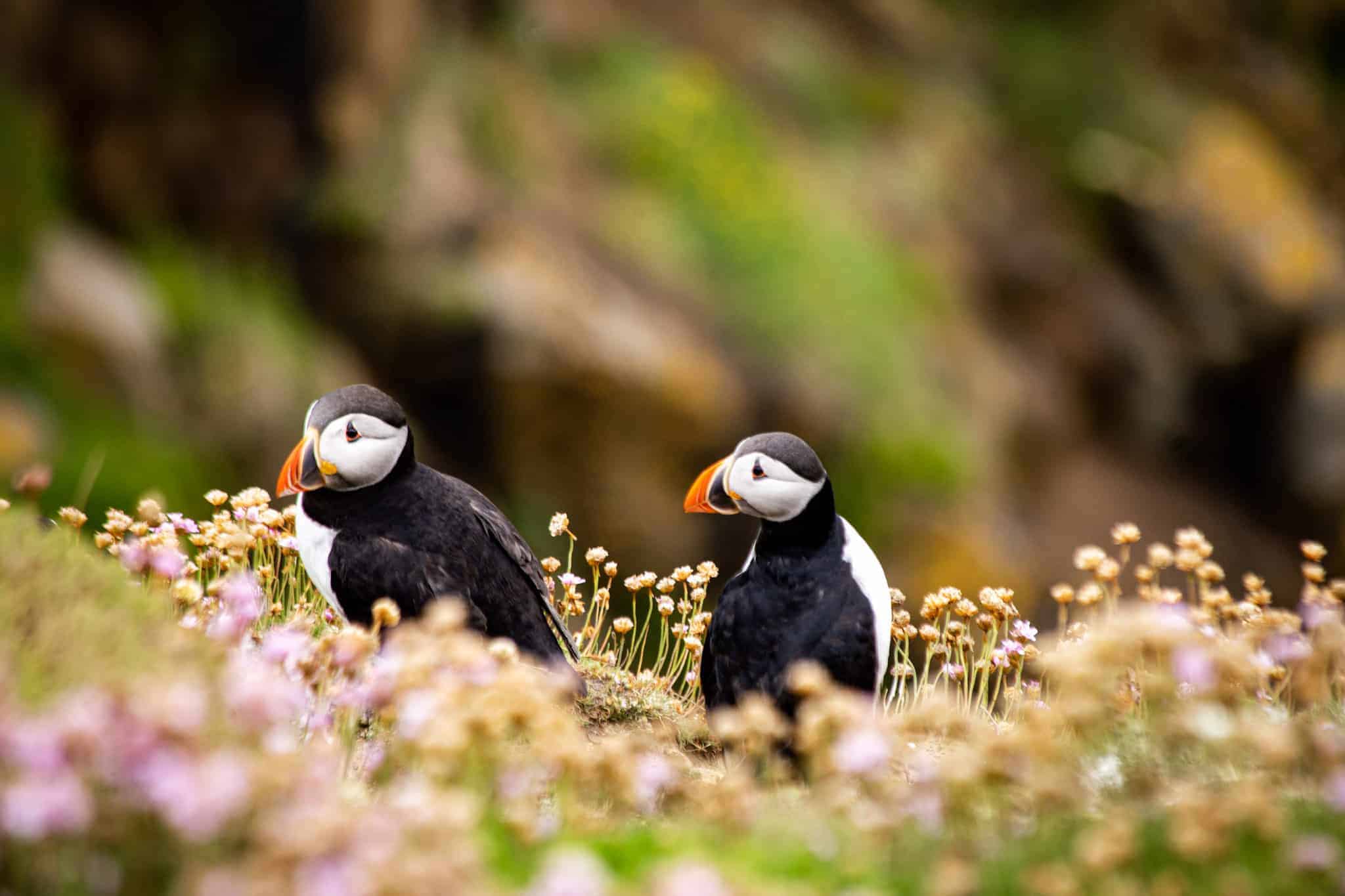
Found in the Southern part of Ireland, near Wexford, the Saltee Islands are one of the most beautiful islands in Ireland and one of the best destinations for bird watching in Europe. In fact, the Great Saltee and Little Saltee are privately owned and home to more than 220 bird species including Puffins, Gannets and Razorbills.
I have visited the Saltee Islands in 2016 and 2022. In the space of 6 years, this relatively unknown island has become very popular for day trips to see puffins in Ireland. Its access also got a lot easier with a website to book the ferry, while in 2016 I had to call a fisherman number found on a random forum in 2016!
But do not worry, in this complete guide to visiting the Saltee Islands, you will find all the information you need, to organise a day trip to this beautiful protected seabird habitat off the coast of Ireland.
Where are the Saltee Islands?
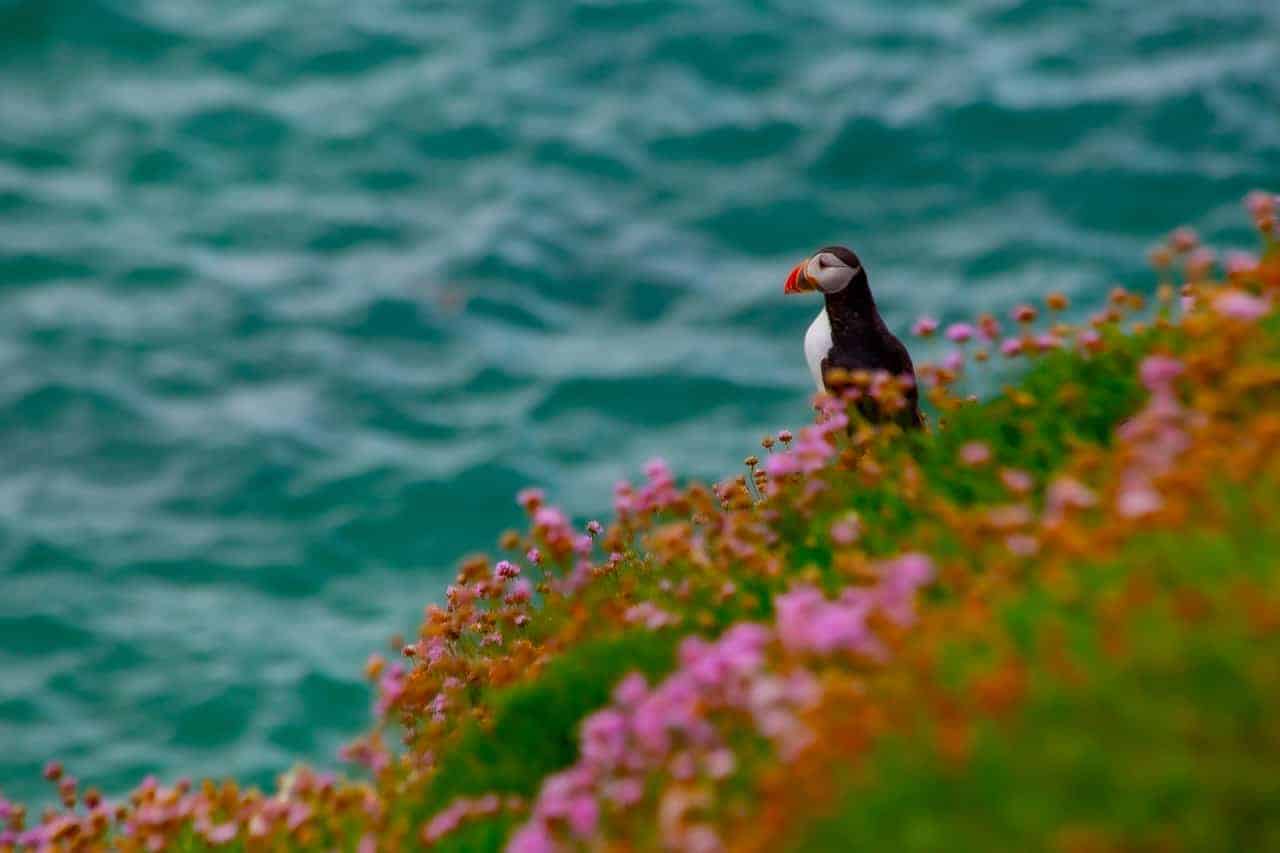
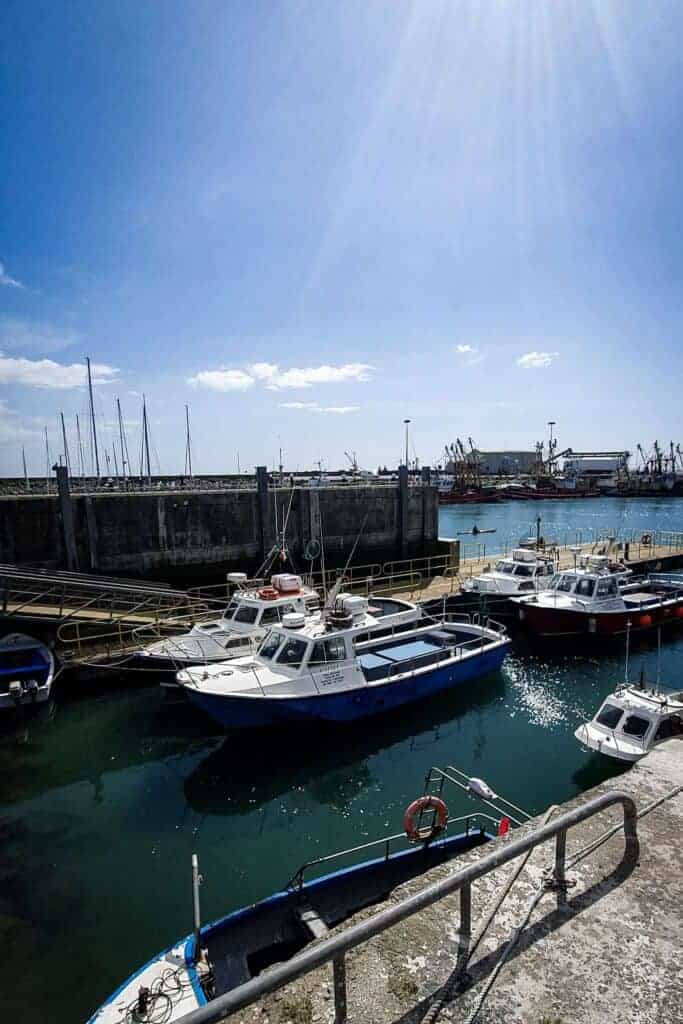
The Saltee Islands are located 5km off the little village of Kilmore Quay in County Wexford (south of the Leinster province). They can be reached within a quick 30-minute boat trip that you will more than likely have to book ahead due to the limited daily spaces available. You will find more details on how to get to the Saltee here.
Kilmore Quay is about 20km from Wexford and can easily be reached from Dublin or Cork on a day trip if you have a car. There is a free car park near the beach, only a 2 min walk to the Ferry meeting point.
With public transport, Kilmore Quay is only accessible from Wexford
- Wexford bus – Route 390: The bus ride is only 30 min but there are only 4 buses a day to or from Kilmore Quay – more details here.
You can get to Wexford from Dublin by Train or Bus (Wexfordbus route 740)
Read before visit the saltee islands
«It was never my intention to make a profit from these islands. Day visitors are welcome to come and enjoy at no cost. Bird watchers are always welcome.» – Michael the First
The Saltee Islands are private property. As Prince Michael first wished, the Neale family makes no profit from tourism (see more details about the Saltee history here).
There is no admission fee to visit the Great Saltee island and no permission is required. However, the family kindly requests that visitors follow the below rules:
- Only Great Saltee is open to the public. The little island remains closed.
- Visits are only allowed from 11 am until 4:30 pm
- Only daily visits are authorized. This means Camping on the island is prohibited.
- Of course, fires are strictly forbidden
- Visitors should remain away from the owners’ house.
- Leave the Saltee as you found it. Do not take anything except your garbage and memories.
- Stay on the path and pay attention to the cliff edges.
- Do not disturb the birds and stay away from the nests (even for a “quick photo”)
The only cost to visit the island is for the transport to and from Kilmore Quays & the islands. To get to the Saltee Island Great, you can take a ferry from Kilmore Quay.
Unfortunately, the Saltee Islands are not accessible to people with limited mobility.
How to get to the Saltee Islands?
Take a Ferry to Saltee Islands (Great Island)
Whether you are planning a day trip or planning a road trip around Ireland, to visit the Saltee Islands, you will need to account for a full day.
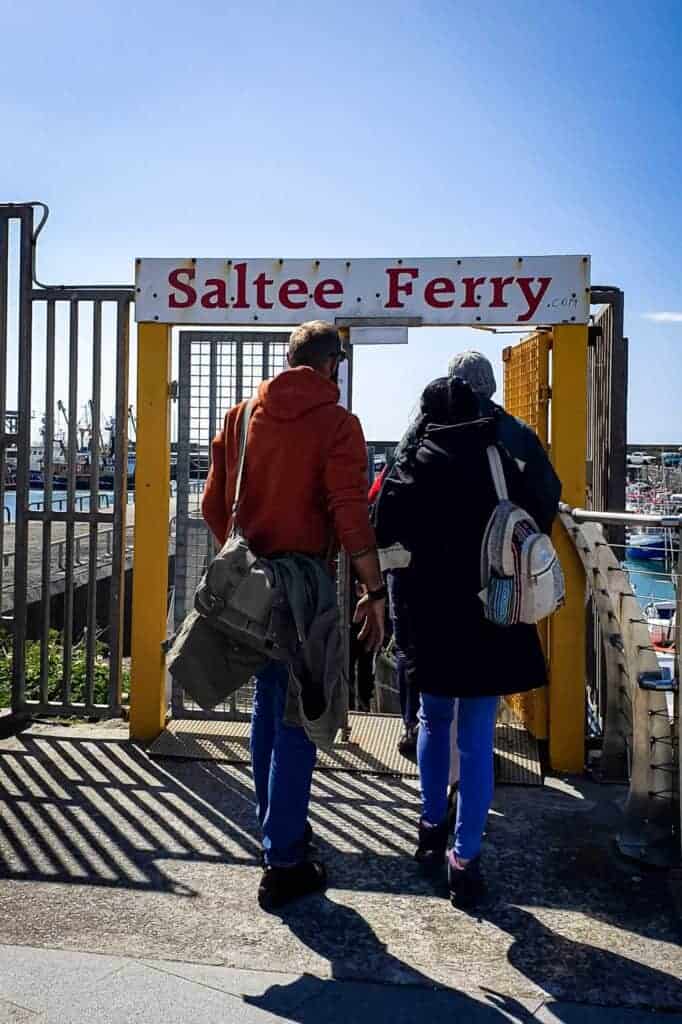
There is one Ferry to Saltee Islands that runs 4 times daily, 7 days a week from June to August. During the months of April, May and September, the ferry runs once a day on weekdays at 11 am, and 4 times a day on weekends only.
Because the spaces are limited and it is a very popular day trip during the Puffin nesting season (June – July), it is advised to book ahead, even more, if you plan your trip on a weekend or on a bank holiday weekend.
You can now book your trip online at https://salteeferry.com – More details are below!
Practical information – Ferry to Saltee Islands
Cost: €30 return per adult and €15 for children under 12 years old. Once you are booked, you will receive a confirmation email. Without this email, you won’t be able to access the ferry, so make sure to contact the ferry company if you don’t get it.
Cancellations: because the crossing is weather-dependent, your crossing is subject to cancellation (with a refund). You will be informed ahead via email so make sure you enter a valid email address upon booking your spot. Refunds are only provided if the ferry company cancels the trip. The tickets are non-refundable & non-transferable. If you miss the boat, you won’t be able to join the next sail, so make sure to arrive ahead at the harbour.
Journey: It takes about 20 to 30 min one way. The boat has a small area inside that can accommodate a couple of people, so most guests will need to sit outside. Because of the breeze and waves, you may get wet (we got drenched!) during the crossing, so make sure to pack wet gear and keep your valuables covered.
The ferry stops about 50 m from the shore. From there, you will be asked to hop in a dinghy for the remainder of the trip.
Wet Landing: Upon reaching the shore, the exit from the dinghy will typically land on sandy terrain. However, depending on the tide & weather conditions, it might be necessary to step directly into the water, where you may encounter seaweed or slippery rocks. These conditions change daily, affected by both weather and tidal patterns.
It is recommended to wear suitable footwear like wellies or be willing to go barefoot.
Daily limitations: the Saltee Island ferry can accommodate 24 persons maximum per trip (2 boats of 12 persons). When you book, you will need to choose a time which will dictate the return time also. I have put the crossing times per season below.
Weather: The crossing to Saltee Island is weather-dependent. If the trip is cancelled, the Saltee Ferry will refund you within 3 days. Check their website for more details and terms & conditions.
Timetable: The return times are fixed based on your initial departing time. Here is the timetable as of March 2024. There is no crossing from September until next April.
April/May
Weekdays – None until May 20th, then:
2 times a day:
11 am to 3 pm
12 pm to 4 pm
Weekends –
10 am to 2 pm (May)
11 am to 3 pm
12 pm to 4 pm
1 pm to 4:30 pm (May)
June
Weekdays– 4 times a day (*Except June Bank Holiday)
10 am to 2 pm (*)
11 am to 3 pm
12 pm to 4 pm
1 pm to 4:30 pm
Weekends – 4 times a day:
10 am to 2 pm
11 am to 3 pm
12 pm to 4 pm
1 pm to 4:30 pm
July to August
Weekdays– 3 times a day
11 am to 3 pm
12 pm to 4 pm
1 pm to 4:30 pm
Weekends– 3 times a day
11 am to 3 pm
12 pm to 4 pm
1 pm to 4:30 pm
(Inc. Sunday Sept 1st)
What to do & See on the Saltee Islands?
The main reason people visit the Saltee Islands is to see puffins and other wildlife. There aren’t many other things to do except walk around, look for birds and watch them be! Though, we can assure you the 3.5 hours on site will fly!
In the below map, we pinned the main trail and spots to see around the island. The itinerary is about 1-hour walk but will definitely take you the entire time on the island if you stop for photos and enjoy birdwatching.
Note that Great Saltee Island is not accessible to Wheelchairs and is not recommended for people with difficulty walking. There are stairs, steep parts and uneven floors. It can get slippery and muddy on rainy days. Pay extra attention close to the cliffs.
The map of the main things to do on the Great Saltee Island
Look for Puffins
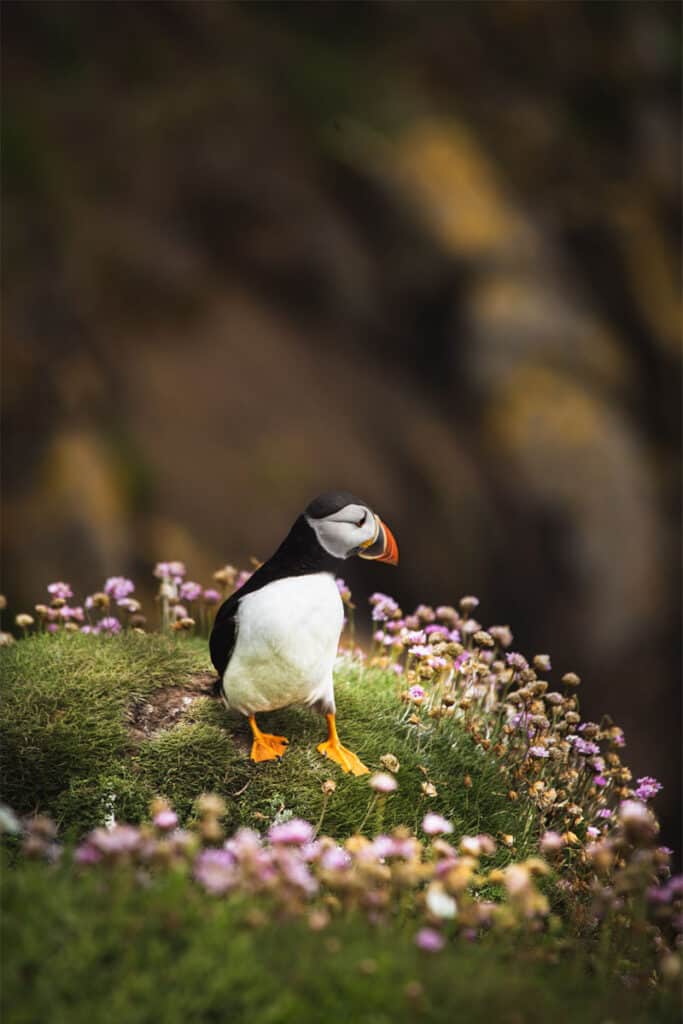
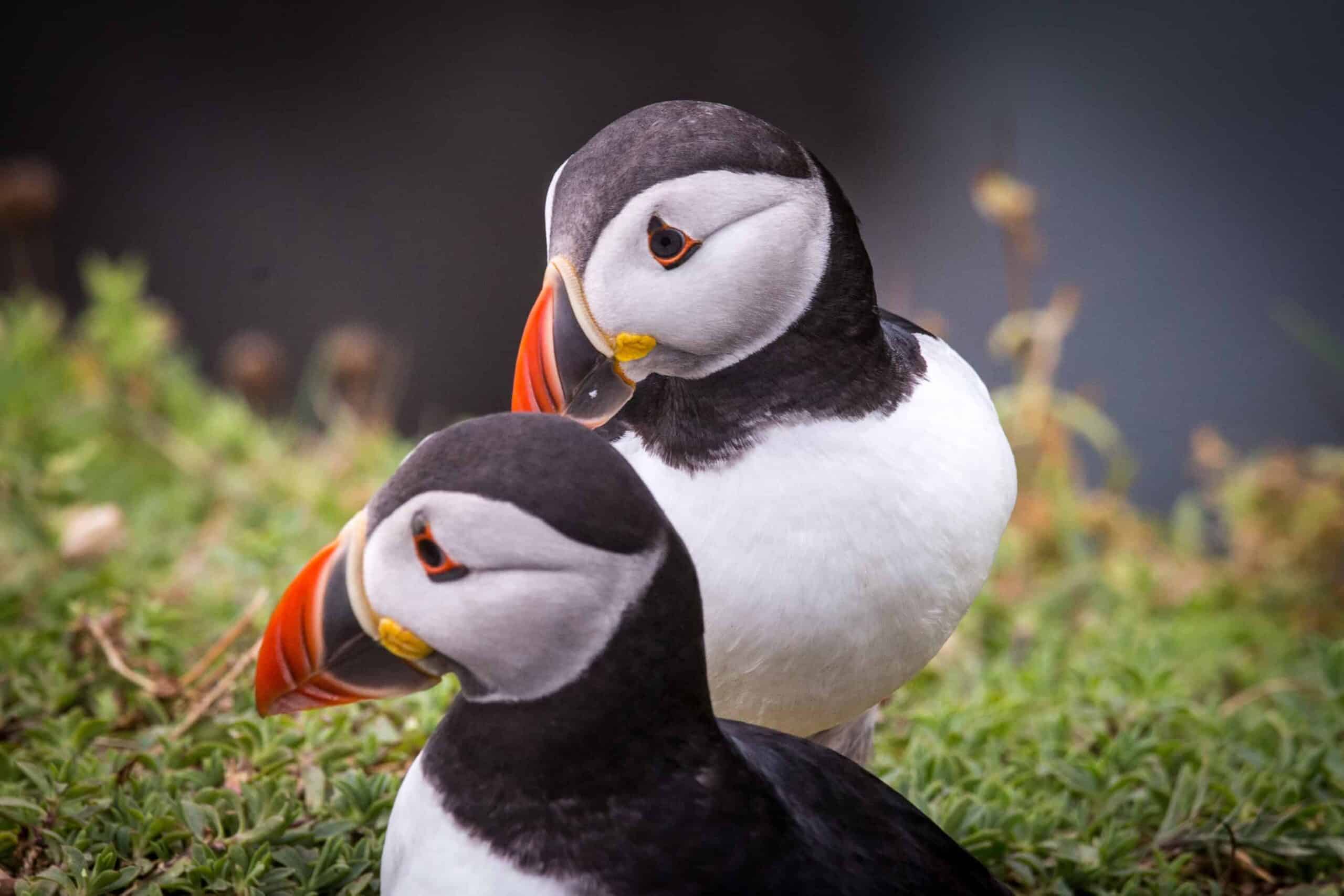
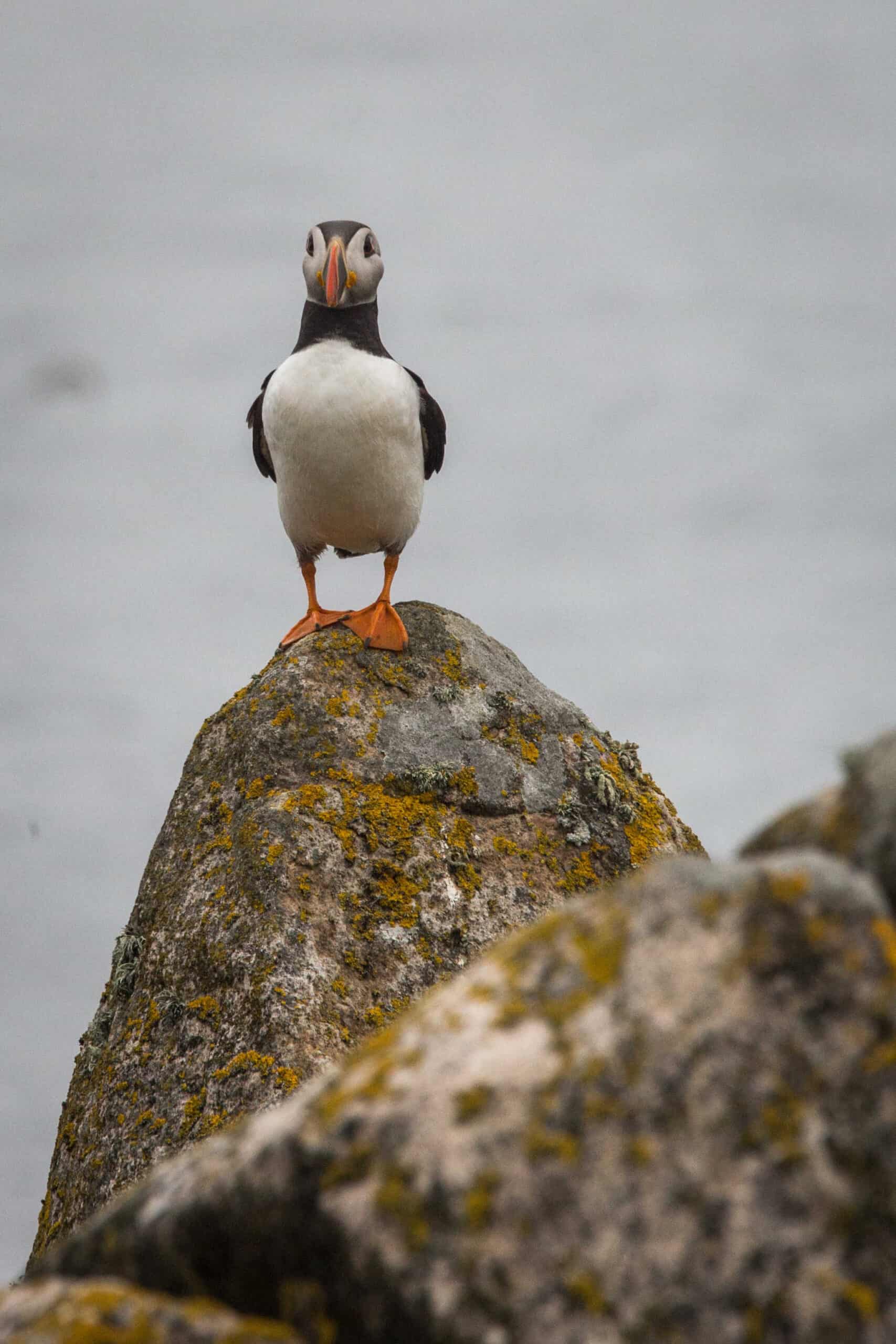
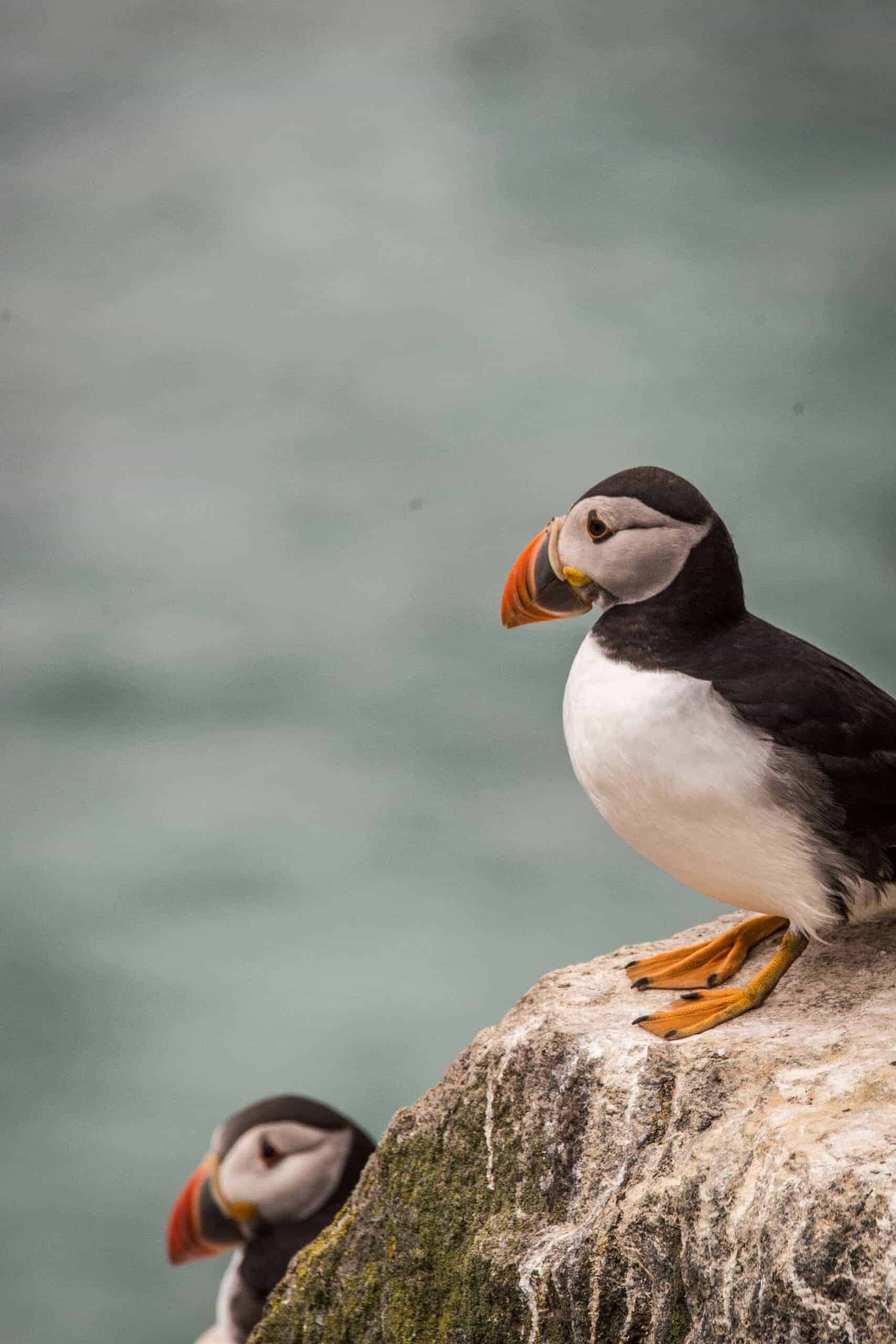
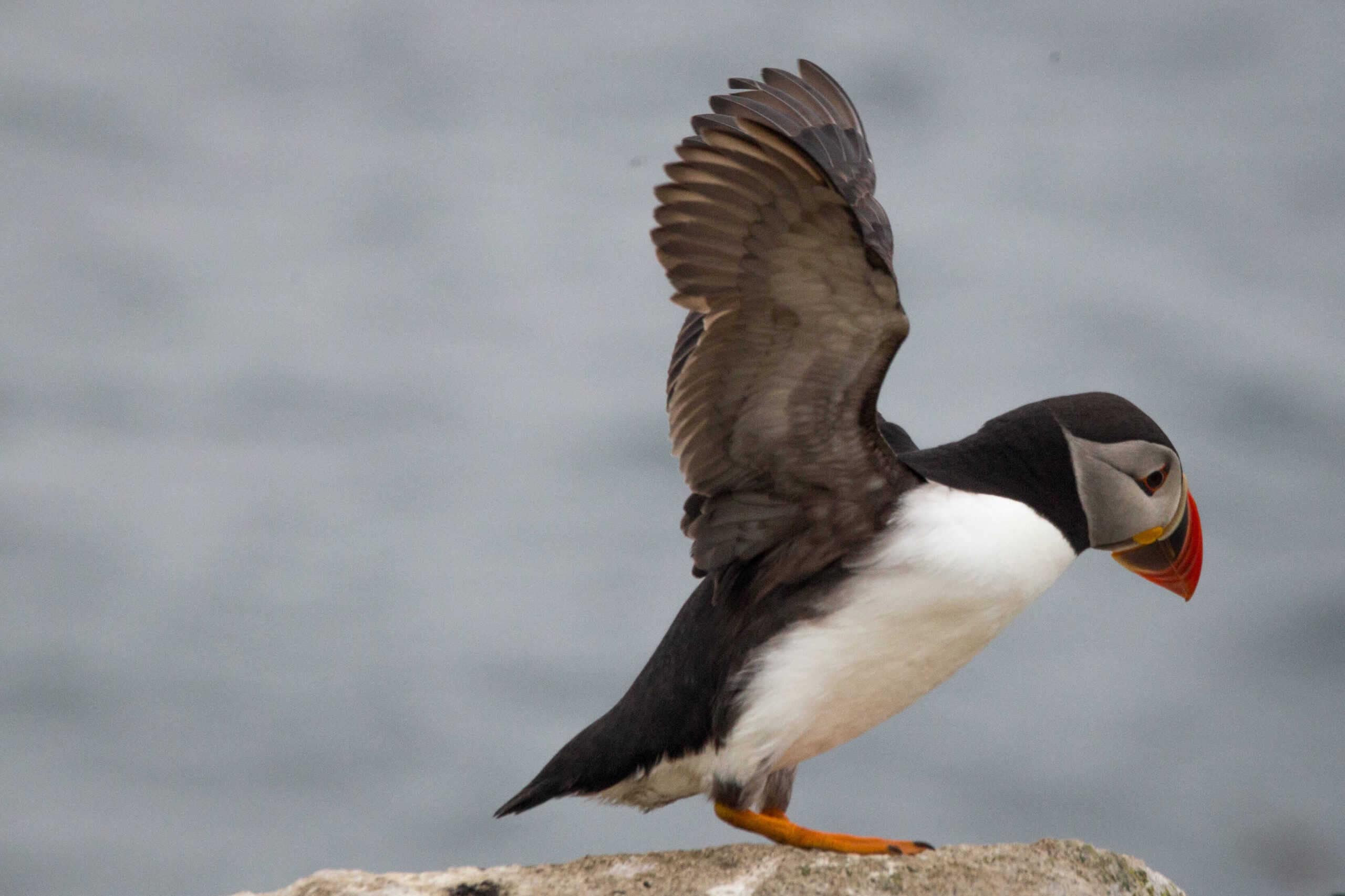
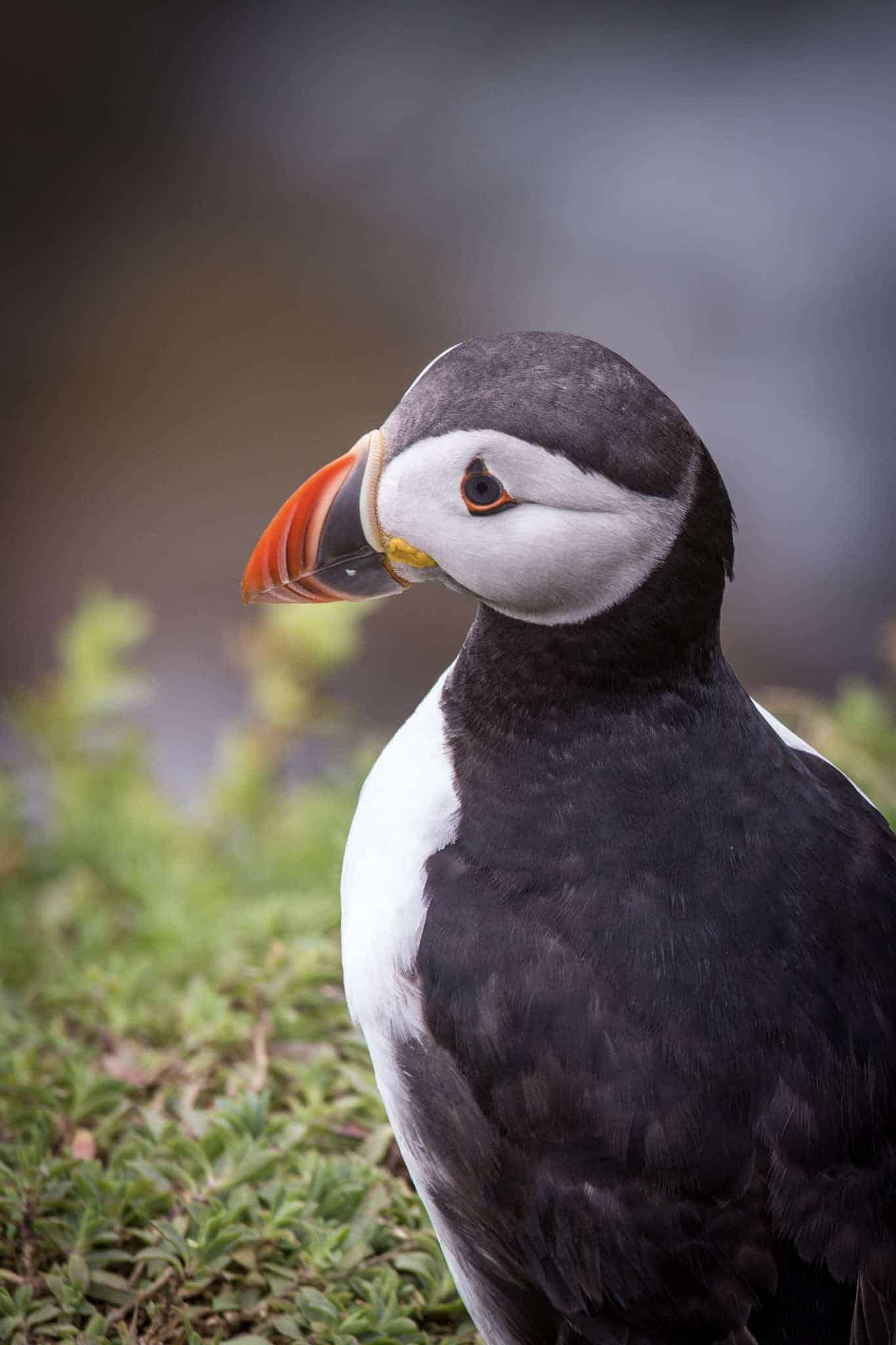
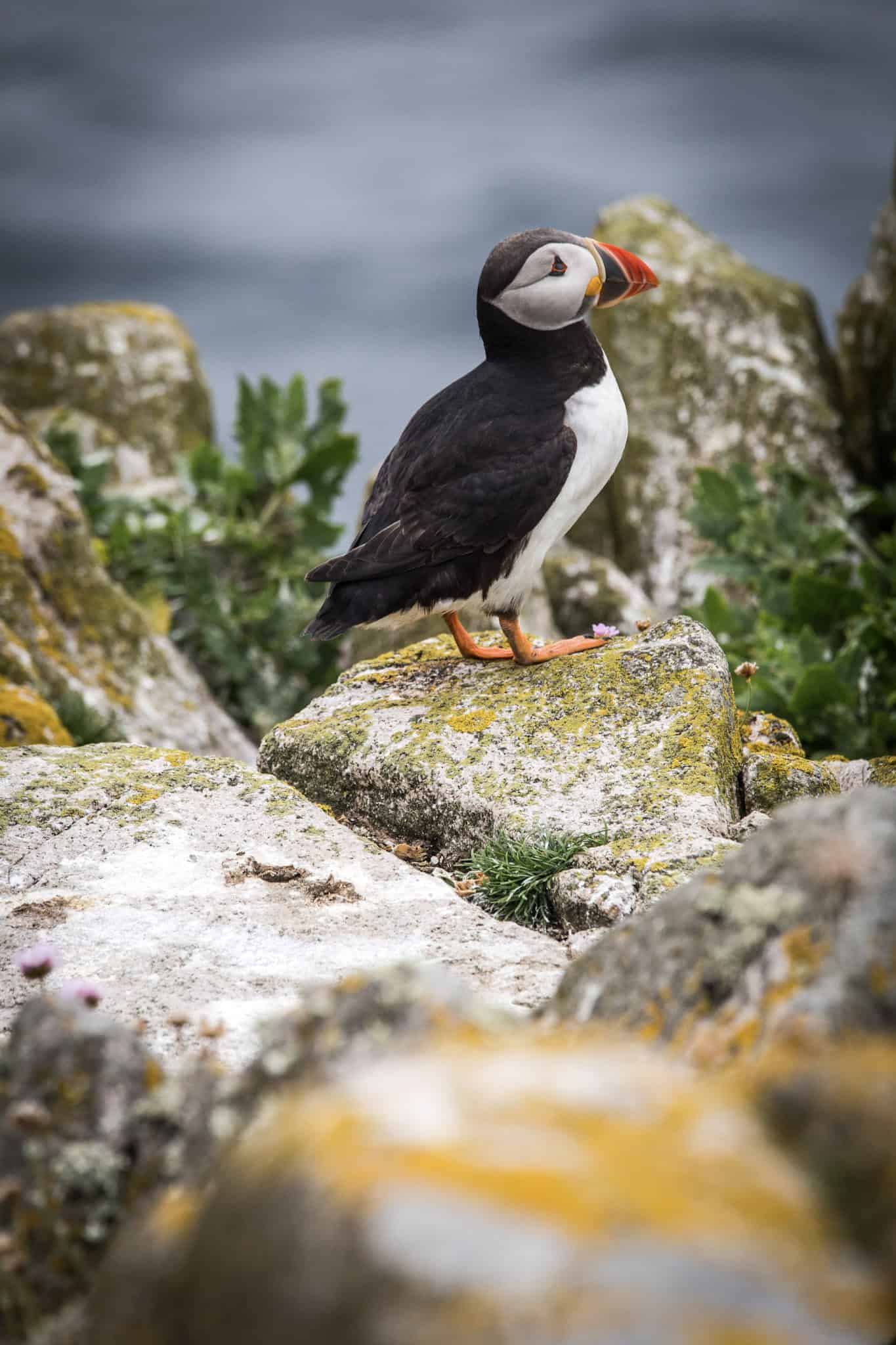
These little red-beaked birds are becoming increasingly rare on the coasts of the North Atlantic. Fearful and always on the lookout for the slightest danger, they seek quiet and remote sanctuaries to lay their eggs and raise their young.
If you have never seen a Puffin, they are really “cute” birds pleasant to observe.
Other wildlife on the Saltee Islands
Puffins aren’t the only birds you can see at the Great Saltee. There are indeed more than 220 species of birds sharing this 89-hectare island. Enough to spend a good day walking around, birdwatching and looking for other wildlife.
Gannets
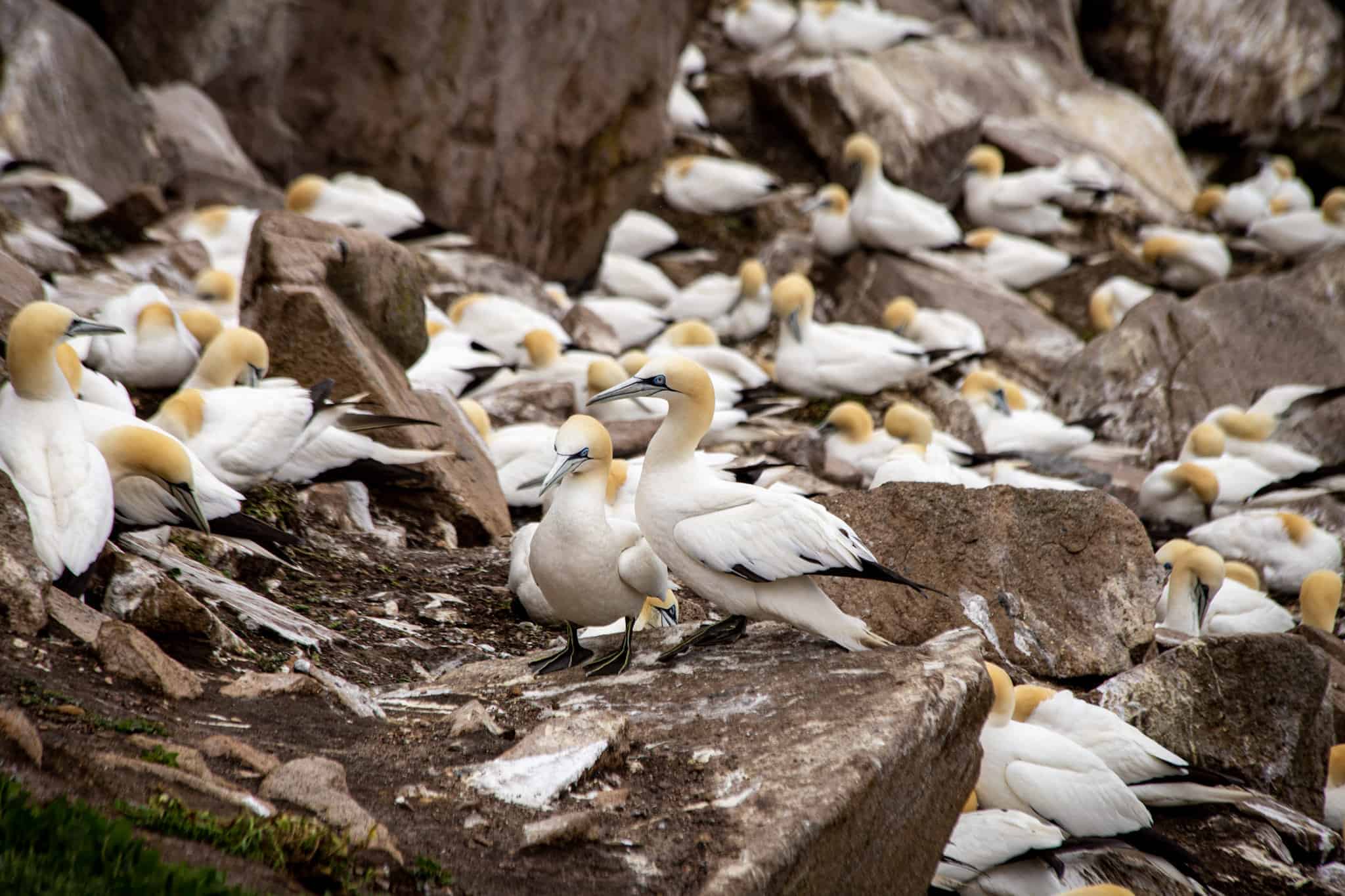
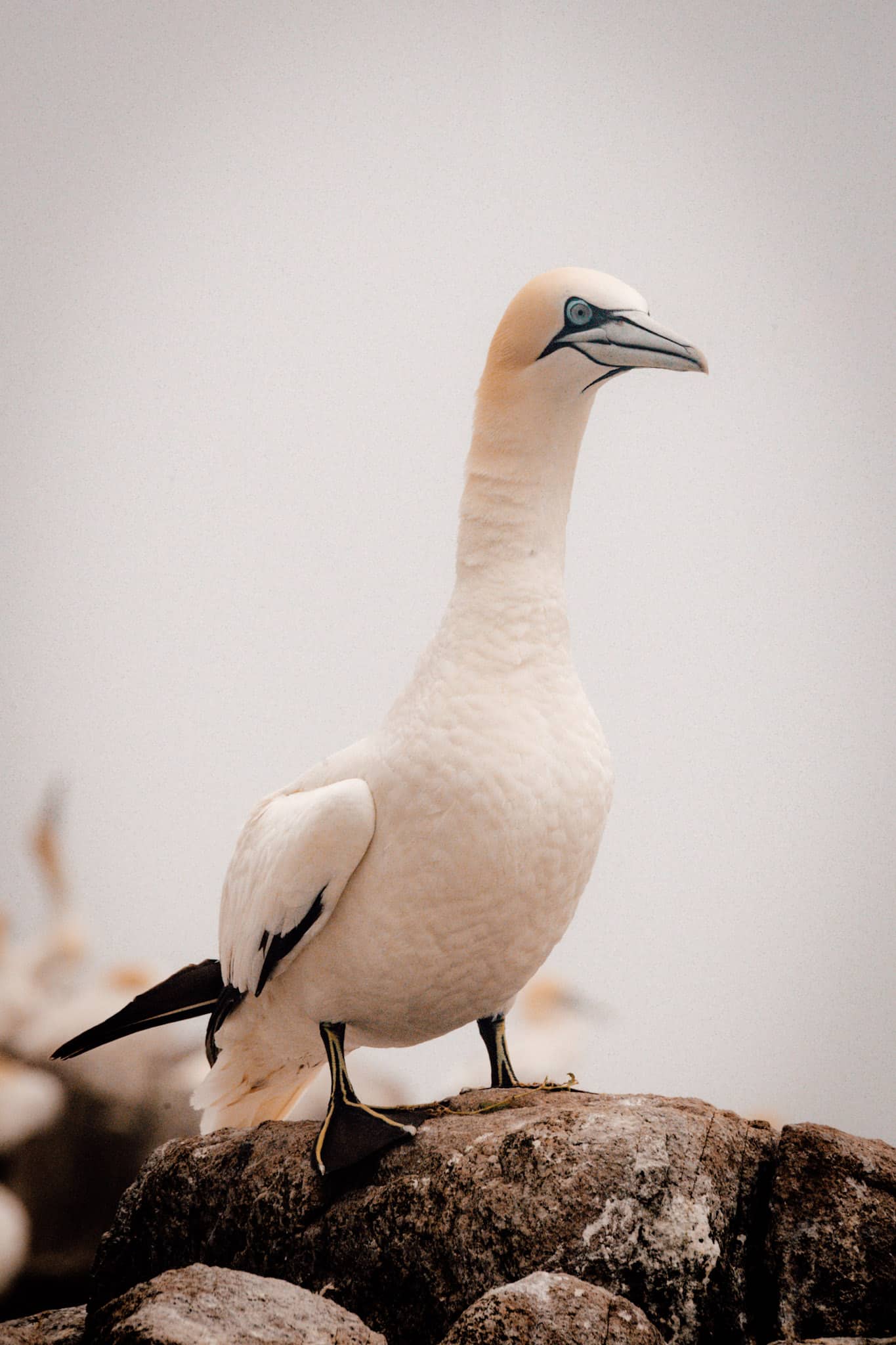
The second reason to visit the Saltee Islands is to see the Gannets colony. The one on the far southwest of the Great Saltee is impressive. You will actually smell and hear it before you see it! Gannets are beautiful white birds with yellowish feathers on the back of their head and deep blue eyes.
Razorbills
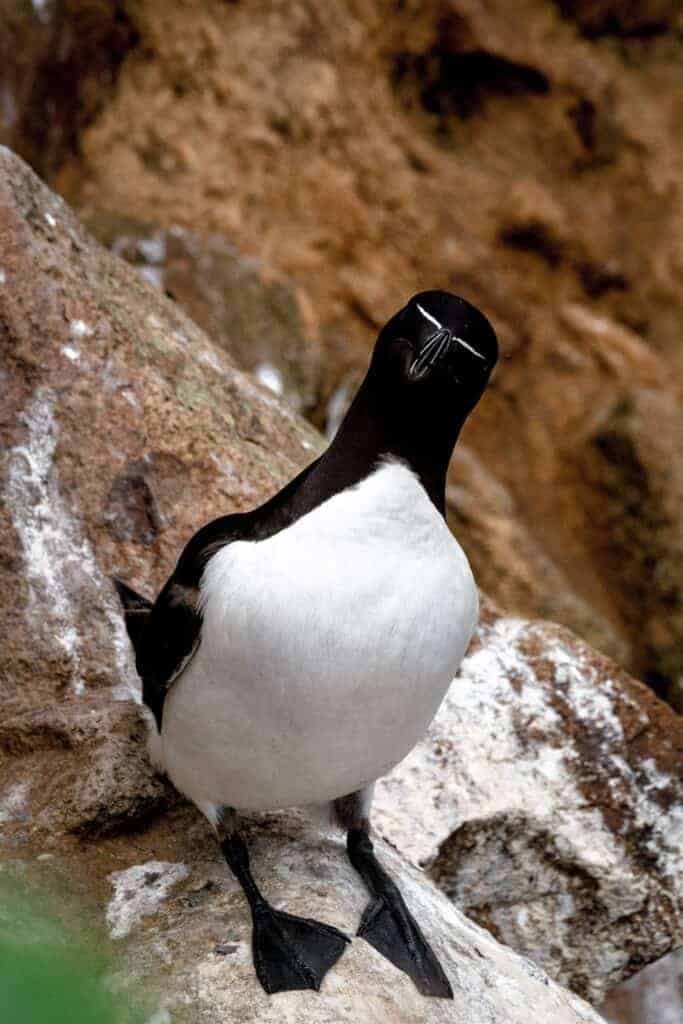
Razorbills are black and white birds. Their distinctive feature is the white line across their face which is really cool to take photos of. Just like guillemot and Puffins, the Razorbills are also part of the Auk family. They are actually the closest living relative to the Great Auk, now extinct.
Guillemots
Guillemots are very common birds on the coast of Ireland, although, the colony on the Great Saltee is the biggest one in the country with a population of around 20 thousand birds. They are recognizable by their dark brown and white feathers.
Seals
The Saltee Islands is one of the main breeding places in Ireland for grey seals. They often can be spotted around the island. You can see them near the landing beach or on the other side of the island where most puffins and gulls nest. The pupping season spans from August to December with autumn months as the main breeding season.
Whales & Dolphins
You might see marine wildlife from the cliffs of the Saltee Island such as Risso dolphins or Harbour Porpoise. If whales have been recorded around the island it remains a rare occasion. The main whale seen near the coast of Ireland is the fin whale which is no less than the second-largest whale in the world.
best time to see Puffins on the Saltee Islands?
Puffins spend most of their adult life at sea and only land on quiet islands to breed and nest away from predators and noise. From June to August, the Great Saltee Island is one of the few places in Ireland where you can see Puffins.
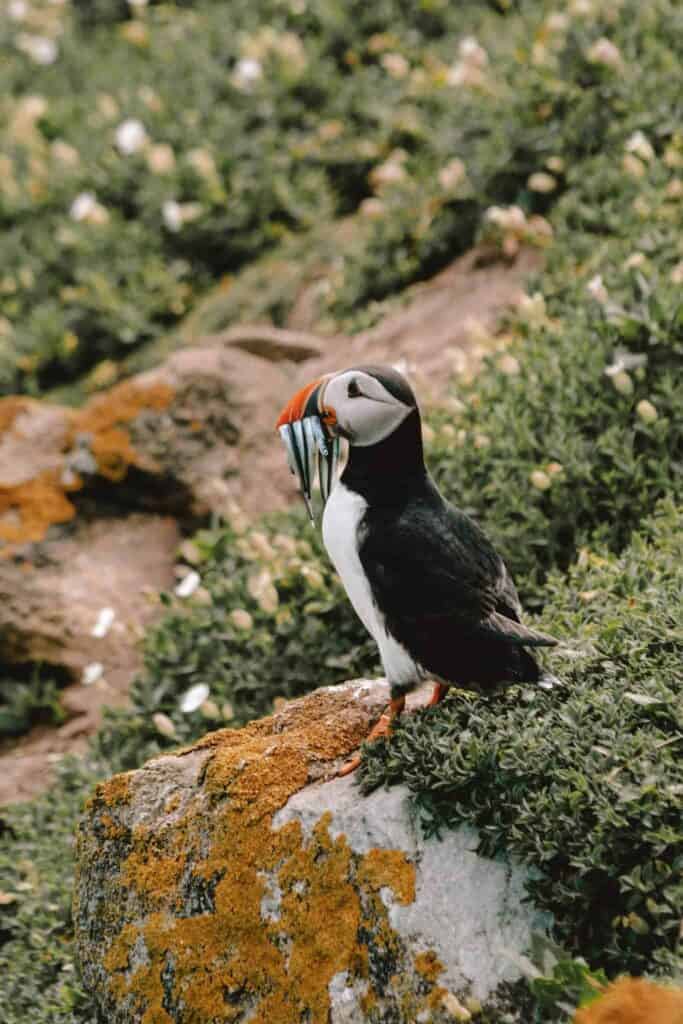
Puffins generally mate for life and return to the same burrow each year to lay one egg. They then stay in the area until the chick (puffling) is born and grown. July is a great period to see the puffins heading back to their nest with fish in their beak.
Although, you will more than likely not see them feeding their chicks because their nest are very deep. Of course, it is important to remain on the path and not disturb puffins who are very fearful and could abandon the nest if they aren’t feeling safe.
Respect the birds & Keep your distance
Puffins are currently one of the most vulnerable species at risk of extinction. Saltee Island’s population is on the decline due to rats eating the eggs. While there is a program to eradicate the rats from the island by poisoning them, the birds remain in danger.
With the increase of tourism on the island, puffins also tend to stay away from their nest, giving a chance for the gulls to attack and eat the eggs. This also contributes to the decline of the colony year after year.
Be aware that it is an offence to disturb nesting birds… though, there is little to non-existent repression or information on that matter on the island.
For a very long time, I have actually refused to share any details on how to visit the island for that purpose. I didn’t want to contribute to over-tourism and its impact on wildlife. However, there is more and more information online about the islands now, so I wanted to share as many details as possible on the subject, and help by sharing preventive information.
I first visited the island in 2016 when it wasn’t possible to book online and very little information was available. From my memories, there was only one ferry a day at the time and the boat owner shared details on how to behave while on the island.
When I went back to the island end of June 2022, I was shocked by the lack of information provided as well as the behaviour of some people just to take a photo.
To my surprise, the most disrespectful people were photographers with huge zoom lenses (500 to 700 mm) getting in the way of the nests, preventing birds from going back to their eggs.
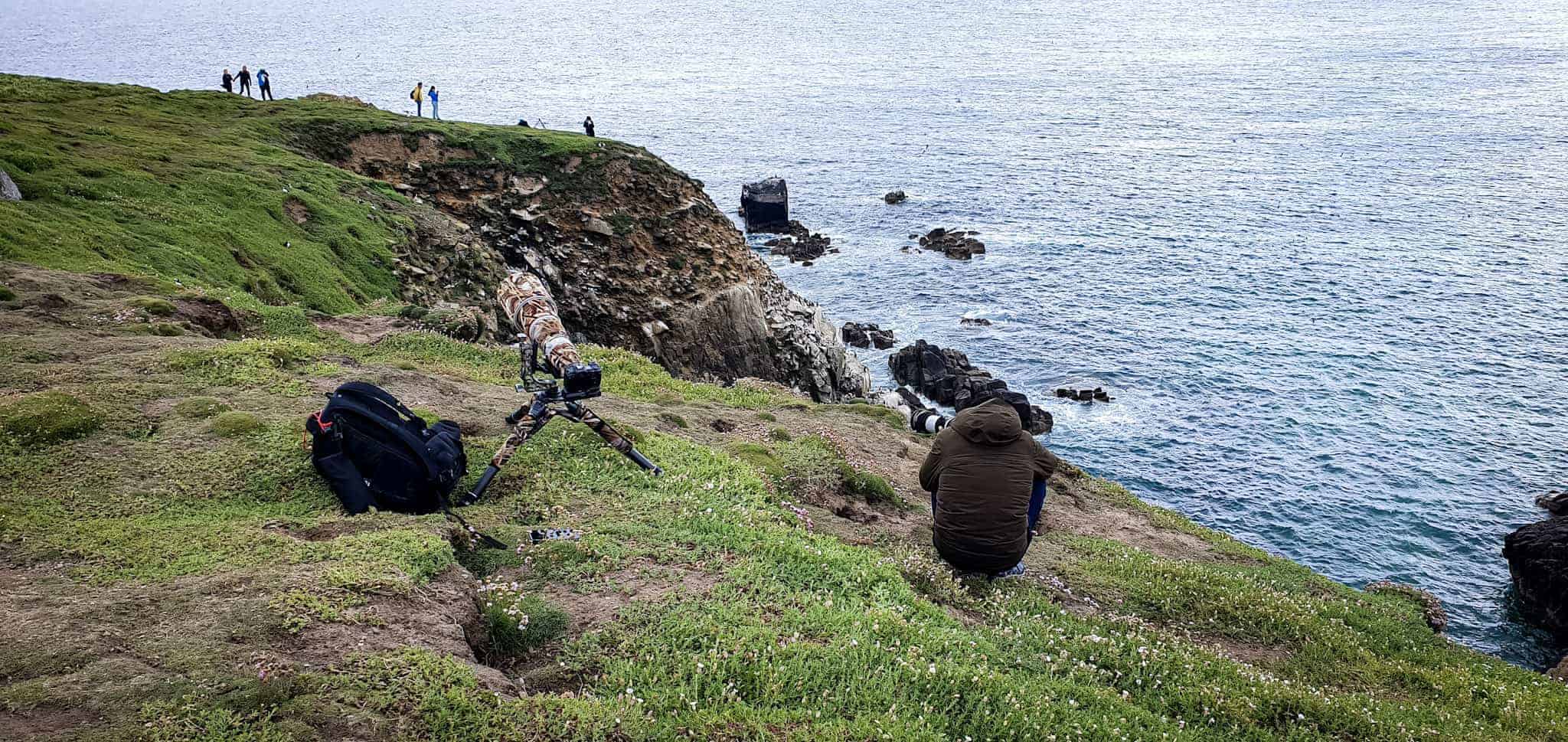
With a lens like that, I can tell you, you don’t need to be 1 m away from the birds… that’s the entire point of such camera lens zoom. I myself own a small 300mm and all the photos you can see in this article are taken from afar. If with my small 300mm I can get such close shots, I wonder why these people were so close to the birds with their massive lenses…
If you visit the island, please stay on the path and keep your distance from the birds.
This is actually not just for the bird but for your own security. The nests are on the cliff’s edge which can be dangerous to anyone venturing this close. The soil is uneven in most parts with hidden holes under the grass.
Where to stay in Kilmore Quay?
If you want to stay in the area for more than a day, you can stay in Kilmore Quay for the night. There is a campsite for tents and motorhomes as well as a few hotels. Here is a selection of places where you can stay in Kilmore Quay:
- Full 2-bedroom traditional cottage
- Free Parking
- Family rooms
- Centre of Kilmore Quay.
- Only 100 m from the Ferry
- Beachfront
You can also search directly on the map below:
What to pack for a day trip to Great Saltee Island?
In your day bag:
- Wet gear (rain jacket, wet pants)
- Extra layers like fleece and windbreaker
- Picnic, snacks
- Water bottle
- A couple of bin bags. One to carry all your picnic waste since there is no bin on the island, and an extra one to layer your backpack inside and protect your belongings, even if you already have a rain cover.
- Sunscream & sunglasses
Photo & Bird watching:
- Binoculars
- Camera
- Zoom lens
- Extra batteries
- Tripod if you are using a heavy lens
Clothes to wear
- Hiking shoes or waterproof runners
- Long pants are preferable for hiking around the island because of the outgrowing vegetation. The trails are maintained but on some parts, you may get scratches from spikes
- Waterproof jacket for the boat
- A hat for the boat if your ears are wind-sensitive
About the Saltee Islands – a bit of history
Based on their pink granite composition, the Saltee islands are believed to have been formed about 436 million years ago. The first signs of humans inhabiting the Saltee go back to the Neolithic according to studies of evidence found on the islands such as artefacts.
The Saltees were later on used by pirates, religious hermits and farmers. However, in the early 19th century after multiple changes of ownership, they became a popular hotspot for shooting parties, impacting the bird colonies’ population, until Micheal Neale bought them in 1943 which turned them into a protected area.
Both islands currently remain privately owned by Micheal’s successors who are keeping his legacy and wish to offer the opportunity to anyone to visit the Great Saltee Island.
The story of Michael Neale is unique! In the 1920s, while he was only 10 years old, he told his mother that one day he would own the islands and be their prince. A promise that he kept as he crowned himself Michael the First, prince of the Saltee and erected his throne on the Great Saltee Island in 1956.
Nowadays, you can still see the throne and read the below inscriptions:
“This chair is erected in memory of my mother, to whom I made a vow when I was ten years old, that one day I would possess the Saltees Islands and become the first prince. From now on my heirs and their successors can only be proclaimed prince/princess of these islands by sitting on this throne fully dressed in the dress and crown of the islands and taking the oath of succession” – Michael the First.
> Read More: 8 Beautiful Islands in Ireland you cannot miss!
Frequently Asked Questions about the Saltee Islands

ARE YOU ON PINTEREST?
What about saving this post to your Pinterest board?
Click on the photo to save this blog post for later. Follow Travel Ireland Today ‘ boards to see our latest pins.

I help you explore Ireland like a local with insider tips, detailed itineraries, and practical advice.
HEY THERE! I’M JEN…
Funder, Author & Photographer behind travelirelandtoday.com
Ireland has been my home for the last 12 years. Before settling here, I spent years backpacking around the globe, visiting 65+ countries. Along the way, I discovered my love for hiking, photography, and crafting budget-friendly itineraries.
Through this website, I share the best things to do and see in Ireland, detailed hiking guides, and practical tips to help you plan your perfect Irish adventure. Let’s make your trip unforgettable!



This answered all my questions about visiting the Saltee Islands. Made my trip planning so much easier! Thanks Jen!
This was super helpful! Are there any specific local tour guides you’d recommend for a more in-depth experience?
Hi Lorna, there are no official guided tour of the island. I think you might find independent tour guides specialized in wildlife photography, but I am not aware of any other local guides available.
Bonjour Jen,
Bravo pour ce reportage très intéressant !
Thierry
Hey Jen, Loved this article! So informative and your photos are just stunning Do you know if drone photography is allowed on the island, or are there restrictions in place?
Hi Dave, drones are strictly forbidden as this is a bird sanctuary. They can be intrusive and pose a danger to the birds.