Connemara National Park – Hiking Routes & Practical information
This website uses affiliate links which may earn a small commission at no extra cost to you. Thank you for your support.
Connemara National Park, a popular place to visit in County Galway, and a haven for nature enthusiasts and hikers in Ireland. Covering nearly 3,000 hectares of picturesque mountains, bogs, grasslands, and forests, the park offers a diverse range of landscapes to explore.
From the summit of Diamond hill, one of the main attractions, visitors can enjoy panoramic views of the Atlantic Ocean and the Twelve Bens mountain range. But there are a few more hiking trails within Connemara National Park.
In this article I will be covering all you need to know before visiting Connemara National Park, from the hiking routes an things to do, to how to get there and where to stay.
Where is Connemara National Park
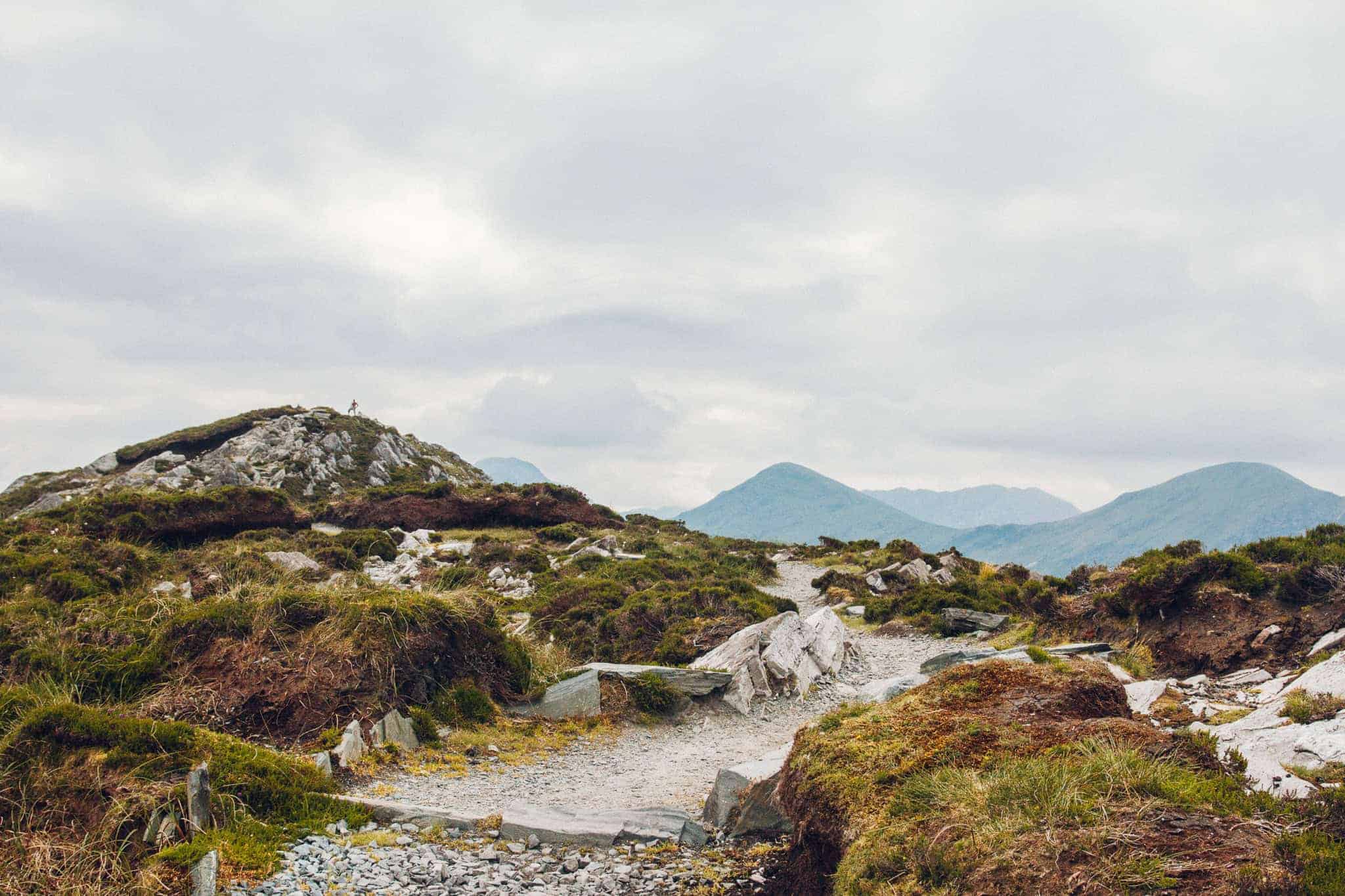
Connemara National Park is located on the northside of County Galway, in the western part of Ireland.
The park’s entrance is just a short walk from the village of Letterfrack, only 15 kilometres (20 min) from Clifden, and about 80 km from Galway (1.5 h), making it easily accessible. It is also about 1 hour drive from Westport, in co. Mayo.
There are no roads within the National Park. It is only accessible on foot via Letterfrack Visitor center.

How to get to the entrance of the park
Drive
When driving from Galway, take the N59 road towards Clifden. You can either drive all the way to Clifden and then onto Letterfrack, or cut through the R344, one of the most beautiful scenic roads in Ireland, that follows the Lough Inagh and passes a valley within the 12 bens.
I personally prefer the 2nd option, especially if you are coupling your visit to Connemara national park with a visit to Kylemore Abbey.
Either way, the journey takes about 1.5 to 2 hours, depending on traffic, how many time you stop to enjoy the scenery and weather conditions. Along the road, you find many signs that will guide you to the park entrance.
Do note that on a good sunny weekend, finding a parking spot can be challenging due to the park’s popularity.

Take the bus
If you prefer public transportation, bus services run regularly from Galway to Clifden, stopping at Letterfrack, the nearest village to the park.
The Route 923 by Citylink takes around 2 hours and operates 3 to 4 times a day. I would suggest taking the 8am from Galway and get back from Letterfrack at 4pm.
If you are coming from Westport, take the TFI route 423. It leaves 4 times a day and takes about 1 hour.
Be aware that once in Letterfrack you will be limited to things you can do as it is quite remote and the main things to do in Connemara require a car. If you are just looking for a day trip from Galway and hike in Connemara national park, then the bus is a good option.
Join a guided tour
A good option for those who don’t have access to a car and don’t want to be limited by the bus schedule, is to take this guided tour. It includes several stops at some of the main places in Connemara (Sky Road, Pine Island, Clifden, Kylemore Abbey), as well as a 3-hour break in Letterfrack to allow you to visit the Connemara National Park and hike if you wish to.
It is a good compromise for only €45. Check availability below.
Things to Know before visiting
Opening Hours
The visitor center & park are opened all year around from 9 am until 5:30pm, except on Christmas day and St Stephen’s day (12/26).
Note: The park may close occasionally in case of weather warning.
Visitor center
It is well worth a visit prior to going hiking, since it offers information about the flora and fauna of Connemara and a small free exhibition about Connemara geology. If you have time, I would recommend watching the 20-min video about the Park conservation and biodiversity.
Amenities
You will find restrooms at the visitor center, as well as designated picnic areas with benches and tables. There is also a playground and a café called the “Hungry Hiker” for a nice cake and tea post hike.
Entrance fees
Admission to Connemara National Park is free.
Wildlife Watching
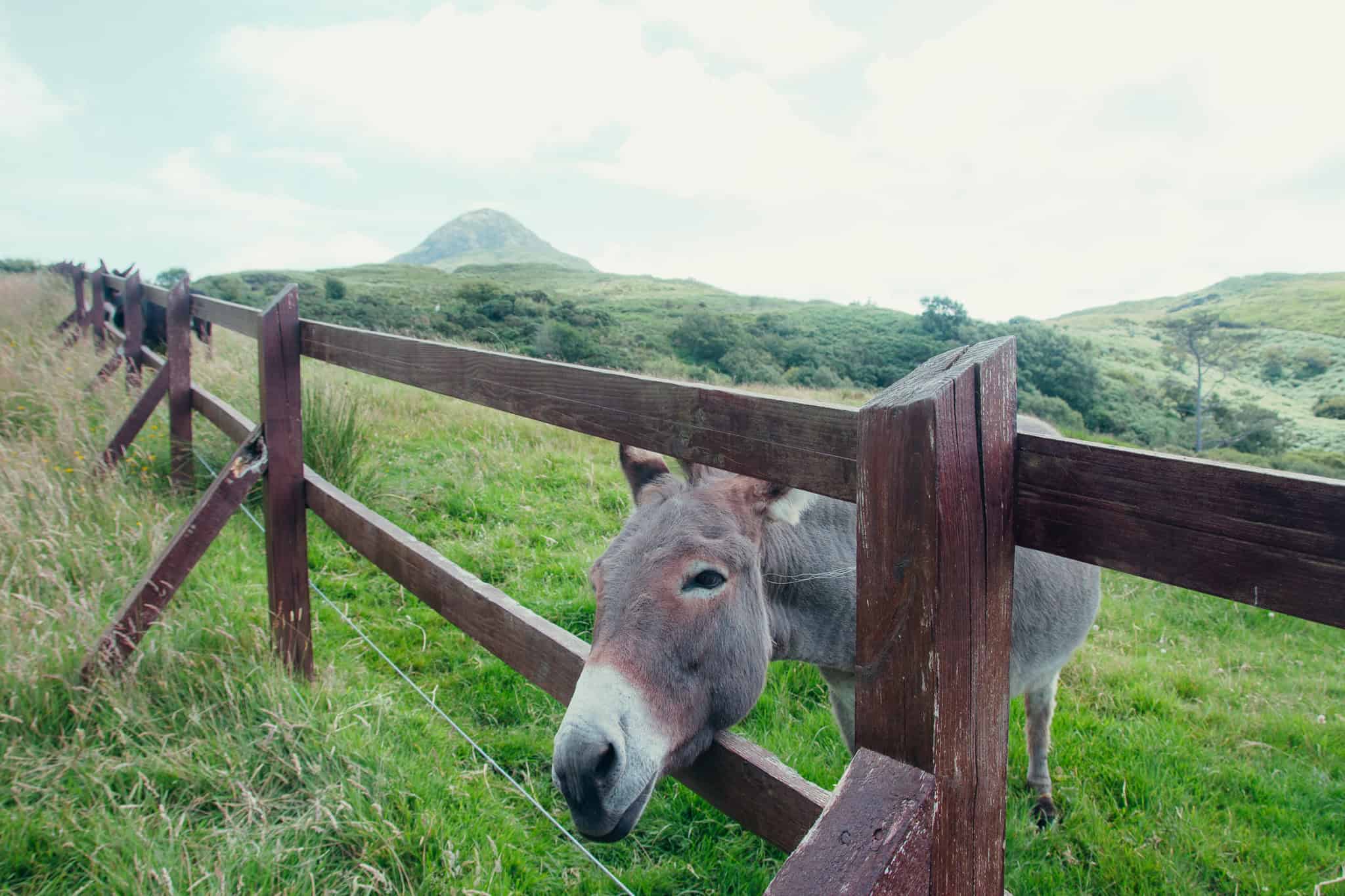
The park is home to a variety of species, including Connemara Ponies, Red Deer and birdlife. The deer are apparently often spotted in the early morning or late afternoon, but I have personally never seen anything other than sheep on the trail or the ponies and donkey roaming near the visitor center.
Hiking Connemara National Park
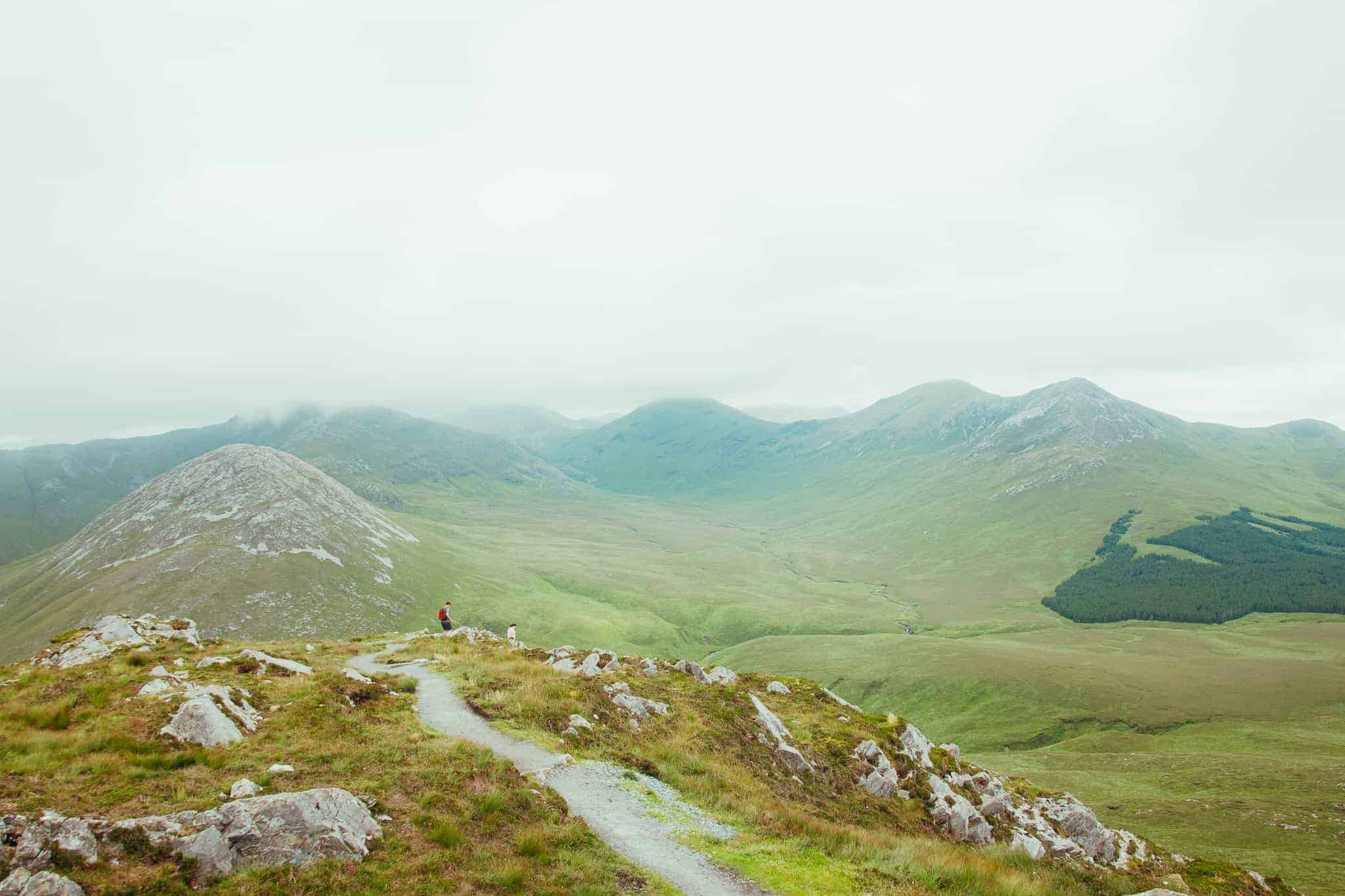
Hiking is the main attraction of Connemara National Park. The park boasts several trails that vary in difficulty and offer stunning views of the surrounding landscape.
Ellis Wood Walk
The Ellis Wood Walk is perfect for families and those looking for a gentle, scenic stroll. This trail takes you through woodlands, offering a peaceful and shaded walk. It’s a great way to experience the park’s flora and fauna without the physical demands of a more challenging hike.
The walk has many stairs and therefore not accessible to trolleys or young children.
Distance: 0.5 kilometers – Difficulty: Easy – Duration: 15-30 minutes – Elevation: Minimal – Best for: Families, beginners. – Map: Green trail
Sruffaunboy Loop
The Sruffaunboy Loop is a 1.5km walk at the base of Diamond hill, offering excellent views of the peak, Ballynakill Harbour, Barnaderg Bay and Tully Mountain. It passes by the Center Pony Paddock where you may spot Connemara ponies and donkeys!
Distance: 1.5 kilometers – Difficulty: Easy – Duration: 30 minutes – Elevation: Minimal – Best for: Families, beginners. – Map: Yellow trail
Lower Diamond Hill Loop
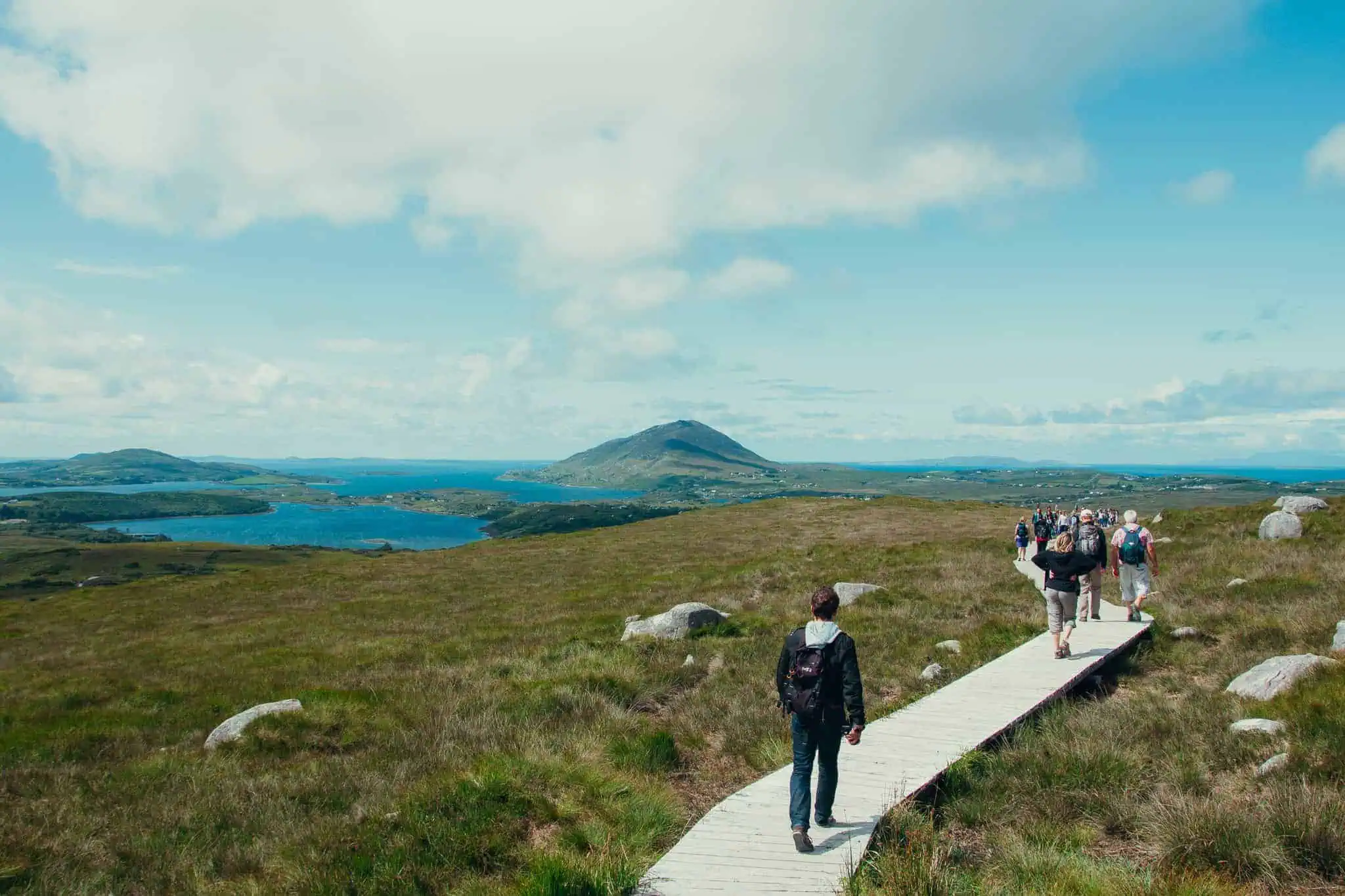
The Lower Diamond Hill Loop is particularly good for those who want to experience the natural beauty of Connemara without a significant physical challenge. It’s also a great option if you have limited time but still want to explore the park.
This trail doesn’t go up the mountain, making it a good choice for those who want a less strenuous hike. The path takes you through diverse landscapes, including bogs, heaths, and grasslands.
Distance: 3 kilometers – Difficulty: Moderate – Duration: 1 to 1.5 hours – Elevation: 50 meters –Best for: Casual hikers, short visits, scenic views – Map: Blue
Upper Diamond Hill Loop
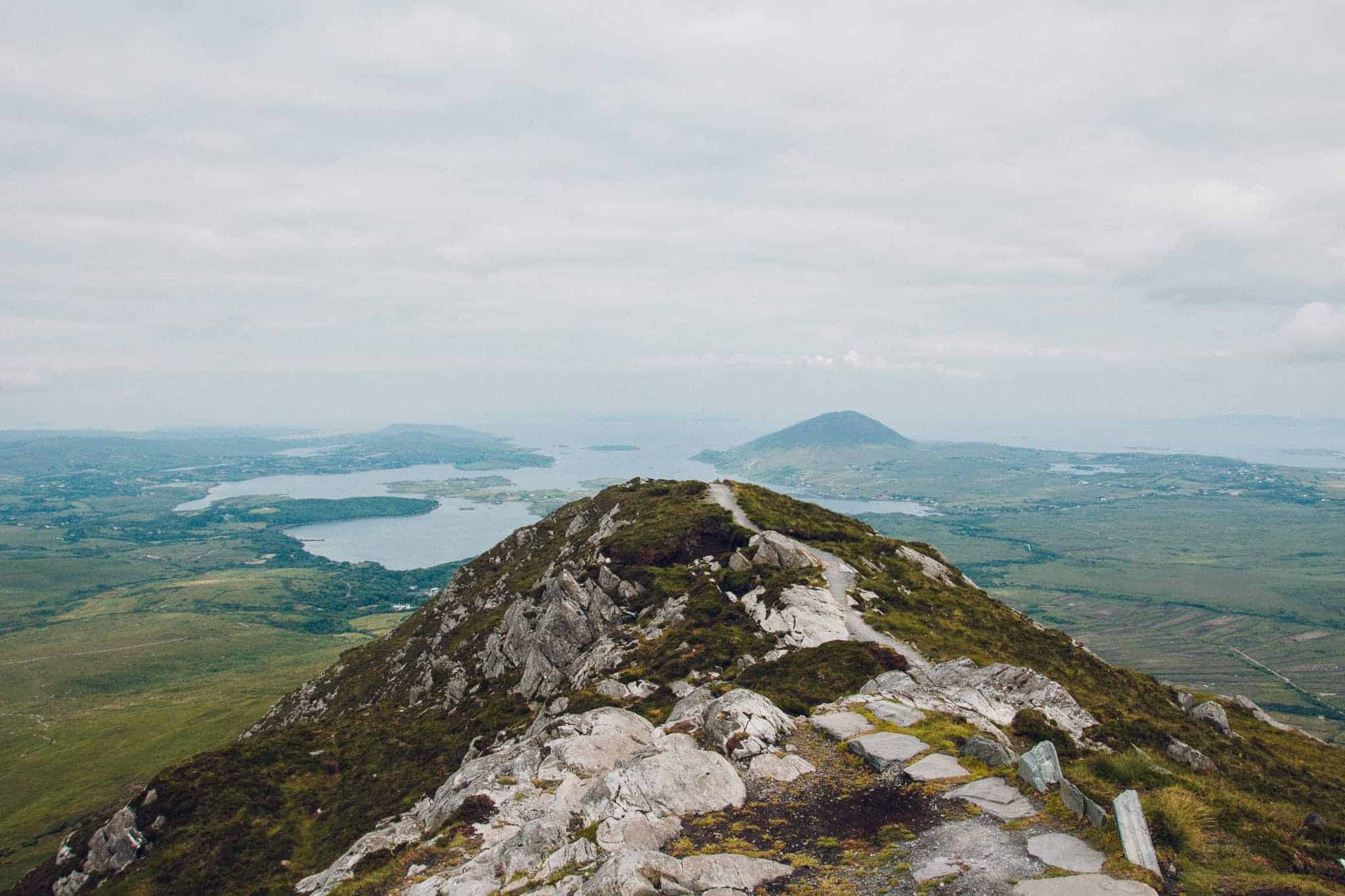
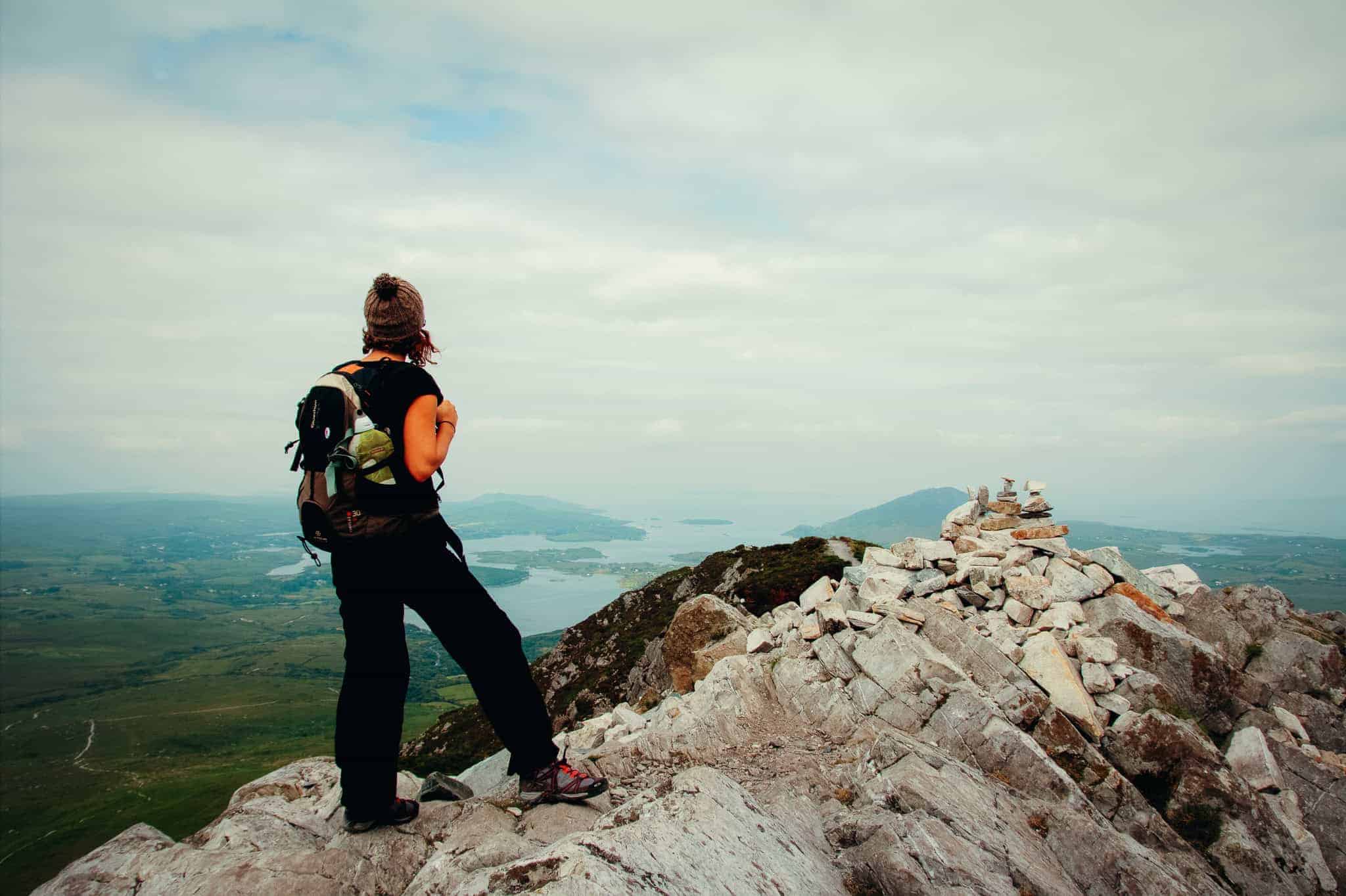
The Upper Diamond Hill Loop is a more challenging 3.7 km trail that takes you to the top of Diamond Hill, with a rewarding 360-degree view from the summit. On a clear day, you can see the Twelve Bens Mountain range, the coastline, and Kylemore Abbey.
This trail includes steeper sections and requires a good level of fitness. It is only accessible from the Lower Diamond hill loop, so while the Upper trail is only 3.7km, don’t forget to add on the 3km return to get there and back.
Distance: 3.7 kilometers – Difficulty: Moderate – Duration: 2.5 to 3 hours (from the visitor center) – Elevation: 445 meters – Best for: moderately experienced hikers – Map: Red
Muckanaght route
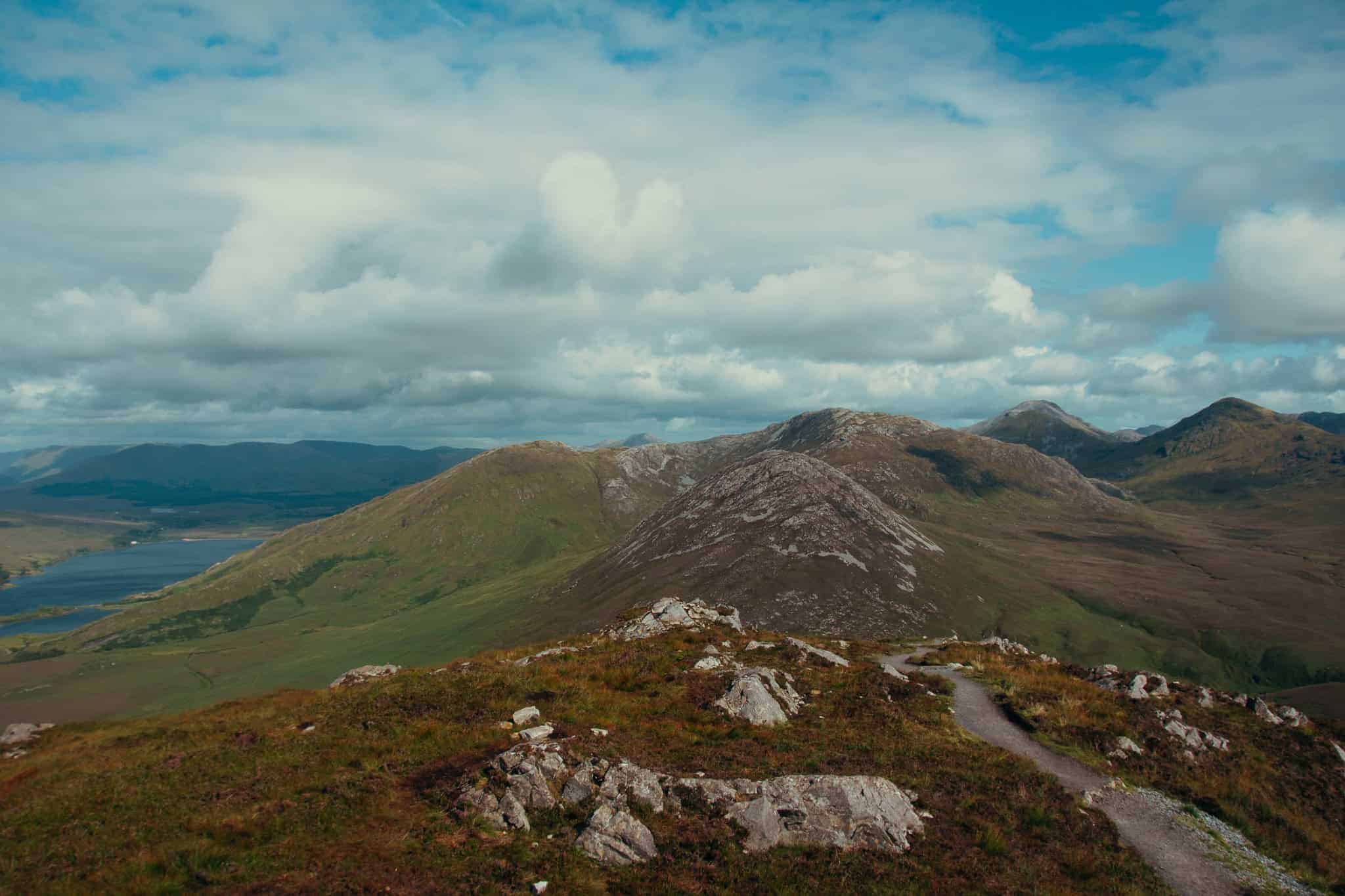
For those seeking a more extensive and challenging hike, the Diamond Hill & Muckanaght Route offers an exhilarating experience.
This trail starts with the familiar Diamond Hill Loop but continues beyond to Muckanaght, one of the lesser-known peaks in the park. The route is demanding, with steep ascents and rugged terrain, but the views are incredibly rewarding.
Starting from the visitor center, follow the Diamond Hill trail to the summit. From there, the trail descends slightly before ascending again towards Muckanaght. The additional climb to Muckanaght offers unique perspectives on the Twelve Bens and the surrounding valleys.
This extended hike is ideal for experienced hikers looking for a full-day adventure.
Distance: 19 kilometers – Difficulty: Hard- Duration: 6 to 7 hours – Elevation: 650 meters – Best for: Experienced hikers, full-day excursions. – Map: Purple
Connemara national park Map
Where to stay
Clifden
A vibrant town offering a range of accommodation options, from hotels to B&Bs. Clifden is an excellent base for exploring Connemara.
Alcock & Brown Hotel is a budget-friendly option located in the town center, offering comfortable rooms and an on-site bar and restaurant. Foyles Hotel, also in the heart of Clifden, provides a touch of historic charm with its elegant rooms and renowned restaurant. For those seeking a scenic retreat, Clifden Bay Lodge offers stunning views of the bay and cozy, well-appointed rooms. If you’re looking for a luxurious experience, Abbeyglen Castle Hotel combines historic grandeur with modern comforts, featuring gourmet dining, a spa, and beautiful castle grounds.
Letterfrack
The closest village to the park, Letterfrack has cozy lodgings and is convenient for visitors planning to spend multiple days in the park.
BunkHouse – Letterfrack Farm is perfect for budget travelers, providing affordable and basic lodgings on a working farm. For a more traditional stay, The Olde Castle B&B offers cozy rooms and a hearty breakfast in a quaint, historic building. For a rustic and communal experience, Old Monastery Hostel provides a welcoming atmosphere with shared facilities and a chance to meet fellow travelers.
Galway
A bustling city with numerous hotels and guesthouses. Galway provides a lively atmosphere and is a great starting point for exploring the region.
Sleepzone Hostel Galway is ideal for budget-conscious travelers, offering clean dormitories and private rooms with shared facilities. The Eyre Square Townhouse provides comfortable and stylish mid-range accommodations right in the city center, close to all major attractions. For a luxurious stay, The g Hotel & Spa offers opulent rooms, a world-class spa, and fine dining, perfect for those looking to indulge.
Around Connemara
Ben Lettery Hostel is a budget-friendly choice for hikers and outdoor enthusiasts, offering simple lodgings with easy access to trails. Connemara Sands Hotel & Spa provides a mid-range option with comfortable rooms, a relaxing spa, and beautiful beach views. For a charming B&B experience, Sharamore House offers spacious rooms, delicious breakfasts, and a welcoming atmosphere. Doleen Quay House, set in a serene location, provides a tranquil retreat with stunning views of the surrounding landscape and cozy, well-appointed rooms.

Camping in Connemara National Park
There is no camping or caravan sites in Connemara National Park. Overnight Parking is also not allowed within the premises.
However wild camping (tent) is allowed for those planning a multi day hike within the park. this is highly regulated, so make sure to read all the rules here before attempting to camp.
If you are looking to camp nearby, you will find several caravan parks where you can also pitch your tent. I know the Clifden Eco Beach Camping & Caravan Park usually comes highly praised but I personally disliked my stay there and won’t recommend it.
👉 Check out the Connemara Caravan and Camping Park or Renvyle Beach Caravan & Camping Park instead. They are also both located on the beach and are definitely less crowded.
History
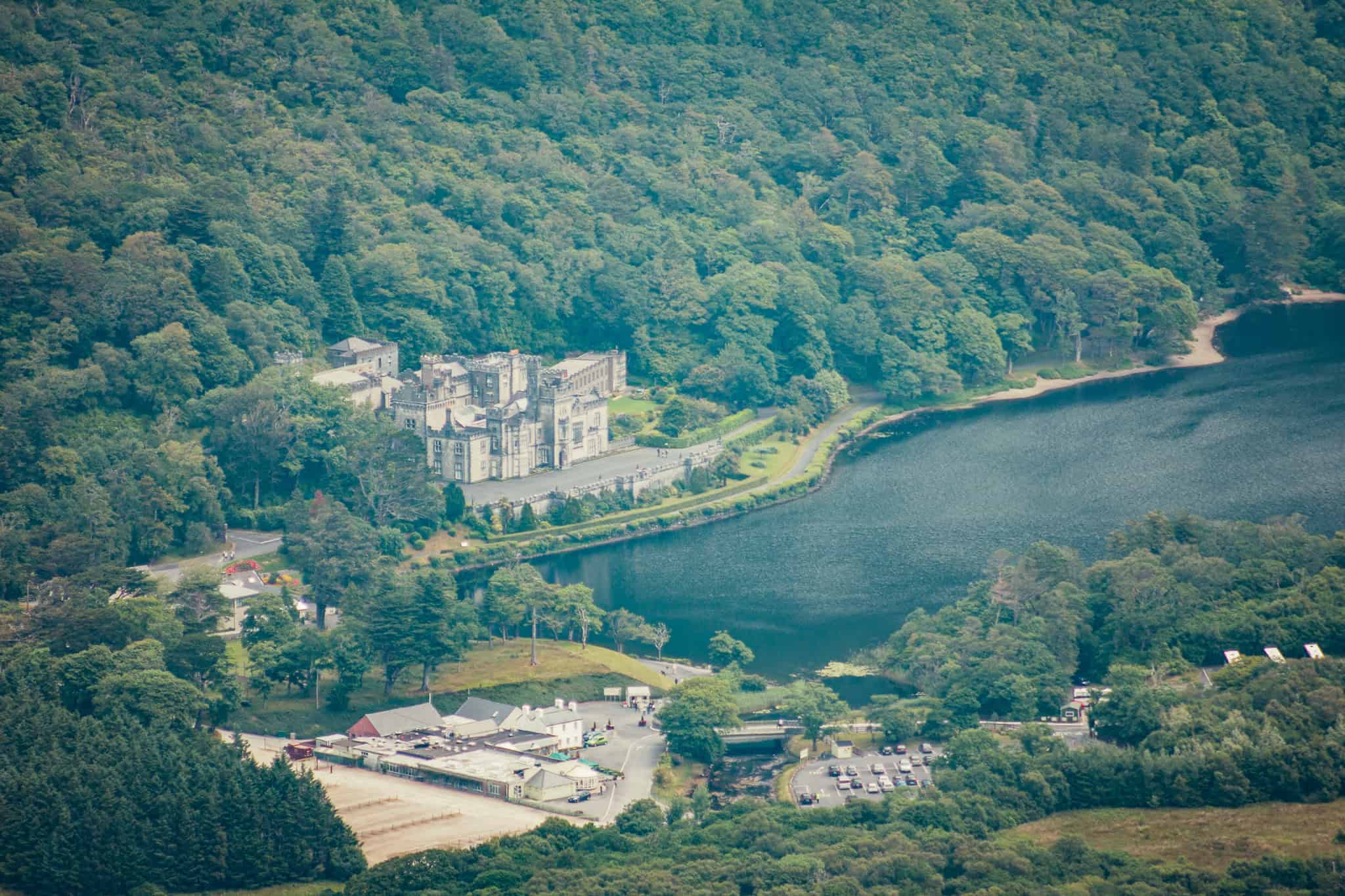
Connemara National Park has a rich history that dates back to its establishment in 1980, but its roots stretch much further into Ireland’s past. The land that now makes up the park was originally part of the private estates of Kylemore Abbey.
The area now known as Connemara National Park was historically inhabited by early settlers, with evidence of human activity dating back thousands of years. Some megalithic tombs and remnants of ancient settlements are indeed scattered throughout the park, but not especially visible to the public.
The land was eventually acquired by the Irish government in the 20th century, with the goal of preserving its natural beauty and making it accessible to the public. Connemara National Park was officially opened to the public in 1980. Its establishment was part of a broader movement to protect Ireland’s unique landscapes and biodiversity.
The park spans nearly 3,000 hectares and is dominated by the Twelve Bens Mountain range, a series of rugged peaks that offer some of the best but challenging hiking in Ireland.
Many conservation efforts and programs are today in place to preserve bogs and heaths that are particularly important ecosystems in Ireland, home to rare plants such as bog cotton, sundews, and butterworts.
The grasslands and woodlands provide habitat for a range of wildlife, including the iconic Connemara ponies, red deer, and a variety of bird species. Birdwatchers can spot species such as skylarks, meadow pipits, sparrowhawk and the rare merlin.
In terms of mammal wildlife, the park is home to Connemara pony, pine marten, foxes, red deer and even otters.
Best time to visit
🌧️ Connemara is beautiful all year long. If you are lucky and get sun during your trip, you are up for a treat, but on a rainy day, the landscape is a bit more moody which gives it a certain charm. Don’t let the rain deter you when visiting Ireland, if there is one thing consistent here, it is how inconsistent the weather is!
☀️ Now, this being said, the best time to visit Connemara National Park is during the spring and summer months, from April to September, when the weather is milder, and the days are longer. You get to enjoy the place longer as the sun sets around 10pm and raise around 4am! Get a eye mask if you are camping.
🍂 However, each season brings its own unique charm and Connemara in Autumn is particularly beautiful, with the foliage turning to stunning shades of red, orange, and gold. The weather remains relatively mild, and the summer crowds have diminished, making it a tranquil time to explore the park.
❄️ As you may expect it, winter is the quietest time in Connemara National Park. While the weather can be unpredictable, with more frequent rain and shorter days, the park takes on a serene and often mystical quality. It’s a great time to visit if you enjoy solitude and don’t mind braving the elements.
What to Do Nearby
Visit Kylemore Abbey
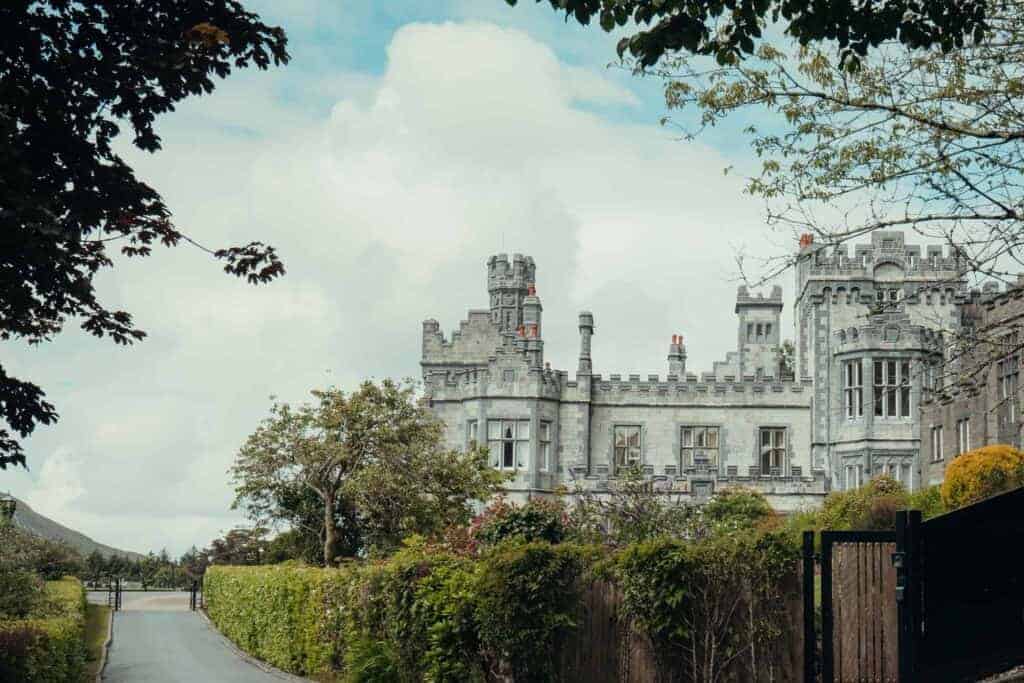
Explore the stunning Kylemore Abbey, a historic castle and Victorian walled garden nestled in the heart of Connemara. This iconic site offers rich history, beautiful architecture, and peaceful gardens perfect for a leisurely visit.
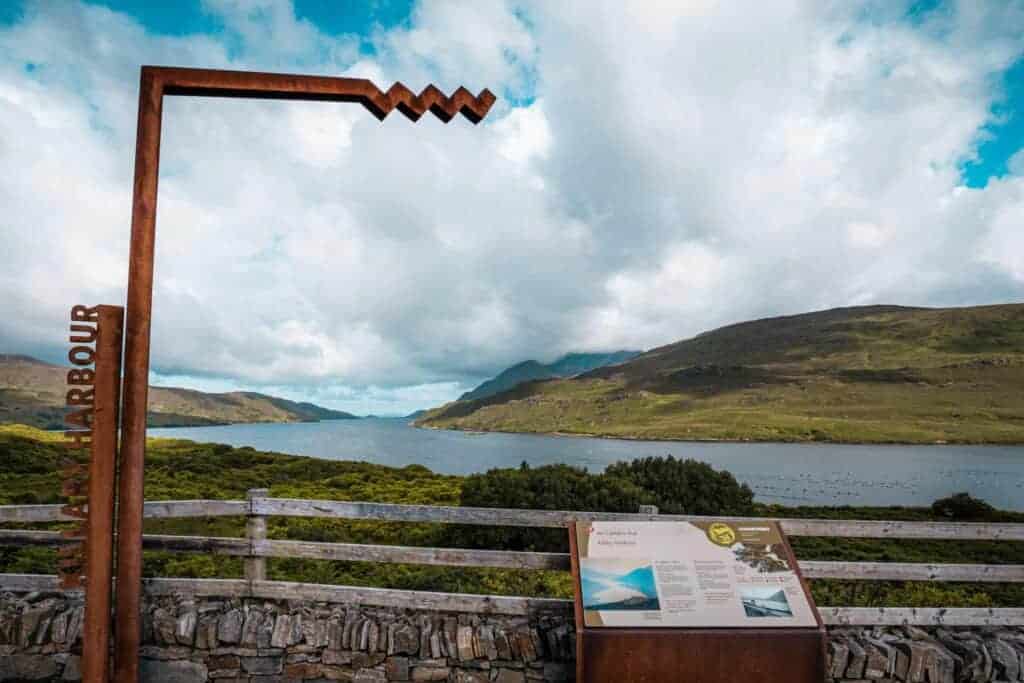
Take a Boat on Ireland’s Only Fjord
Experience the unique landscape of Killary Harbour, Ireland’s only fjord, by taking a boat tour. Enjoy the dramatic scenery, spot local wildlife, and learn about the history and geology of this remarkable natural feature.
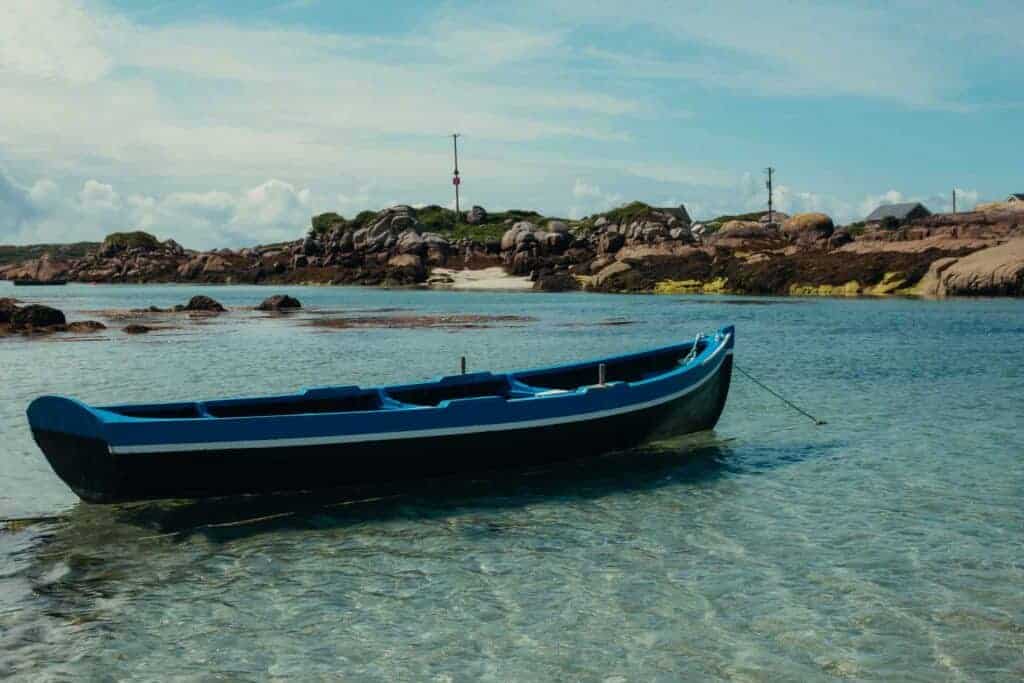
Drive the Sky Road
Embark on a scenic drive along the Sky Road in Clifden, which offers some of the most breathtaking coastal views in Ireland. The winding route provides numerous photo opportunities and a chance to appreciate Connemara’s rugged beauty.
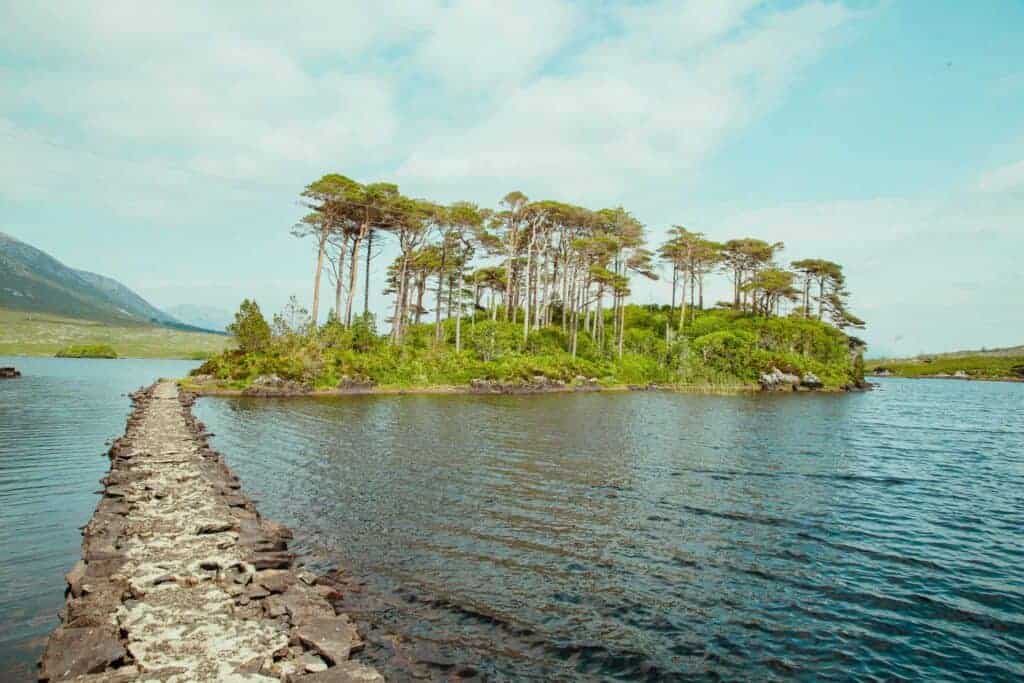
Photograph Pine Island
Capture the serene beauty of Pine Island, a small, picturesque island located in Derryclare Lough. This spot is a favorite among photographers for its tranquil setting and stunning reflections of the surrounding mountains.
💡 For more ideas on what to do in the area, check out our article on the 30 Best Things to Do in Connemara.
FAQ about visiting Connemara National Park

ARE YOU ON PINTEREST?
What about saving this post to your Pinterest board?
Click on the photo to save this blog post for later. Follow Travel Ireland Today ‘ boards to see our latest pins.

I help you explore Ireland like a local with insider tips, detailed itineraries, and practical advice.
HEY THERE! I’M JEN…
Funder, Author & Photographer behind travelirelandtoday.com
Ireland has been my home for the last 12 years. Before settling here, I spent years backpacking around the globe, visiting 65+ countries. Along the way, I discovered my love for hiking, photography, and crafting budget-friendly itineraries.
Through this website, I share the best things to do and see in Ireland, detailed hiking guides, and practical tips to help you plan your perfect Irish adventure. Let’s make your trip unforgettable!