Dog’s Bay, Connemara: Ireland’s Hidden Beach Paradise
This website uses affiliate links which may earn a small commission at no extra cost to you. Thank you for your support.
Picture this: a sunny afternoon in Connemara, the sky a flawless blue (yes, it happens!), and beneath your feet… soft, dazzling white sand that crunches like seashells. That’s because it is. Welcome to Dog’s Bay, one of Ireland’s most unique beaches, where the sand isn’t made of rock, but of tiny, crushed shells. It’s rare, it’s beautiful, and when the light hits the water just right, the entire bay glows in turquoise.
Tucked just outside the village of Roundstone in County Galway, Dog’s Bay is part of a natural double act. It sits back-to-back with Gurteen Bay, forming a double beach with the Atlantic wrapping around both sides. The whole area feels like a secret escape, perfect for swimming, paddleboarding, or simply taking in the views.
But there’s more here than pretty scenery. The landscape is ecologically rare, home to fragile dunes and unique plant life found in only a handful of places on Earth. In this guide, I’ll walk you through everything you need to know to visit Dog’s Bay and Gurteen Bay in Connemara. From where to park, to how to walk around both beaches, find hidden coves, and protect this incredible spot for the next visitor.
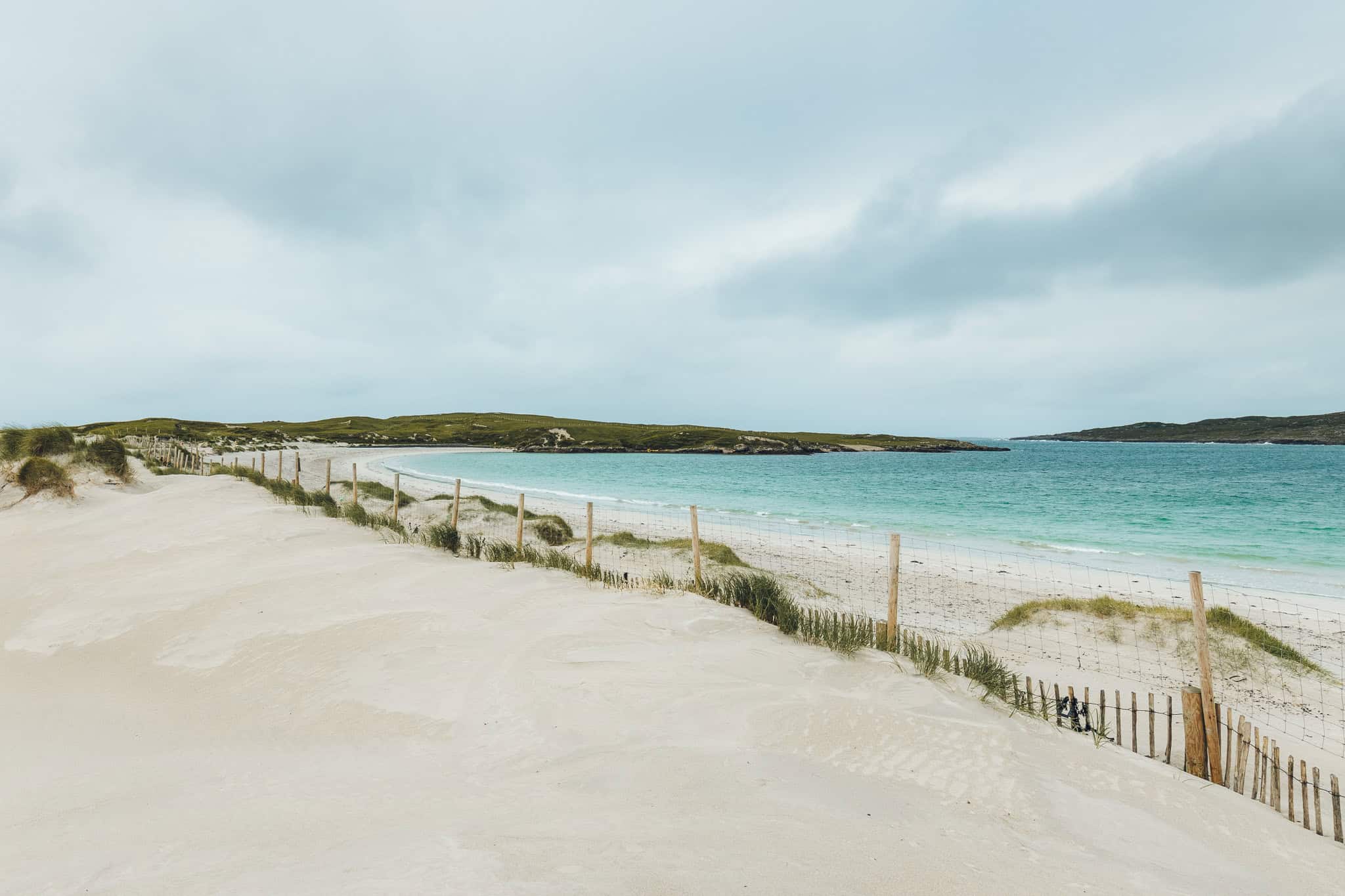
Where is Dog’s Bay?
Dog’s Bay is just outside of Roundstone, a small village in Connemara, County Galway. It’s about an hour’s drive from Galway City, with the last stretch taking you through winding, narrow country roads. The drive is worth it, though, as it passes through beautiful scenery along the ocean and is overlooked by tall, green, and rocky hills.
What Makes Dog’s Bay Special?
Dog’s Bay sits back-to-back with neighbouring Gurteen Bay, forming a rare tombolo: a double beach connected by a narrow strip of sand. With the Atlantic Ocean on both sides, this creates a striking and unusual landscape.
What really sets Dog’s Bay apart is its incredibly white sand. Unlike most beaches, which have sand made from ground-down rock, the sand here is almost entirely composed of crushed seashells; specifically, tiny marine organisms called foraminifera. These give the beach its dazzling white colour, and on a sunny day, the contrast against the turquoise-blue water is breathtaking.
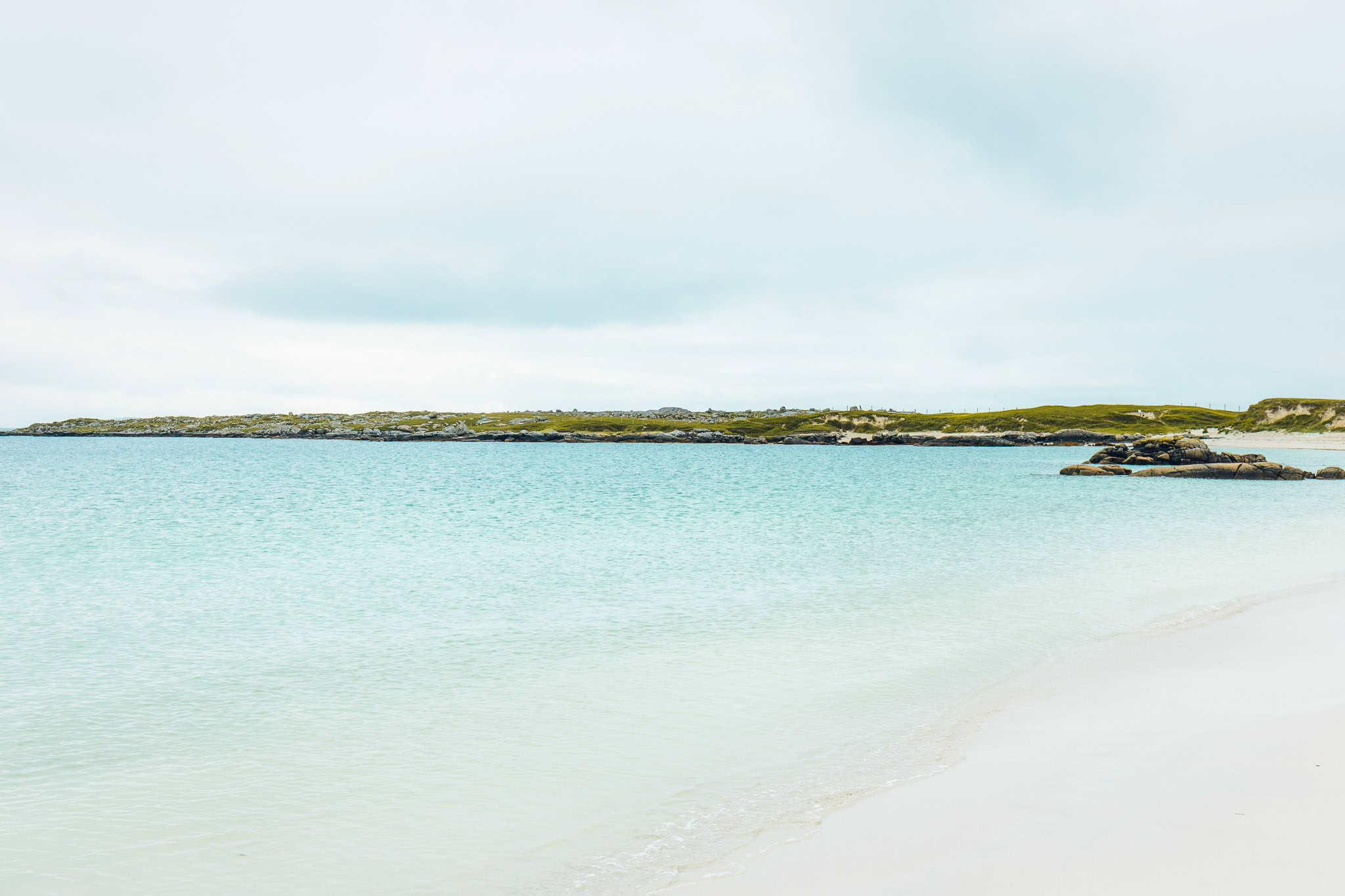
On top of that, both beaches here curve in a perfect horseshoe shape, stretching for about a mile, and are naturally sheltered by a headland at the bottom end. That makes the water calm, ideal for swimming or water sports like paddleboarding.
Beyond its beautiful scenery, this area is also ecologically significant. The dunes between the beaches support a rare type of coastal grassland called machair. This fragile habitat is found in only a few places in Ireland and Scotland and is home to unique plant and wildlife species. Combined with the unusual shell-sand and delicate vegetation, Dog’s Bay is a natural treasure that deserves careful protection.
Parking and Facilities
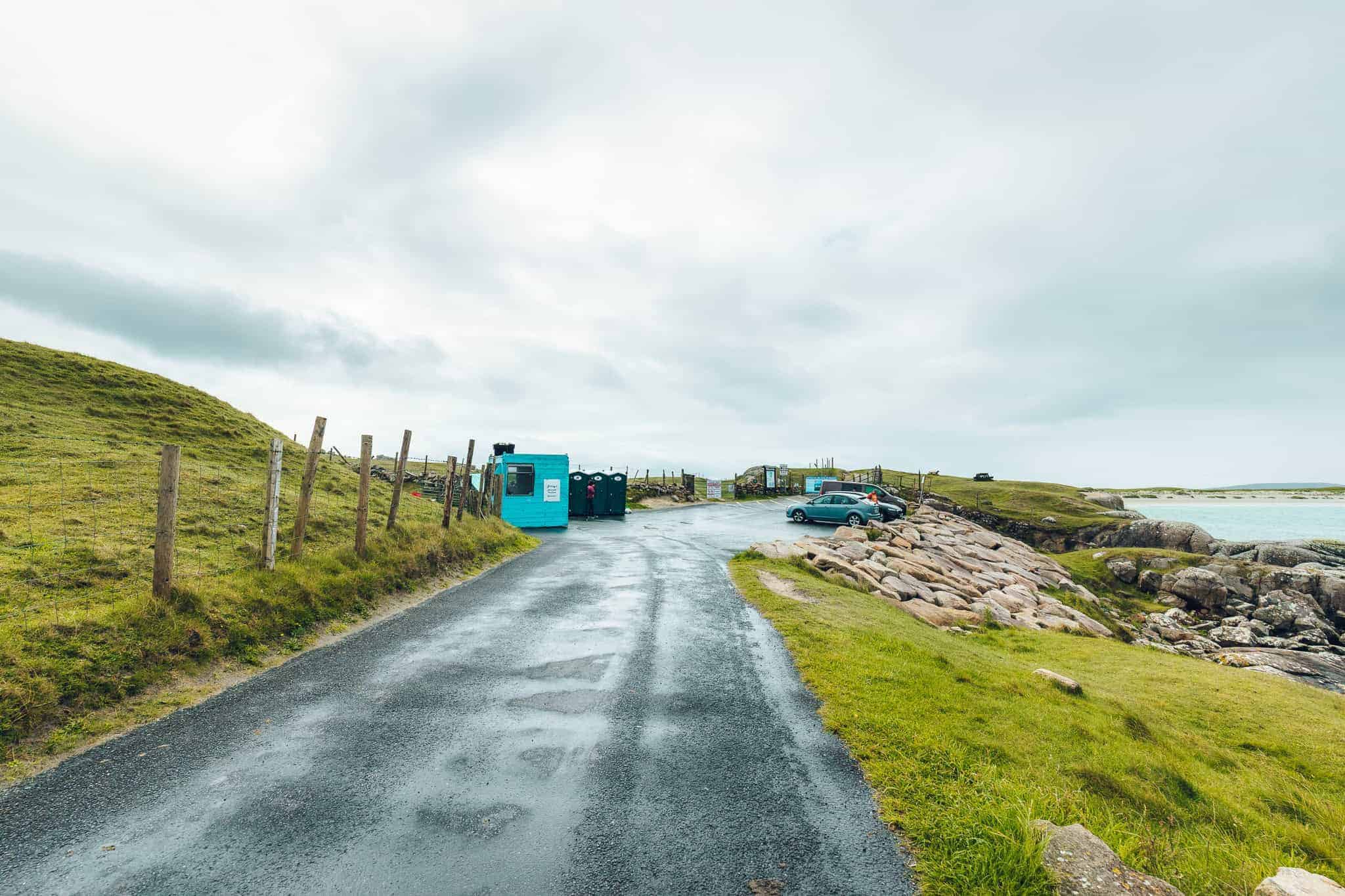
There are two main car parks in the area.
- Gurteen Bay car park – Located across from the Gurteen Bay Caravan & Camping Park. It is called Tra na Feadoige (the small cove before Gurteen). It’s well signposted from the road; however, it fills up quickly, especially on sunny days when locals come to walk their dogs, and tourists follow the Wild Atlantic Way Signs from the main road!
- Dog’s Bay car park – slightly larger, but is located at the end of a very narrow road and not really signposted (though it is the next left after Tra na Feadoige turn). It is therefore a bit quieter but usually taken over by campers or motorhomes staying here overnight (especially from 4 pm). It is a really good spot if you’re self-contained. For those visiting for a short time, pass the campers to your right and follow the road to find another small car park, located directly at the entrance to the beach.
Facilities are minimal, consisting of two toilet pods, with no showers or changing rooms.
Local tip: In summer, you might find “Jimmy’s Handmade Ice Cream” near the last car park. It’s not always open, but it’s worth checking if you’re lucky.

BEST IRELAND CAR RENTAL COMPANY DISCOVER CARS
When booking a rental car in Ireland online, I use Discover Cars because they offer Full coverage for less than €7. It is the best rental car comparator out there!
What to Do at Dog’s Bay
Swimming
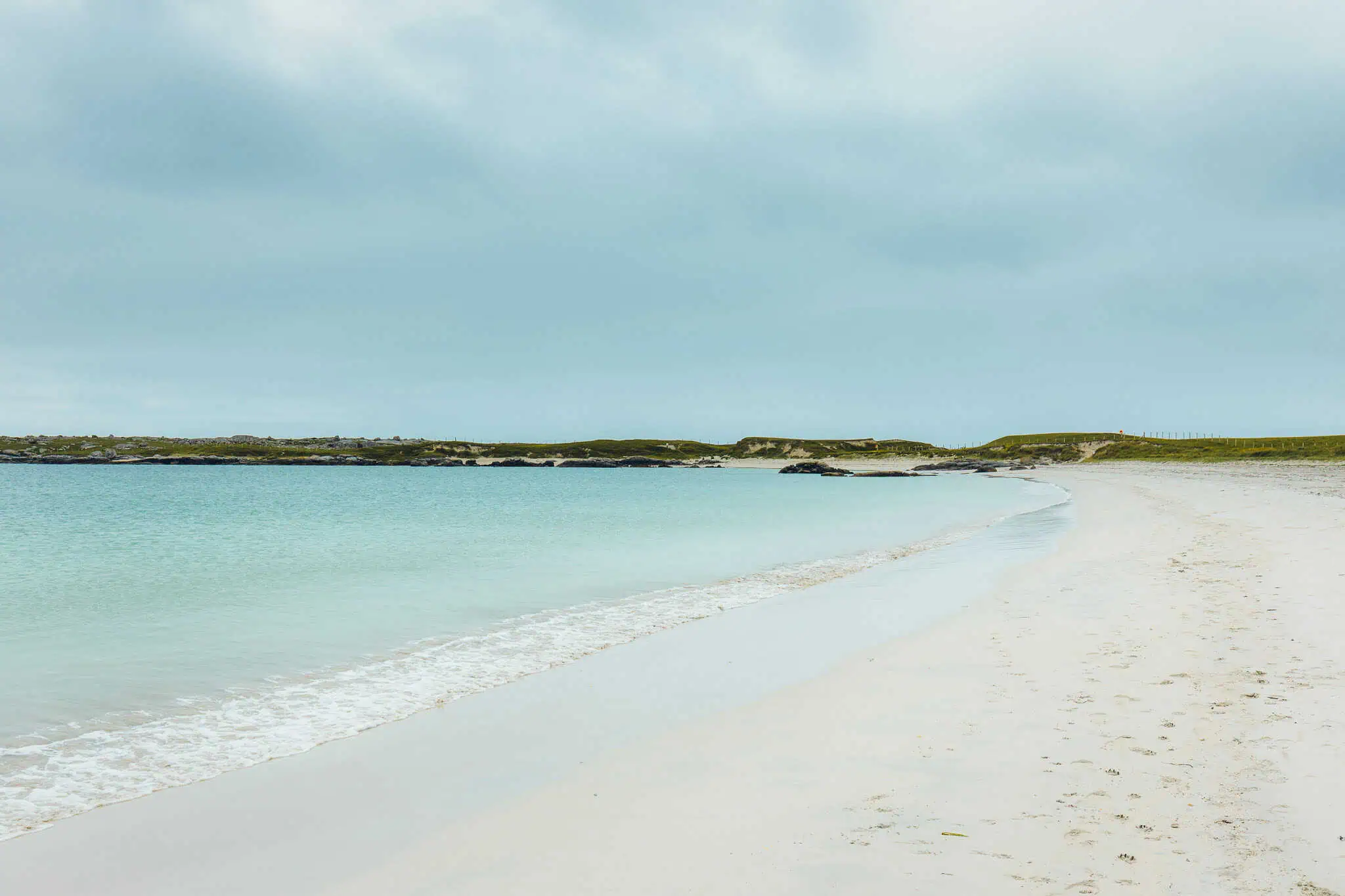
Dog’s Bay is ideal for a dip. It’s naturally protected, so the water remains calm and clear, making it suitable for families or anyone seeking a swim. However, there are no lifeguards on duty, only safety buoys set every 100 metres or so. (These are positioned on the dunes, not near the water).
There’s a lifeguard station at Tra na Feadoige car park, but it wasn’t open on my last visit (a sunny Tuesday in late June). I suppose it’s staffed only on weekends and during holidays.
Walk around
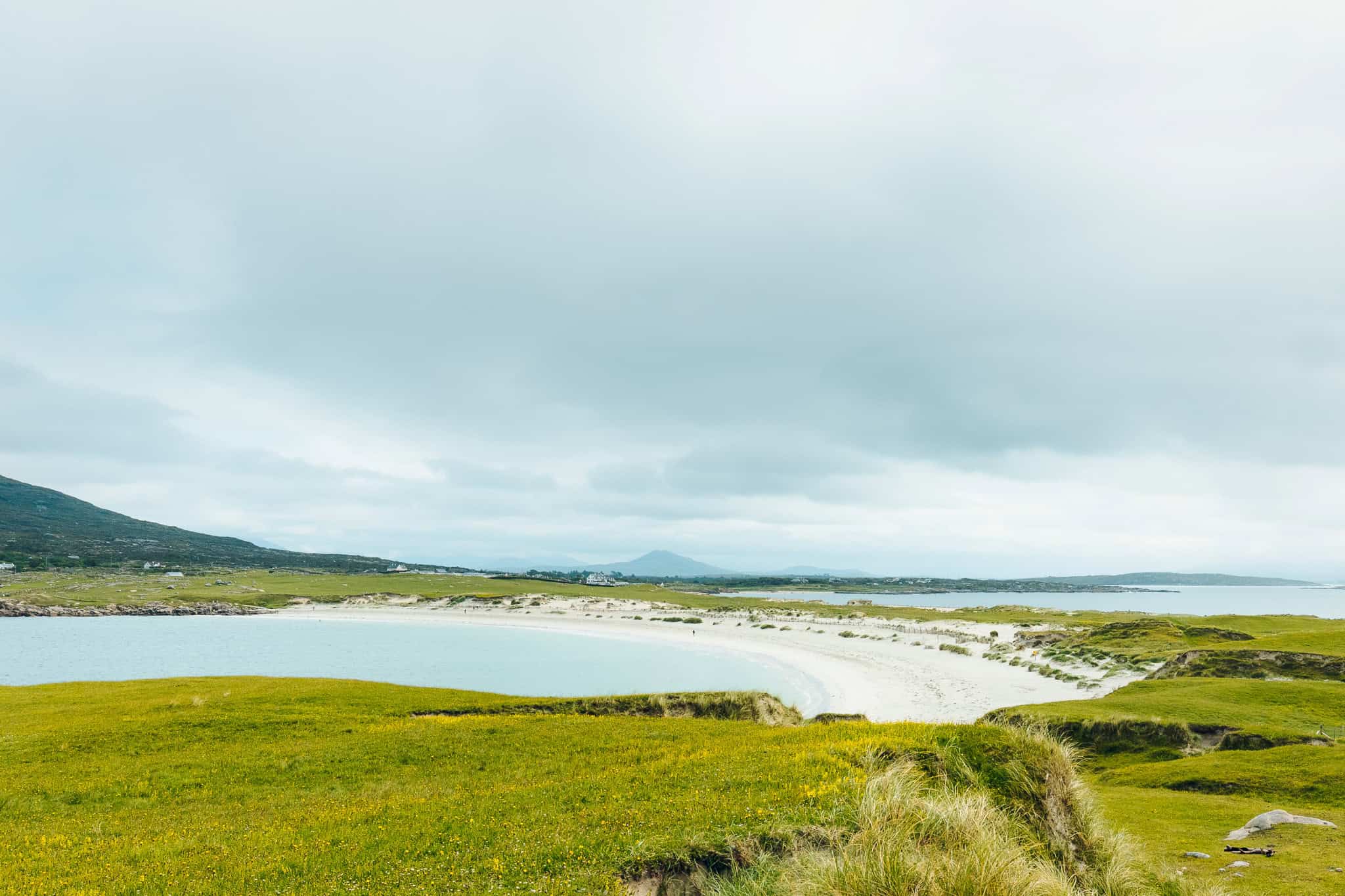
If you don’t fancy a swim, walking on the beach is the next best thing. The crescent shape of Dog’s Bay makes for a gorgeous stroll with the Connemara hills in the background and that startling contrast of turquoise water and white sand.
From Dog’s Bay, you can loop around to Gurteen Bay without having to drive. Just walk to the end of Dog’s, follow the trail up and to the right, then take the left-hand path down to Gurteen. It’s a great way to enjoy both beaches in one go.
On the way back, either loop through again via a passageway through the dune, or continue towards Tra na Feadoige, where you’ll turn left just before the cemetery. You’ll then cross farmland (watch for cows!). The whole loop took me about an hour, but you can easily make it shorter.

Water Sports and Activities
If the water’s calm, you’ll see people kayaking, paddleboarding, and on breezier days, potentially windsurfers and kitesurfers.
Tip: The Gurteen Bay campsite hires out kayaks and boards if you don’t bring your own. With the sheltered waters and lack of big waves, it’s a great place to try something new without getting knocked around.
Hidden Beaches
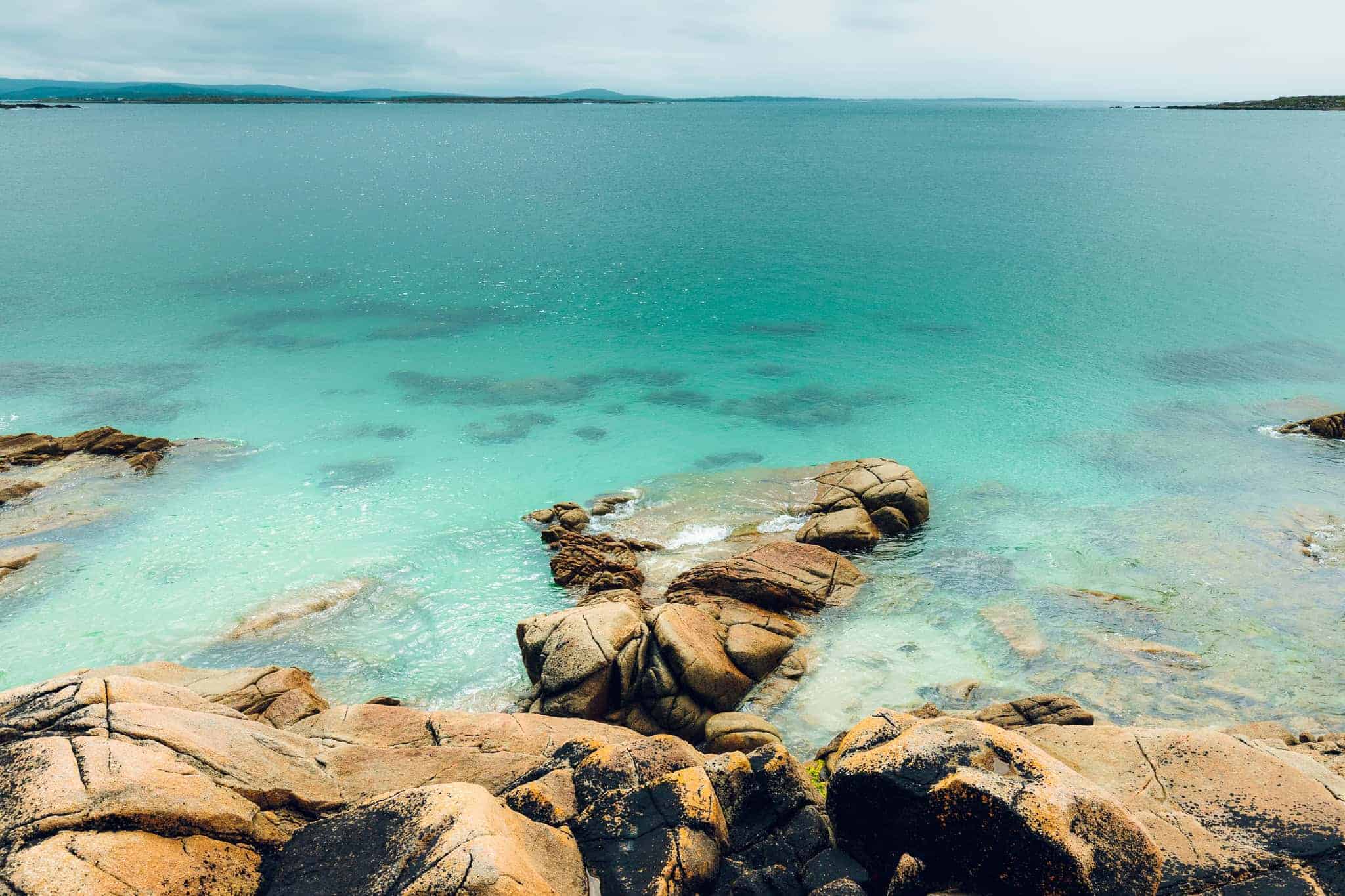
Fancy something even more secluded? Tra Mhartog and Tra Lelaith are two smaller, tucked-away beaches nearby. You won’t see them from the main car parks and will need to walk across farmland to get there.
Access is allowed, but please ensure that you close any gates behind you and respect the land. These beaches are perfect if you’re looking for peace, but they aren’t as sheltered as the two main ones, so be extra careful.
Relaxation and Picnicking
Sometimes the best thing to do here is nothing at all. Bring a blanket, lie back on the soft white sand, and read a book or listen to the waves! It’s an excellent spot for a picnic stop on your Connemara itinerary, but please note that there are no bins.
Be sure to bring all your litter back with you.
Environmental Tips and Rules

Dog’s Bay might look rugged, but it’s incredibly fragile. The white sand isn’t sand in the usual sense since it’s made from seashell fragments, called foraminifera. The dunes separating Dog’s Bay from Gurteen Bay are especially delicate and play a vital role in protecting the whole area.
These dunes have suffered significant damage over the years due to cattle grazing, unauthorized camping, and excessive off-trail use. As a result, they’ve started losing height and width, which speeds up erosion. It is essential to keep to the rules and respect the signs.

Here’s how to help preserve this stunning place:
- Stick to designated paths
- Don’t walk on the dunes (fenced)
- Clean up after your dog
- Take all rubbish with you
- No fires or BBQs allowed on the beach or dunes
- No wild camping on the sand, beach, or dunes
- Respect all signs and local guidelines
There has been an ongoing effort to restore the area since the 1990s, including replanting marram grass to stabilise the dunes. Every visitor makes a difference. If you follow the simple rules, you’ll help protect this rare landscape for others to enjoy too.
Where to Stay Nearby
If you’re camping, Gurteen Bay has a great campsite right by the beach. It’s well-equipped with power and water hookups for motorhomes, as well as facilities for grey water disposal. There’s a playground for kids, a games room, and you can even rent kayaks and paddleboards right there. They accept tent camping as well.

For something a bit more comfortable, Roundstone has a few Bed and Breakfasts that are just a short drive away. It’s a small village, but it’s got charm, a couple of cosy pubs, and just enough to keep you entertained after a beach day.
If you prefer a wider range of options, Clifden is approximately 25 minutes away and offers a variety of hotels, guesthouses, and restaurants.
Galway City is a bit further away from Dog’s Bay, but it makes a good base for visiting Connacht and Connemara as a day trip.

For those in a self-contained vehicle, you can stay overnight at the first Dog’s Bay car park. It is flat, and the views are stunning. Please be aware that the road leading to the parking area is very narrow (though only a couple of hundred meters long), and if you encounter traffic with a large camper, you will need to either reverse or find a spot to pass each other.
Things to Do Nearby
Alcock & Brown Landing Site and Marconi Station Trail
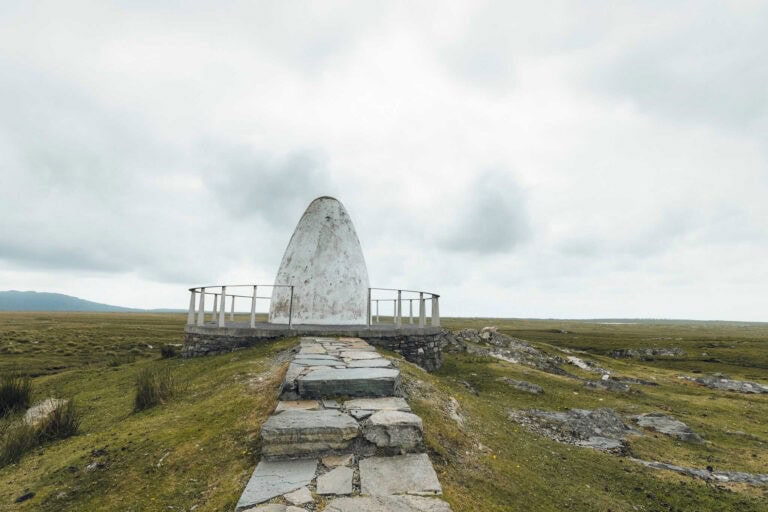
Just a short drive from Dog’s Bay, you’ll find the Derrigimlagh Bog, home to not one but two fascinating historic sites. This is where Alcock and Brown crash-landed in 1919 after completing the world’s first non-stop transatlantic flight, and where the Marconi Wireless Station once stood, the first of its kind to transmit transatlantic radio messages.

A newly developed walking trail (the Marconi Trail) guides you through the area with information panels and viewing points.
It’s an easy and scenic route across the bog that leads you right to the monument marking the Alcock & Brown landing site. A must-do for history lovers and anyone curious about Connemara’s lesser-known past.
Sky Road
If you’re up for a scenic drive, don’t miss the Sky Road loop just outside Clifden. It’s one of the most stunning coastal routes in Ireland, offering dramatic views over the Atlantic, islands scattered offshore, and the rugged Connemara landscape.
There are a few official viewing points along the way, perfect for pulling in and snapping a few photos.
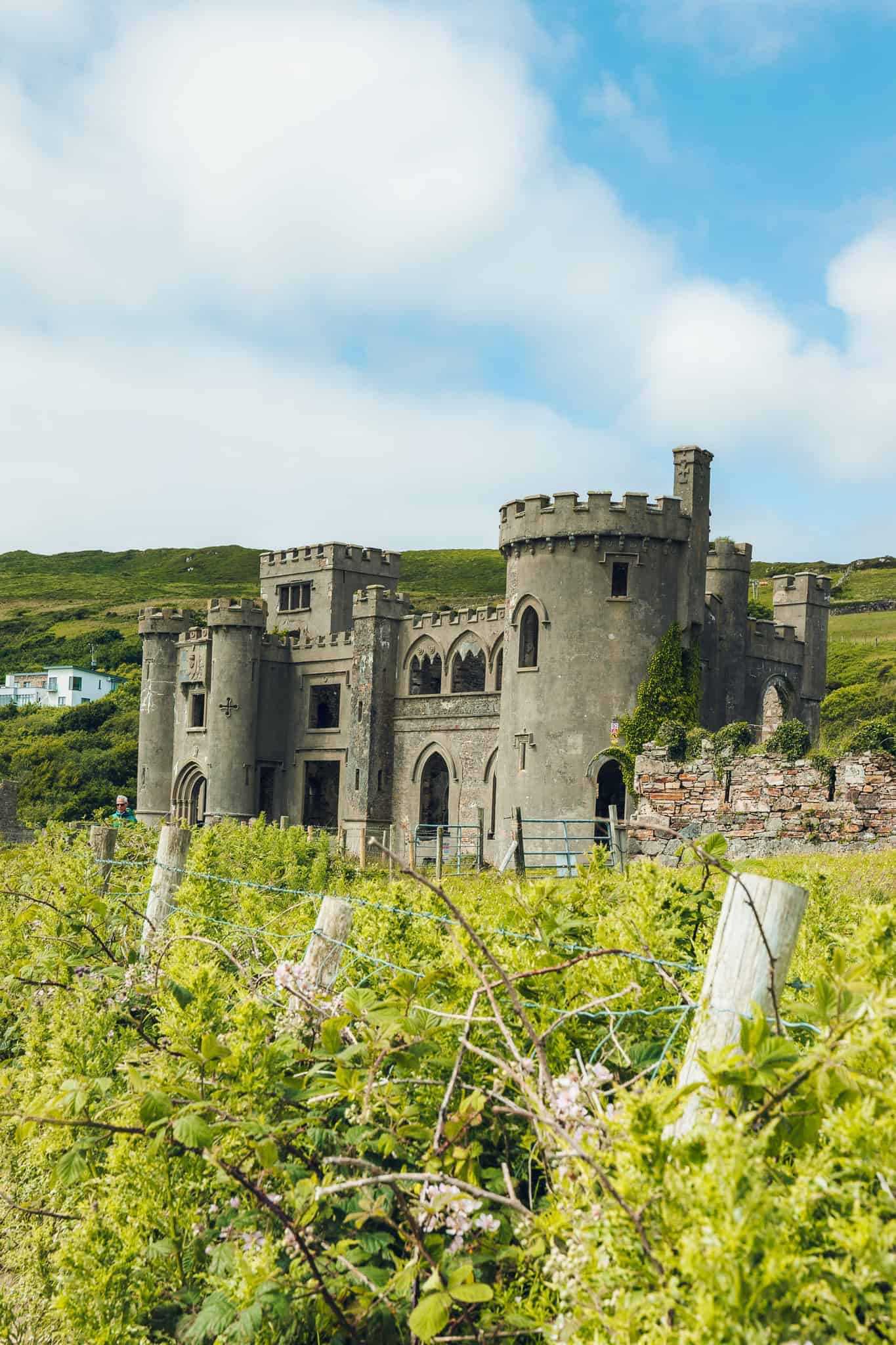
One highlight along the route is the ruin of Clifden Castle, once the home of John D’Arcy, the founder of Clifden. You can walk down a public path through private farmland to get a closer look.

If you’ve got time, take the detour to Eyrephort Beach. It’s a quiet, rocky cove with turquoise waters and almost no crowds. A lovely spot to stretch your legs, dip your toes in, or enjoy the peaceful scenery before looping back into Clifden.
👉 It is also a great overnight spot for self-contained campers.
Connemara National Park
About 40 minutes away, the National Park near Letterfrack offers well-marked trails, including the hike up Diamond Hill. It’s a brilliant way to spend half a day, with panoramic views at the top that stretch across the Twelve Bens and out to the sea. The visitor centre is free and has good information on the region’s wildlife and geology.

Final Thoughts on Dog’s Bay
Dog’s Bay might not be on every tourist’s radar, but it should be. If you’re driving around Connemara and have a bit of time to spare, this is one of those places that’s well worth the stop. Whether it’s for a quick swim, a scenic walk, or just a relaxed lunch on the sand, you’ll be glad you came.
Unlike many of Connemara’s more hidden beaches, which often involve long, bumpy drives down single-lane roads, Dog’s Bay and Gurteen Bay are surprisingly easy to get to. And once you’re there, you’ll see why it’s considered one of the most beautiful beaches in the region.
If you’re exploring the area, you might also enjoy reading about how to hike in Connemara National Park, the best things to do in Connemara, and upcoming guides on the Alcock and Brown landing site, Sky Road, and even where to watch a traditional sheepdog demonstration.

ARE YOU ON PINTEREST?
What about saving this post to your Pinterest board?
Click on the photo to save this blog post for later. Follow Travel Ireland Today’s boards to see our latest pins.

I help you explore Ireland like a local with insider tips, detailed itineraries, and practical advice.
HEY THERE! I’M JEN…
Funder, Author & Photographer behind travelirelandtoday.com
Ireland has been my home for the last 12 years. Before settling here, I spent years backpacking around the globe, visiting 65+ countries. Along the way, I discovered my love for hiking, photography, and crafting budget-friendly itineraries.
Through this website, I share the best things to do and see in Ireland, detailed hiking guides, and practical tips to help you plan your perfect Irish adventure. Let’s make your trip unforgettable!